
Privatisation of Bahamas telecoms company completed
 The privatisation of the Bahamas Telecommunications Company (BTC) was completed on Wednesday, with the sale of 51 percent of the shares to Cable & Wireless Communications (CWC).
The government of The Bahamas has received the purchase price of $210 million from CWC paid in full, as well as in kind and cash completion dividends from BTC amounting to $14.3 million.
CWC has taken management control effective Wednesday.
One of the effects of the revised Sector Policy is that, as of Wednesday, the clock has started ticking for the liberalisation of cellular services. The process for liberalisation will commence three years from April 6, 2011.
“This privatisation, a process started 14 years ago, is essential for the advancement of the Bahamian economy. It is no longer about telecommunications; rather we are now in a world of converged communications. Technology advancement is moving at a lightning fast pace, requiring huge investments, economies of scale and deep technical expertise. The Bahamian people deserve and indeed, rightly demand, more minutes for less money, more products with better quality, excellent service and more business and profit opportunities for themselves,” the government said in a press statement.
The government also said it is committed to making The Bahamas an international business centre of choice, committed to giving Bahamians access to the latest and best technologies available in communications and committed to opening the economy for the further participation of progressive, innovative Bahamian entrepreneurs.
“The vision for BTC of the government and CWC, is that BTC will continue to be recognized as a Bahamian company, operating for the benefit of the people and the economy of The Bahamas; that it will be viewed as a great customer centric and sales and marketing organization, which offers excellent value for money, that delivers the services that customers want, and that it will be a company that Bahamians choose to buy from and work for,” the government added.
CWC is a global full-service communications business that operates communications businesses in thirty-eight countries through four regional units -- the Caribbean, Panama, Macau and Monaco and Islands -- and has close to $2.5 billion revenues. Its services are highly complementary to those of BTC and include mobile, broadband and domestic and international fixed line services, as well as pay-TV, data centre and hosting, carrier and managed service solutions.

Dramatic rescue in Ivorian city
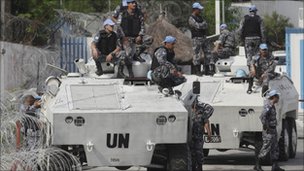 French forces have snatched the Japanese ambassador to safety from near the embattled presidential residence in Ivory Coast's main city, Abidjan.
Soldiers traded fire with guards at the residence where Laurent Gbagbo is ensconced, refusing to stand down as president, French officials said.
France, the former colonial power, has called on Mr Gbagbo to resign after losing November's election.
Forces loyal to his rival, Alassane Ouattara, are besieging the residence.
They were driven back when they tried to storm the site in a chic district of Abidjan on Wednesday, after talks on a cease-fire and Mr Gbagbo's departure ran into difficulty.
The incumbent president continues to insist he won the election, despite international recognition of Mr Ouattara's victory.
Mr Gbagbo says Mr Ouattara's troops want to kill him but they say they have strict orders to capture him alive.
'A lot of blood'
Late on Wednesday, French helicopters moved in to evacuate the Japanese ambassador, Okamura Yoshifumi, and his aides after his home near the presidential residence was invaded by unidentified gunmen.
They were taken to safety in a French military camp at Port-Bouet, south of Abidjan, the French embassy said.
The French said they had acted after a request from Japan and the UN.
During the operation, French forces exchanged fire with fighters defending Mr Gbagbo's residence.
Speaking before his rescue, Mr Yoshifumi told AFP news agency that a group of "mercenaries" had occupied his residence for five hours.
While he and others sheltered in a safe room, the gunmen used his residence as a firing-point to launch rockets and fire machine-guns and cannon, he said.
He said he had later found that four people employed at the residence, security guards and a gardener, had "vanished", and there was "a lot of blood" in the house.
It was not clear if the gunmen were part of the forces defending the nearby presidential residence or the attacking forces loyal to Mr Ouattara.
France has troops in the country alongside UN peacekeepers, attempting to maintain security around Abidjan under the terms of a UN Security Council resolution.
French Foreign Minister Alain Juppe said neither French nor UN troops were involved in the new offensive against Mr Gbagbo.
Failed assault
Speaking by phone to French radio on Wednesday and sounding defiant, Mr Gbagbo denied he was hiding in a bunker.
"I am in the residence - the residence of the president of the republic," he said.
Earlier he denied he was surrendering, saying he was only negotiating a truce.
Approaching the compound in pick-up trucks modified to carry heavy machine guns, Mr Ouattara's troops attempted to storm the residence but faced stiff resistance from inside the property's walls, where Mr Gbagbo's supporters were said to be dug in with mortars and rocket launchers.
After several hours of fighting the sounds of battle died away.
Local residents, Western officials and representatives of Mr Ouattara's forces conceded that Mr Gbagbo's men had held out.
Mr Juppe said Mr Gbagbo's "intransigence" had led to the collapse of UN-brokered talks aimed at negotiating an orderly departure.
"The conditions set by President Ouattara are very clear: he demands that Laurent Gbagbo accepts his defeat and recognises the victory of the legitimately elected president," he told parliament.
"That's where we stand today, so sadly the arms have begun to talk again."
Following two days of advances in Abidjan by pro-Ouattara forces the city's four million people remain mainly inside their homes.
Soldiers, ex-rebel fighters, militia groups and mercenaries are battling for control of the streets, says our correspondent. The main banks have been closed for nearly two months and few people have the funds to stock up on food.
Tens of thousands of people have fled their homes to escape the violence, with the UN refugee agency reporting an increase in the number of Ivorians crossing the border into neighbouring Liberia.
The International Criminal Court says it is preparing to investigate reports of human rights abuses during the fighting.
Last November's election was intended to reunite Ivory Coast which split in two following a northern rebellion in 2002.
The electoral commission pronounced Mr Ouattara the victor, but Ivory Coast's Constitutional Council said Mr Gbagbo had won.
The US, the UN and the EU recognised Mr Ouattara as the winner, but both candidates had themselves sworn in as president and a stand-off ensued.
Skirmishes and battles between the rival forces have since taken place across Ivory Coast, culminating in Mr Ouattara's troops sweeping into Abidjan at the end of March.

LIME Signs US $3.7 Million Contract To Build National Broadband Network For The Government Of Jamaic
LIME, the Caribbean’s only full service telecoms provider, today signed a five-year agreement with the Government of Jamaica, valued at more than US $3.7 million, to build out a major portion of the broadband island-wide network which will provide internet connectivity to public schools, libraries, post offices and other locations across Jamaica.
The island-wide broadband network, which will increase public internet access significantly, is being financed through the Universal Service Obligation (USO) levy which gives the Jamaican Government revenue from charges for incoming international calls. The levy is managed by the Universal Access Fund Company Ltd. The network will provide high speed connectivity throughout the country, eventually bringing even the most remote locations online.
Speaking at the agreement signing, which was held at the Office of the Prime Minister, Managing Director for LIME in Jamaica & Cayman, Garry Sinclair said: “This project, involves two major areas where LIME has been working tirelessly to make a difference – the infusion of ICT in Education and the increasing of access to ICT to the general population in order to bridge the digital divide within Jamaica and the digital divide between the Jamaica and more developed nations.”
He added, “So while all of us at LIME are excited about the commercial side of this project, the real thrill is that we will be part of an initiative that will be a critical catalyst in the development of our country.”
Jamaica’s Minister with responsibility for Telecommunications, Daryl Vaz said: “Internet service is a critical and important ingredient in national advancement and economic development and therefore we have developed and are pursuing deliberate strategies for accelerating the deployment of high-speed connectivity throughout the length and breadth of the country.”
Managing Director of the Universal Access Fund Company Limited, Hugh Cross said: “We are fully aware of the correlation between growth in Gross Domestic Product and access to the Internet. The World Bank has indicated that for every 10% increase in high speed Internet connections the increase in economic growth is 1.3%. We are committed to pursuing every available strategy to grow the national economy and this island-wide broadband initiative is consistent with that objective.”
Through its Foundation, LIME Jamaica has been providing free internet access to primary and secondary schools islandwide for the past six years. At present, more than 300 schools are benefiting from this programme.
Portugal calls for EU financial bail-out
Portugal's caretaker Prime Minister Jose Socrates has said that he has asked the European Union for financial assistance.
Mr Socrates said the country was "at too much risk that it shouldn't be exposed to".
The government has long resisted asking for aid but last week admitted that it had missed its 2010 budget deficit target.
Portugal follows Greece and the Irish Republic in seeking a bail-out.
"I always said asking for foreign aid would be the final way to go but we have reached the moment," Mr Socrates said.
"Above all, it's in the national interest."
European Commission President Jose Manuel Barroso said in a statement that Portugal's request would be processed "in the swiftest possible manner, according to the rules applicable".
He also reaffirmed his "confidence in Portugal's capacity to overcome the present difficulties, with the solidarity of its partners".
Borrowing costs
Mr Socrates did not say how much aid Portugal would ask for. Negotiations will now be underway and the BBC's business editor Robert Peston said rescue loans could amount to as much as 80bn euros ($115bn; £70bn).
Mr Socrates was speaking after Finance Minister Fernando Teixeira dos Santos said it was necessary to resort to financial aid from the EU.
Earlier, the government raised about 1bn euros after tapping the financial markets in order to repay loans, but will have to pay a higher interest rate to lenders.
Portugal's cost of borrowing has risen sharply since the minority Socialist government resigned last month after its proposed tougher austerity measures were defeated in parliament.
Since then several rating agencies have downgraded the country's debt.
An informal meeting of European finance ministers had already been scheduled for Thursday in Budapest. Portugal was not originally on the agenda but is expected to be discussed.
The UK Treasury Minister Mark Hoban will attend. A source at the Treasury said that the bilateral loan the UK offered to the Irish Republic was "very much a special case" and a similar offer is "not on the table" for Portugal.
Jan Randolph, head of sovereign risk at IHS Global Insight, told the BBC that Portugal might organise "some sort of bridging loan" in the short term.
But he added: "The real big loan over several years will require a medium-term plan and I don't think that can be agreed until the new government comes into place."
Elections are likely to take place in a few months' time.
Ex-Enron CEO Jeff Skilling denied new trial
A US appeals court has denied ex-Enron chief executive Jeffrey Skilling a new trial, upholding his conviction on 19 counts of conspiracy and other crimes.
The court rejected arguments that faulty jury instructions at his 2006 trial meant he should get a new trial.
The arguments were based on a June US Supreme Court ruling that an anti-fraud law was improperly used to convict him.
Skilling, 57, was the highest-ranking Enron officer to be punished after the energy firm's collapse.
In addition, on Wednesday the three-judge panel of the Fifth Circuit Court of Appeals in Houston vacated Skilling's 24-year prison sentence and sent it back to a lower court for re-sentencing.
Skilling's lawyer Dan Petrocelli said he would continue to fight to overturn the convictions.
The energy trading giant imploded in December 2001 amid revelations executives had covered up the shoddy state of the company's finances with accounting trickery and shady business deals.
In 2006, Skilling was convicted for his part in the accounting fraud, after prosecutors said he and other executives had concocted a scheme to keep the firm's failing financial health secret from shareholders.
'Harmless'
Enron founder Kenneth Lay was also convicted but died six weeks later as he awaited sentence.
In June, the US Supreme Court ruled the federal anti-corruption law that made it a crime ''to deprive another of the intangible right of honest services" was overly vague and could only be applied to cases of bribery and pay kickbacks.
The Supreme Court ruled the law was misapplied to Skilling's case, since prosecutors had shown no evidence he had taken bribes or kickbacks for making the financial misrepresentations, but left it to lower courts to decide whether to void Skilling's conviction.
In Wednesday's ruling, the Fifth Circuit Court of Appeals sided with the US government and found the faulty jury instructions in Skilling's trial were "harmless" because the evidence against him was overwhelming.
China increases fuel prices as crude costs hit refiners
China has increased the retail price of gasoline and diesel to record highs, after a rise in global crude costs.
The increase will be 5-5.5%, according to the National Development and Reform Commission.
The move is aimed at easing pressure on state refiners who are struggling with international oil prices at two and a half year highs.
But analysts say inflation worries have kept the government from increasing prices too much.
'Too late'
"The hike is not enough and too late," said Brynjar Bustnes, head of the Asia-Pacific oil and gas equity research at JP Morgan.
"The only way to control oil product demand is through higher prices".
China has been battling inflation, with consumer prices rising 4.9% in February from the same month a year ago.
That is above the maximum target of 4% inflation this year.
The country has been taking measures to rein in that high inflation without hurting economic growth.
The increase in the price of fuel comes only a day after the Chinese central bank raised interest rates for the fourth times since October.
Express workers in protest over compensation $$
Employees of One Caribbean Media (OCM) voiced their dissatisfaction with management as they engaged in an hour-long protest yesterday in front of Express House, Independence Square, Port-of-Spain. Union representatives and members described the situation facing workers as a steadily deteriorating industrial relations climate between OCM and its employees. Deputy president of the Bankers, Insurance and General Workers Union (BIGWU), Mario Als, said workers feared the material produced by Express reporters would be used for Tv6 newscasts without additional compensation to reporters. One employee said there also were fears the company would use reporting from both Express and TV6 for its new venture, OCM Caribbean Superstation.
SuperStation will give online users access to Caribbean material through a television and radio platform.
“We are not prepared as a union for a situation where workers are required to produce more work without compensation,” said Als. Als said other issues plaguing OCM employees included the failures by OCM to honour agreements made with the union, undue delays in the settlement of grievances and a persistent refusal to compensate advertising sales representatives. He said OCM sought to maximise profits by eroding into the benefits and rights of its employees. He said although the union was currently in dialogue with OCM, the employers have been “stonewalling” it. Als said the intensity of protests would increase if some measure of sanity and stability was not demonstrated by OCM management.
President of BIGWU, Vincent Cabrera, was at yesterday’s protest. He used the opportunity to encourage workers to show solidarity with fellow union members at Newsday during their protest, scheduled for 12 pm today. Newsday employees have been protesting since last week over industrial relations issues and wage negotiations. When contacted by T&T Guardian yesterday, OCM’s group corporate services manager Gregory Camejo said he was alarmed and perplexed as to what the protest was about. He said meetings held with the union last month showed no indication of deteriorating industrial relations. He also expressed his confusion as to reporters’ fears that their stories would be used for the new OCM Caribbean Superstation and said there had been no dialogue to indicate stories would be used without discusion with employees.
Meanwhile, OCM cancelled yesterday’s scheduled launch of the OCM Caribbean Superstation at the Hilton Trinidad after union members made plans to protest outside the hotel. Protests are expected to continue today at both Newsday and Express offices.
World Health Day, April 7th 2011
 World Health Day, celebrated annually April 7th commemorates the founding of the World Health Organization; it seeks to promote any action that improves health, among people of all ages and from all backgrounds.
This year, the World Health Day theme is “Combating Antimicrobial Resistance”. Antimicrobial Resistance occurs when medications which were once used to treat or cure an infection is no longer effective against the microbial organism causing the infection due to medication abuse and misuse. We live in an era in which we depend heavily on antimicrobial medications such as antibiotics and antivirals to treat conditions that decades ago, or even a few years ago, in the case of HIV/AIDS and Tuberculosis, would have proved fatal.
Clinical trials have supplied sufficient knowledge about appropriate antibiotic use; antibiotics are effective only against certain organisms, must be taken in a particular dose for a specified frequency and duration (e.g. every six (6) hours for five (5) to (7) days), and are ineffective against viruses. The myth that all infections respond to antibiotics needs to be corrected. When a patient with a viral respiratory infection gets better after taking antibiotics such as amoxicillin; this improvement is usually due to the natural course of the illness and not to the antibiotics.
We must all be very concerned about anti-microbial resistance as infections caused by resistant organisms often do not respond to the standard treatment, resulting in prolonged illness and a greater risk of death. Antimicrobial resistance is a serious problem that strikes at the core of infectious disease control and has the potential to halt and possibly even roll back progress with the control of the most serious infectious diseases such as Tuberculosis, Malaria and HIV just to name a few. While the development of resistance is a natural response of microbial organisms, it can be prevented and contained through careful and appropriate antimicrobial use. Antimicrobial resistance can be managed and prevented through a multi-pronged approach with comprehensive well regulated health systems, integrated monitoring of antimicrobial use and resistance, educating pharmacists, dispensers, patients and the public in general and the regulation of antibiotic use in the communities and hospitals.
Healthy policy-makers and planners, the public, medical practitioners, pharmacists, and the pharmaceutical industry must act together and take responsibility for combating anti-microbial resistance. “We will have no cures for tomorrow, if, today, we take insufficient or no action at all”.
“Combating drug resistance” is everybody’s business, find out how we can do more, join Health Matters host, Miss Imterniza McCartney and a panel of Health professionals live today at 11:30am-12:30pm today on Radio Turks & Caicos with a repeat at 7pm.
PDM calls for 21 day freeze in budget passage
The Peoples Democratic Movement is calling for a 21 day freeze of the TCI budget passage, and for all parties to meet for a round table discussion.
In a statement from the party it was stated that the members are deeply concerned that without public debate of the proposed budget the people of the Turks and Caicos Islands will not have an opportunity to hear what measures are being considered by the Government.
The PDM continued to add that they will not know how to properly plan their interaction with Government over the next year and the people will not know how the Government performed last year. The end result is a complete lack of confidence in the viability of any proposed measure.
“Because of these and other vital reasons The Peoples Democratic Movement is calling on the Interim Administration to FREEZE and come together with relevant groups in a round table to resolve differences on important financial matters affecting the people of the Turks and Caicos Islands.
“We are calling for a period of 21 days to resolve these matters. It is our understanding that it is the Governor’s intent to enact the budget as is. We are urging him to reconsider. This would be the first time in almost 40 years that we have not had a public debate before a budget measure is passed,” said the PDM.
The PDM have since formed a Mediation Council which is headed by the former Leader of the Opposition and former President of the Civil Service Association Hon. Floyd Seymour. The main objective of the Mediation Council would be to bring financial alternatives and solutions to the current situation which includes new revenue measures and government expenditure.
“We are therefore calling for a 21 day freeze in passing the budget, a freeze in the changes to the pension’s ordinance, and a freeze in the interpretation ordinance along with a call for a 21 day temporary spending measure to fund the Government while these financial issues are addressed. It is in the interest of all citizens, residents and visitors that the Turks and Caicos Islands Government functions efficiently, effectively and economically.”
There has been no word as yet from the Governor’s office.
Provo awarded best beach
Providenciales has been voted the top beach destination in the world, according to the travel website TripAdvisor.
It ranked above such renowned beach destinations as Honolulu and Miami Beach in the report based on travelers' reviews and ratings to select the best destinations around the world.
Myrtle Beach in South Carolina was the only U.S. destination to make the top five. "A number of factors make these beach destinations stand out as wonderful choices," said TripAdvisor spokesman Brooke Ferencsik. "In addition to featuring remarkable stretches of sand, these hotspots offer a wide variety of quality hotels, restaurants and activities to accommodate virtually any vacation budget, and appeal to any traveler type."
Providenciales, was praised for its pristine white-sand beaches, calm, clear water and a healthy barrier reef appealing to snorkelers and divers. Many reviewers called its Grace Bay Beach the world's best.
Rounding out the top five were Boracay, in the Philippines, Aruba's Palm/Eagle beach, Negril in Jamaica and Tulum, Mexico. Grand Cayman's famous Seven Mile Beach and Punta Cana in the Dominican Republic placed seventh and eighth respectively.