
NFL: There are no legal grounds to stop lockout
The NFL asked a federal judge Monday to keep its lockout in place, saying there are no legal grounds to stop it while accusing the players of trying to manipulate the law with a bogus antitrust lawsuit.
The NFL filed its arguments in federal court in St. Paul, Minn., where U.S. District Judge Susan Richard Nelson has scheduled an April 6 hearing on the players' bid to stop the lockout.
The NFL said any decision on a lockout should wait until the National Labor Relations Board rules on an unfair labor practice charge against the now-dissolved players' union that contends the players failed to negotiate in good faith. The charge, filed Feb. 14, was amended on March 11 to include reference to the union's decertification.
The NLRB said the case is still under investigation and had no further comment.
The legal salvo is just the latest in the fight between the league and players, who failed to forge a new collective bargaining agreement on March 11. That same day, Tom Brady, Drew Brees, Peyton Manning and six other current NFL players filed the antitrust suit and injunction request in federal court here, and the NFL owners locked out the players, putting the 2011 season in jeopardy.
The NFL made three main points in Monday's filing. It said the injunction issue shouldn't be in federal court at all, the decertification of the union was a sham and the players' claim of "irreparable harm" has no merit.
Stopping the lockout, the NFL argued, would open all 32 teams up to additional antitrust claims even for working together to solve the labor fight. Antitrust claims carry triple damages for any harm proven, meaning hundreds of millions of dollars are at stake.
In arguing that Congress has barred judges from halting lockouts, the league cited the Norris-LaGuardia Act - Depression-era legislation passed with the intent of limiting employers' ability to crack down on unions, including their ability to seek court orders halting strikes. The NFL contends the law also protects an employer's right to impose a lockout in a labor dispute.
The league said the NFLPA dissolved eight hours before the labor agreement expired simply to avoid a six-month delay in filing its multimillion-dollar antitrust lawsuit - a delay spelled out in the CBA.
Decertification, the league says, proved the players did not want to negotiate in good faith and is a step used whenever it serves the union's purposes at the bargaining table.
The 57-page court filing includes statements from the players themselves that the league says backs its argument.
"We decertified so that we could fight them from locking us out and go back to work," Jeff Saturday, the NFLPA vice president, said the day after the March 11 decertification, according to the court filing. "And we feel like ... we can still negotiate this anytime you want."
According to the filing, NFLPA president Kevin Mawae said in a Sept. 29 interview that decertification was an "ace in our sleeve" that worked in the late 1980s in favor of the players.
"It's been a part of the union strategy since I've been in the league," Mawae said.
The league also cited comments from Baltimore Ravens receiver Derrick Mason nine days before the union was dissolved.
"So are we a union? Per se, no. But we're still going to act as if we are one," Mason, an NFLPA player representative, said on March 2, according to the court filing.
The NFLPA did not respond specifically to Monday's filing, but spokesman George Atallah said: "The NFL's actions don't match their words. They say they want a fair deal, but instead they locked out the players and now are trying to preserve that lockout through litigation."
The league, meanwhile, accused the union of an illegal "heads I win, tails you lose" strategy, claiming the players want the NFL subject to antitrust claims "if it ceases or refuses to continue football operations" yet also "subject to antitrust liability if it does not" in a "flip of a switch" approach.
The players' antitrust suit - forever to be known as Brady et al vs. National Football League et al - attacked the league's policies on rookie salaries and free-agent restrictions such as franchise-player tags.
Peter Ruocco, the NFL's senior vice president of labor relations, wrote rebuttals to those contentions as part of Monday's court filing.
He argued that franchise tags are lucrative options for players, noting that Manning signed a multiyear contract worth nearly $100 million after being designated a franchise player in 2004.
As for the league-wide limit on rookie salaries, in which teams are permitted a certain pool to spend on players they draft, Ruocco noted that rookies last season, as a whole, signed contracts totaling $658.9 million in guarantees.
Ruocco also wrote that missing offseason workouts does not do "irreparable harm" to players, as they allege of the lockout. He noted that players work out on their own regardless.
NFL players would "undoubtedly argue" that free agency should begin promptly if the lockout were to be lifted, Ruocco added. That, he said, would create "considerable uncertainty" about the rights and abilities of teams wishing to re-sign their players and have a "detrimental effect" on the league's competitive balance.
That scenario would be "difficult, if not impossible, to unscramble the egg and return those players" to their original teams if the NFL were to win this case.
Source:AP

Bynum suspended for flagrant foul
Lakers coach Phil Jackson has no idea how the NBA did the math that resulted in Andrew Bynum receiving a two-game suspension for his flagrant foul on Minnesota's Michael Beasley.
Jackson just knows the absence of the shotblocking center is a big negative in the middle of the two-time champions' defense.
Bynum, who has little prior history of hard fouls, missed Sunday's game against Portland and will sit out Tuesday's meeting with Phoenix under the suspension announced Sunday morning by the NBA.
Jackson said he agreed with the flagrant foul and Bynum's ejection last Friday, but thought the resulting penalty was "excessive." Bynum will lose roughly $250,000 during his suspension without pay.
"I feel badly for the team, for the fans," Jackson said. "That (suspension) is a subjective thing. I don't know how they judge it. I understand the reasoning behind it, but the penalties, I don't understand."
Bynum was ejected during the fourth quarter of the Lakers' 106-98 win over the Timberwolves after he turned his shoulder and sent Beasley crashing to the court in a mid-air collision when Beasley drove the lane.
Los Angeles had won 11 of 12 since the All-Star break, and Bynum has raised his game considerably during their surge toward the playoffs. The starting center is averaging 11.8 points, 13.0 rebounds and 2.6 blocked shots since the break, including 22 points and 15 rebounds during a win at Dallas last weekend.
Lamar Odom started in Bynum's place against the Blazers, just as he did while Bynum sat out the first 28 games of the regular season following offseason surgery on his right knee. Jackson has said the 7-foot Bynum's looming presence in the middle is the key to Los Angeles' defense.
Timberwolves coach Kurt Rambis said he didn't know whether Bynum should be suspended immediately after Friday's game. After seeing replays over the weekend, Rambis agreed with the ruling.
"He made no play on the ball," Rambis said Sunday before the Wolves hosted Sacramento. "It's unfortunate that things like that happen in basketball, but it was the right call. Michael is relatively lucky he didn't get more hurt than he did."
Rambis was an assistant coach with the Lakers during Bynum's first four seasons, playing a large role in Bynum's development from the youngest player ever drafted by an NBA team into a talented defensive center.
"I know Andrew, and he wasn't going up to do anything malicious," Rambis said Friday, immediately after the incident. "He just wanted to protect the basket, so I think he was making a good basketball play out of it."
Beasley limped off the court shortly after getting hurt, but X-rays on his hip and shoulder showed no damage. He scored 13 points while playing 15 minutes in the Timberwolves' blowout loss to the Sacramento Kings on Sunday, earning a technical foul while appearing agitated and distracted throughout the game.
Source:AP
Windies to face Pakistan
Another inexplicable batting collapse upstaged a career-best spell from Ravi Rampaul and another fine innings from Devon Smith to condemn West Indies to an 80-run defeat against India in the World Cup yesterday.
Smith continued his rich vein of form with 81 from 97 balls, as West Indies, chasing 269 for victory from their allocation of 50 overs, were dismissed for 188 with 42 balls remaining in the final group match of the competition at the Chidambaram Stadium.
West Indies lost their last eight wickets for 34 runs in the space of 76 deliveries, slumping from the relative comfort of 154 for two in the 31st over.
Rampaul had captured five wickets for 51 runs from 10 overs playing for the first time in the tournament, as India were dismissed for 268 in 49.1 overs after they chose to bat.
He, however, had to share the spotlight with Yuvraj Singh. The Indian left-hander defied dehydration and broke his drought of hundreds, when he gathered 113 from 123 balls that included 10 fours and two sixes.
West Indies had virtually qualified for the quarter-finals before the match had started, but the defeat condemns them to face Group-A winners Pakistan in the first match of the Super Eight on Wednesday at the Sher-e-Bangla Stadium in Mirpur, Bangladesh.
No stopping Limitless at US cinemas
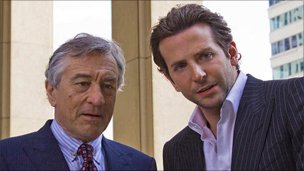 Sci-fi thriller Limitless has topped the North American film chart as box office takings continue to suffer compared with last year.
The film, starring Bradley Cooper as a writer who takes a pill to maximise his brain power, took $19m (£11.7m) in its first weekend, according to estimates.
Comedy Rango was second ahead of last week's number one, Battle: Los Angeles.
It is the fourth weekend running that overall box office takings have been down compared with last year.
Animated Western Rango, featuring the voice of Johnny Depp, took $15.3m (£9.4m) in its third weekend while alien invasion film Battle: Los Angeles took $14.6m (£9m).
The Lincoln Lawyer, a thriller starring Matthew McConaughey as a defence lawyer in a high-profile case, opened in fourth, with $13.4m (£8.3m).
Alien road trip film Paul, written by and starring British actors Simon Pegg and Nick Frost, opened in fifth, taking $13.2m (£8.1m).
Paul Dergarabedian, of box office tracker Hollywood.com, said: "The first quarter of 2011 has been one we'd like to forget with comparisons to last year making things tough, week after week."
Box office top five
- 1. Limitless - $19m
- 2. Rango - $15.3m
- 3. Battle: Los Angeles - $14.6m
- 4. The Lincoln Lawyer - $13.4m
- 5. Paul - $13.2m
Source: Hollywood.com
DJ Vybz Kartel and Manager Corey Todd " Still Friends"
Last week the ER reported there was a rumor that DJ Vybz Kartel and Manager Corey Todd, had parted ways. In a recent interview with the media Corey put those rumors to rest.
It was reported that Todd was venturing into a new business with Nite Time Entertainment and the Quad nightclub on his own, but he responded that "This is just a separate business venture. Vybz Kartel has other business ventures with other investors.
Corey also stated that he and Kartel are still friends and nothing have changed between them
Wyclef Jean, Pras And Lauryn Hill Reunite For Haiti
 Wyclef Jean, Pras and Lauryn Hill reunited last week to show support for Haitian Presidential candidate and fellow musician, Michel Martelly.
Last week Thursday (March 17), Jimmy Rosemond, Wyclef and Pras hosted a concert featuring Busta Rhymes and The Fugees, including estranged group member, Lauryn Hill.
Wyclef Jean told allhiphop: “It’s a new era in Haiti and we are campaigning for change for good in my beloved country. I had to come home as a diaspora to make a difference.”
Re-elections for the office of President of the country took place this Sunday (March 20th), after the original November election results were scrapped, due to fraud, voting irregularities and violence at the polls.
Unfortunately, Wyclef Jean was shot and injured on the eve of the election. The Fugee star is now recovering from his injuries.
Wyclef Jean: “the bullet grazed me in my right hand”
Former Fugee Wyclef Jean yesterday opened up about being shot in the Haitian capital Port-au-Prince over the weekend.
Clef who is in Haiti to support presidential candidate and fellow musician Michel Martelly, said the bullet grazed his hand as he stepped out of a car to make a call on his cellphone.
Wyclef told the associated press: “The way I can explain it is that the bullet grazed me in my right hand. I heard blow, blow, blow and I just looked at my hand.”
Jean was shot on Saturday night at approximately 11 PM in the city of Delma, just before the country’s general election. The Hip Hop veteran attempted to run for president, but called off his bid in September because he had not lived in the country in the run up to the election.
Clef was treated at a local hospital and released. The singer said he was taking antibiotics and recovering at an “undisclosed location” before going out to vote in Sunday’s presidential election.
Celebrities Raise Money for Japan Quake
Many celebrities are using their fame to aid victims of the recent Japan earthquake and tsunami. Katy Perry is donating proceeds from sales of tour merchandise to the Red Cross. In only 48 hours, Lady Gaga raised $250,000 by selling “We Pray for Japan” bracelets on her website. Linkin Park’s Mike Shinoda is designing T-shirts that will benefit Music for Relief’s support efforts. And, Blink-182 is auctioning some of its rare band memorabilia, including handwritten lyric sheets and clothing the members wore in a music video. The sale is taking place on eBay to benefit the Red Cross.
Russia Gets Giant Boost from Rising Oil Prices
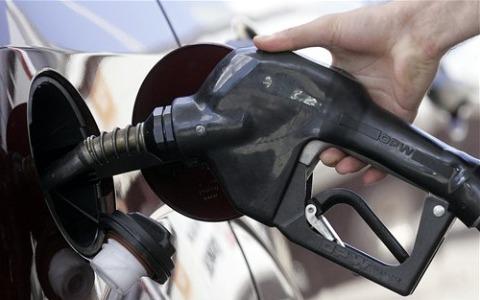 As much of the world reels from civil unrest and natural disasters, Russia is cashing in on high oil prices that may allow it eliminate its budget deficit in 2011.
Libya suspends oil exports. Political revolts put the Persian Gulf on edge. And Germany and Japan close one quarter of their nuclear reactors.
In today’s energy world, Russia seems to be the winner. Producing 11 percent of the world’s energy output, Russia is the world’s biggest energy exporter.
“This is a huge amount of energy - about five times more than Russia’s share of global GDP or population. This is the basic number,” said Leonid Grigoriev, who studies Russia’s energy economics at Moscow’s Higher School of Economics.
With prices expected to average over $100 a barrel this year, the oil bonanza is expected to erase Russia’s budget deficit this year.
This is timely for the Kremlin, which is handing out pay and pension raises as the nation starts an election cycle. The latest came Friday when President Dmitry Medvedev announced that salaries for soldiers will triple next January - just 10 weeks before election day.
Oil and gas pays for about 40 percent of Russia’s budget. Once prices rise over $27 a barrel, Russia’s Finance Ministry takes in 90 cents for each dollar.
”This is why the Russia depends so much on oil and on oil prices,” said Leonid Grigoriev. “And that’s why any turmoil in the world immediately brings money to the Ministry of Finance.”
Today, foreign currency reserves are growing at $100 million a week. By the end of March, Russia’s total reserves are to hit $500 billion - the world’s third largest, after China and Japan.
Now, economists are now raising Russia’s economic growth estimate for 2011 to five percent - the highest level since 2008, the year the economic crisis hit.
Higher oil earnings filter down to Russian consumers.
Last year, car sales and overseas travel jumped by one third. The equivalent of 10 percent of Russian took foreign vacations. Next year, Russia is to displace Germany as Europe’s largest car market. In February, Ford, GM and Volkwagen announced new joint ventures to produce more cars in Russia.
Russians spend now, because they are never certain about the future.
In one decade, the oil price gyrated wildly - from a low of $8 a barrel in 1998 to a peak of $147 in 2008.
Looking at the long term, analysts say Japan's nuclear crisis may benefit Russia by pushing the world energy pendulum away from nuclear toward natural gas. Germany imports almost half of its gas from Russia. Even before the crisis, Russia was investing to increase gas production by 50 percent over the next 20 years.
The downside is that high prices ease pressures to cut corruption, to diversify the economy and to lighten the hand of government on business.
Chris Weafer, chief strategist with Uralsib Capital, fears that the new flood of oil earnings is leading the Kremlin to slow its privatization program.
“We have seen it in the Gulf Arab countries. and we saw it in Russia in the last 10 years that as the oil price is rising governments talk about the need for reform and using the money wisely, but as the price goes up too high, the whole process slows down, people become complacent, they become lazy, they live the good life as it were, until the collapse comes,” he said. “And then then whole process starts again.”
In public opinion polls, corruption rivals food prices as the number one public complaint for Russians. According to Transparency International, Russia is the most corrupt of the Group of 20 major economies.
Last week in a speech in Moscow, U.S. Vice President Joe Biden clearly warned Russia that corruption scares away investors.
“No amount of government cheerleading or public relations or U.S. support or rebranding will bring wronged or nervous investors back to a market they perceive to have these shortcomings,” he said. “Only bold and genuine change.“
As Biden spoke, new economic data came in. Despite the oil price rises, despite the run up in the Russian stock markets, the country suffered a net loss in investment capital in February.
“Despite the stock market and despite the oil prices, people are still very skeptical that there is going to be material change in Russia,” said strategist Chris Weafer. “Right now, they are voting with their wire transfers."
Another cloud on Russia’s horizon is demographic. Over this decade, the Russian workforce is expected to shrink by 10 million people, or 15 percent.
Solutions are not popular: raising the retirement age, increasing immigration, and raising productivity through more foreign investment. And those measures will not be taken until after Russia’s presidential election - one year from now.
Tokyo Electric Power to pay farmers for radiation loss
Tokyo Electric Power (Tepco) will have to compensate farmers for losses caused by the nuclear radiation leaking from its power plants, Japan has said.
The firm will have to take responsibility, said Chief Cabinet Secretary Yukio Edano at a press conference.
Japan has banned all shipments of leaf vegetables, spinach and milk from the area around Fukushima.
The government has urged calm saying health risks are limited.
"Even if you eat contaminated vegetables several times, it will not harm your health at all," said Mr Edano.
The World Health Organisation (WHO), however, said the radiation impact was becoming more serious than first thought.
"It's safe to suppose that some contaminated produce got out of the contamination zone," said Peter Cordingley, spokesman for the WHO.
Mounting costs
Adding to Tepco's worries are the fears of contamination in the water.
High levels of radioactive iodine were detected in the water around the plant.
The government has urged some residents to stop drinking tap water.
All this is unfolding while Tepco continues to try and bring the nuclear power plant under control.
The cost of cleaning up the Fukushima Daiichi nuclear plant as well as compensating victims is likely to be in the billions of dollars for Tepco, analysts said.