
15 People Killed in Pakistan Violence
Pakistani authorities say 15 people were killed in violence across the country Monday.
In the Datta Khel area of the North Waziristan tribal region, Taliban militants shot and killed four men after accusing them of spying. Local authorities said they found the four bullet-riddled bodies with notes attached saying the men were killed for acting as U.S. spies.
In southwestern Baluchistan province, gunmen on motorcycles attacked a camp for road construction workers near the southwestern port city of Gwadar, killing 11 and wounding two others.
Authorities say the victims worked for the military-run Frontier Works Organization, which undertakes civil engineering projects across the country.
The attackers managed to flee and no one claimed responsibility for the attack.
Also on Monday, officials said more than 16 people had been killed in attacks in the southern port city of Karachi since Saturday. Authorities say those killed included activists with the Muttahida Qaumi Movement or MQM, a partner in Sindh province's ruling coalition.
The MQM, which largely represents the Urdu-speaking community, and the rival Awami National Party, representing ethnic Pashtuns, are blaming each other for the latest political violence.

Workers Evacuated as Smoke Rises From Japanese Nuclear Plant
Japanese workers were forced Monday to evacuate from the crippled Fukushima nuclear power plant after dark smoke rose from one of the facility's six reactors.
Officials said that there had been no immediate increase in radiation levels and the cause of the smoke was under investigation.
The plant's operator, Tokyo Electric Power Company, says abnormally high levels of radioactive substances have been found in the Pacific Ocean along Japan's northeastern coast. But they are not considered a threat to human health.
With the number of dead or missing from the March 11 earthquake and tsunami reaching beyond 21,000, the hope of finding any more survivors is declining. Some 350,000 have been left homeless.
The World Bank estimates that the economic cost of the disaster at $235 billion, the equivalent of four percent of Japan's annual economic output.
The head of the International Atomic Energy Agency , Yukiya Amano, told reporters in Vienna on Monday that while the situation at the Fukushima plant is serious, he remains confident the crisis will be “effectively overcome.”
The Japanese government has suspended all raw milk shipments from Fukushima and spinach from all four prefectures surrounding the plant after unacceptably high radioactive levels were found in the products. But government officials added that the levels did not pose an immediate health risk.
The U.S. government Monday made potassium iodide available to U.S. personnel and dependents in several prefectures, including Tokyo, as a precautionary measure. Potassium iodide protects the thyroid gland against radiation.
Libya Releases 4 New York Times Journalists
Libya's government has released four New York Times journalists, six days after they were captured by pro-government forces while covering a rebel uprising in the country's east.
Libyan authorities handed the journalists to Turkish diplomats in the capital, Tripoli, on Monday. Turkey says it helped to secure the release of the four and expects them to leave Libya within hours.
The released journalists include New York Times Beirut bureau chief Anthony Shadid, photographers Tyler Hicks and Lynsey Addario, and videographer Stephen Farrell.
The newspaper says the four were detained last Tuesday while covering the conflict between government and rebel forces in the eastern town of Ajdabiya. It says they had crossed from Egypt into the rebel-controlled eastern region of Libya without visas, like many other Western journalists.
Several foreign journalists have been detained or gone missing in Libya since February 15, when the uprising against Libyan leader Moammar Gadhafi began.
Among the missing are two journalists with the French news agency, AFP, and a photographer accompanying them.
AFP said Sunday its reporter Dave Clark and photographer Roberto Schmidt were last in contact on Friday night, when they sent an email saying they planned to travel to an area 35 kilometers outside the eastern city of Tobruk.
AFP said the two journalists were accompanied by Joe Raedle, a photographer for the Getty Images agency. It said the three planned to meet opponents of Gadhafi and speak with refugees fleeing the fighting.
On Sunday, Qatar-based television network Al Jazeera said Libyan authorities arrested four of its journalists who had been working in western Libya. The network said "regional parties" are helping to secure their release.
Putin, Medvedev Engage in Rare Public Split Over Libya
In a rare split between Russia’s two top leaders, Russian President Dmitry Medvedev calls Prime Minister Vladimir Putin’s comments on Libya "unacceptable” Russia’s ruling duo is like the national symbol, the two-headed eagle. President Medvedev looks west. His political mentor, Prime Minister Putin, looks east. For the last three years, the two have managed to hide their differences and run the country together.
But now public tensions are emerging - over Libya.
Mr. Putin, visiting a military armaments factory, denounced the United Nations resolution allowing military action in Libya as "a medieval call to crusade."
The nations sending war planes on bombing missions to Libya include Britain, France and Italy. During the Middle Ages, British, French and Italian knights joined Christian crusades against Islamic rulers in the eastern Mediterranean.
In response, President Medvedev donned a leather bomber jacket, and gave a press conference in a pine forest to rebut such loaded language.
He said, "Under no circumstances it is acceptable to use expressions which essentially lead to a clash of civilizations, such as ‘crusade’ and so on."
He defended his government’s decision to abstain on the U.N. resolution - a measure he said was only partly flawed. In fact, he said, "I do not believe this resolution to be wrong."
A few hours earlier, Mr. Putin had called the resolution "defective and flawed."
Fyodor Lyukanov, editor of Russian in Global Affairs magazine, said it sounded as if Mr. Putin found Russia’s failure to veto the resolution offensive. "It looks like Putin felt obliged to publicly differentiate his position from Medvedev’s, because Medvedev’s decision to abstain in the Security Council was probably not what Putin would like to see as [a] Russian vote," he said.
Mr. Putin, on a tour of a ballistic missile assembly line in central Russia, delved even further into foreign policy. "This U.S. policy is becoming a stable trend," he said.
Citing American air strikes on Belgrade and the wars in Iraq and Afghanistan, he said, "Now it is Libya’s turn under the pretext of protecting civilians. Where is the logic and the conscience? There is neither."
Back in Moscow, Mr. Medvedev stressed to his pool of reporters that Western military action in Libya is "the result of the appalling behavior of the Libyan leadership and the crimes it committed against its own people."
One year from now, Russians are to vote for president. Today, political watchers are scrutinizing the tandem for cracks that might point to the next official candidate.
The Obama administration is making little secret of its preference for Mr. Medvedev. When U.S. Vice President Joe Biden visited Moscow two weeks ago, he showered praise on Russia’s president, and quoted him approvingly seven times in his major address here.
On Tuesday, U.S. Defense Secretary Robert Gates is to meet in Moscow with President Medvedev and other high officials. His schedule does not list a meeting with Prime Minister Putin.
Barbados in worse economic position, says opposition leader
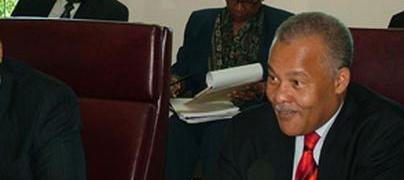 Barbados opposition leader, Owen Arthur, has painted a gloomy picture of the state of the country’s economy.
Speaking at the Budget presentation on Monday, Arthur said that, if the country is faced with a severe economic and financial crisis before the budget presentation, it will continue to do so or even get worse after the estimates are put into effect.
The former prime minister said that Barbados economy, which was the second best in the region, is now one of the poorest -- below Trinidad and Tobago, Jamaica, Belize, ECU and Bahamas.
He added that the December report indicated that not only has Barbados' fiscal position, as measured by the overall fiscal deficit, deteriorated significantly but, he said, it has also dropped significantly in comparison to the rest of the region.
The Barbados Advocate reported that Arthur said that there are signs of deterioration in the country's foreign exchange earning capabilities, and also faced with an unsustainable fiscal situation that "is already beginning to erode the foundations of the stability of the Barbados economy."
Arthur contended that, while the Barbadian economy continues to deteriorate, other Caribbean countries facing the same situation are finding ways to consolidate and improve their situation.
He called for more vision on the part of the administration.
Heated debate forces early adjournment of extradition enquiry in Jamaica
Heated argument among the attorneys present forced the chairman of the Commission of Enquiry looking into the extradition of Christopher ‘Dudus’ Coke to adjourn Tuesday's session prematurely.
Attorney general and minister of justice, Dorothy Lightbourne, was under cross examination by Patrick Atkinson, attorney for Dr Peter Phillips, when the adjournment was taken.
The Jamaica Observer reported that there more suggestions that Lightbourne acted corruptly in her dealing with the Coke extradition.
But Lightbourne steadfastly maintained that there was no corruption in the handling of the matter.
From the outset of his cross-examination, Atkinson suggested that she was motivated by an intent to have the August 25, 2009, extradition request withdrawn by the United States.
"My position most certainly was not to have the request withdrawn by the United States of America," responded Lightbourne.
Asked if it was appropriate for the governing Jamaica Labour Party (JLP) to take the initiative to set up meetings between the government of Jamaica and agents of the US government, Lightbourne responded that countries and governments lobby all the time.
On Monday, Lightbourne was accused by K. D. Knight QC, representing the opposition People's National Party (PNP), of corruptly using her office to protect the political career of Prime Minister Bruce Golding and the political interest of the JLP.
Lightbourne emphatically rejected the charge made by Knight, who had been grilling her for days during the Enquiry.
The Jamaica Gleaner reported that Knight repeatedly accused the minister of acting corruptly under the guise of protecting Coke's constitutional rights.
He also accused her of employing delay tactics in a bid to preserve Coke's political power. But the minister dismissed the accusations and stoutly maintained that she had acted to protect Coke's constitutional rights in her handing of the extradition request from the United States.
"Miss Lightbourne, you sought information on this in order to delay the extradition request and you did so by the corrupt use of your authority," asserted Knight.
"That is absolutely untrue and not necessary," Lightbourne responded.
The enquiry continues.
Bahamas fiscal deficit deepens 22 percent to $216m
The first half of fiscal year 2010/2011 showed a $38.9 million increase in the Bahamas government’s deficit, expanding 22 percent to $215.9 million year-over-year.
According to the Central Bank of The Bahamas’ January Monthly Economic and Financial Developments report, the decreased expenditure of $16.5 million, or 2 percent, was insufficient to offset the fall-off in total receipts of $55.4 million, or 8.8 percent.
Total receipts for the July to December 2010 period came in at $573.5 million and despite the aggregate decline year-over-year, its largest component -- tax receipts -- showed a slight increase of 1.5 percent, up to $507 million. The report credited a 6.5 percent gain in the international trade taxes classification, which includes import taxes, stamp taxes on imports, excise taxes, export taxes and stamp taxes on exports.
Selective taxes on services, the classification that gaming and hotel occupancy taxes fall under, were up 40.9 percent for the period. The amount of this contribution was small, coming in around $6.4 million according to the prime minister’s recent mid-year budget statement to Parliament. He credited the increase in the room tax rate for the increase, which Guardian Business has learned was about $2 million.
The overall decrease in receipts for the period came from the “Miscellaneous” sources classification, which saw a 76.5 percent reduction from the previous period’s mid-year position. The 2009/2010 position included $64 million in stamp duty from the South Riding Point, Grand Bahama, sale to Statoil.
But one-offs for this fiscal year are likely to more than make up the number in the miscellaneous category over the next few months. The sale of the Bahamas Oil Refining Company (BORCO) in January is estimated to bring over $60 million in stamp revenues, for example. Real estate and mortgage transactions from the Baha Mar deal, and the sale of the governments’ BTC position for $210 million along with the $7 million stamp duty on that deal, should further boost total receipts.
Aggregate expenditure came in at $789.4 million for the period, down $16.5 million or 2 percent year-on-year. The reduction was due to a drop of around 66 percent in net lending to public sector entities, according to the report.
Recurrent expenditure, the largest contributor to aggregate expenditure, was up 3.18 percent to $687.1 million, influenced by an 11.5 percent increase in the purchases of goods and services, and a 5.8 percent increase in transfer payments. Outlays for infrastructure decreased for the period, resulting in a $0.5 million capital spending reduction and bringing that total to $79.9 million.
Labour Ministry Completes ILO Recommendations On Tornado Safety
On March 29, 2010 a tornado struck the Container Port in the Bahamas killing three people and injuring several others.
Through the Department of Labour, Mr. Foulkes said the government commissioned an ILO expert to investigate and suggest what preventative measures could have been taken.
The ILO specialist presented the report, which was later tabled in the Senate.
That report made several recommendations for the government.
"The Occupational Safety and Health is governed under the 2002 Health and Safety at Work Act. While the Act has a good general framework, it can be strengthened by the development of regulations specific to different economic sectors," the report said.
"Consideration should be given to amending the Health and Safety at Work Act in order to more closely accord with the provisions of the ILO’s Safety and Health Convention, The Bahamas should formally ratify the main Occupational Safety and Health Convention 198 and Protocol 2002 related to recording occupational accidents."
The report said The Bahamas should also develop a set of technical regulations defining occupational health and safety requirements for particular occupations and hazards and strengthen and expand the Occupational Health and Safety training of labour inspectors.
"The Bahamas should participate in regional occupational safety networking systems which are designed to exchange information," the report said.
The report also suggested that government officials advance the professional certification of occupational health and safety practitioners in order to ensure that skills and experience in this area are updated periodically.
During his contribution to the mid-year budget yesterday Mr. Foulkes said, "All recommendations have been acted upon and completed."
"One such recommendation was that Labour Officers receiving training in Maritime Port Inspection. Officers of the Department of Labour did receive the necessary training and now are able to put protocols in place to further ensure the safety of workers at various posts," said Mr. Foulkes.
"When ILO Director, Dr. Cleopatra Doumbia Henry visited the Container Port last month while attending the Bahamas International Maritime Conference And Trade Show (BIMCATS) Conference, she was impressed by the measures that had been put in place."
UK air passenger tax discriminatory, says CARICOM acting secretary general
In a first ever Caribbean Tourism Summit held in Europe, CARICOM acting secretary-general Lolita Applewhaite laid out the region’s case against the UK’s Air Passenger Duty (APD) on outgoing flights and other increases to aviation taxation.
“We view the APD as discriminatory against Caribbean destinations and Caribbean people living in the United Kingdom seeking to travel to the region,” Applewhaite said in her address to summit delegates in Brussels, Belgium on Monday.
Applewhaite said that she viewed aviation taxes as a tax on the development of the region, due to the significance of tourism to Caribbean economies and the fact that aviation is the only practical way for Europeans to access these markets.
Looking forward, however, the acting secretary-general said this revenue-raiser for the UK may only be the beginning of moves that disadvantage the Caribbean.
“It is clear that even if the particular design problems that the Caribbean is seeking to have addressed in relation to the UK APD are resolved, this tax could be only the tip of the iceberg that may eventually come to include all aviation and maritime transport,” Applewhaite said. “Similar unilateral measures have also been introduced by other countries in Europe.”
The European Union’s (EU) decision to bring aviation into the Emissions Trading Scheme (ETS) to be imposed from 2012 is another troubling concern, according to Applewhaite. She called the EU’s decision to add aviation to the ETS before a global approach was agreed “unfortunate.”
“Aviation and sea transport were not included in the Kyoto Protocol on Climate Change due to difficulties in assigning emissions to any specific country,” Applewhaite said. “At the 37th ICAO Assembly held in Montreal, Canada last year there was general consensus on the need for a multilateral approach once general principles had been agreed on the implementation of market-based measures for international aviation.”
Applewhaite said that according to Standard and Poor’s, passengers could face a rise in airfares of up to 40 euro per ticket once aviation is included in the ETS. She acknowledged that the way airlines dealt with the additional cost would impact how much passengers ultimately must bear, but also said the amount assumes that the cost of carbon, currently traded on international markets, remains relatively low.
The CARICOM executive highlighted the vulnerability of the Caribbean region to climate change, and called for a multilateral approach which did not disadvantage a particular mode of transportation and was development oriented.
UK’s APD is imposed on all passengers departing airports in the UK and, according to a Bahamas Ministry of Tourism release, accounted for GBP 1.9 billion in revenue for the UK in 2009/2010. The APD was introduced in 1994 as a “green tax”, and initially expected to decrease the impact of aviation on the environment. According to the Ministry of Tourism statement, however, there has been no indication as to how those billions were applied.
The 1994 form of the APD taxed passengers based on whether they were traveling to European or non-European destinations. Under the first iteration of the APD, passengers to The Bahamas, the Caribbean, Florida or Hawaii, for example, all paid GBP 40 in APD.
However, in April 2009, UK’s Labour Government changed the banding system, creating four tiers based on how far a country’s capital city was from London. The result was that travelers departing UK airports to Miami or Hawaii paid an APD of GBP 60 for an economy fare, while a visit to Nassau or Kingston would have incurred a duty of GBP 75 -- the same amount that a Singapore-bound traveler would pay. Miami and Nassau are less than 200 miles apart as the crow flies. The duty doubled if a passenger traveled in a premium class rather than economy.
As the region seeks to develop tourism from developing markets such as Central Europe, China and India, such taxation may be a further detriment to the development of these markets.
In a November 2010 Caribbean Tourism Organisation (CTO) report, “The Impact of Air Passenger Duty and Possible Alternatives for the Caribbean”, an average decline of 10.8 percent was reported for stopover arrivals from the UK between 2009 and 2010. Annual traffic data to a popular Internet flight booking service, Cheapflights.co.uk, showed a similar drop. According to the report, there was an annual average drop of 11.6 percent in Caribbean destination searches in September 2010 compared to the previous year, suggesting the APD might be impacting on perceptions of costs, the report said.
Oil Prices Drop on Fears for Japan's Economy
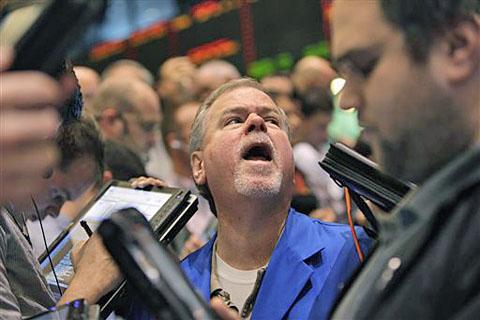 World oil prices are dropping because of fears the earthquake and tsunami in Japan will weaken the country's economy and curtail its demand for oil.
Oil recently has been trading at two-year highs. The violent conflict in Libya sharply cut its production and generated fears that the political unrest there could spread to other oil-producing countries in the Middle East, further reducing the world supply.
But those fears were outweighed Tuesday by worries that Japan, the world's third biggest oil importer, would at least in the short term limit its imports. Part of Japan's economy has already stalled as the country copes with the vast damage from last Friday's earthquake and tsunami and attempts to contain radiation leaks at some of its nuclear reactors.
Major Japanese industrial operations have already shut down. Sony, the country's biggest consumer electronics exporter, has stopped operations at 10 factories, while Toyota, the world's biggest automaker, has closed all of its plants.
The benchmark price for Brent crude oil on the London market fell to about $108 a barrel, down sharply from recent trading that had pushed the price close to $120. In New York, the price for U.S. crude dropped below the recent $100-per-barrel mark to the $97 range.
Analysts said Japan's oil imports could expand again as the country starts to clean up the damage and rebuilds the northeastern sector of the country that was swept away by the tsunami.