
Portugal hit by debt downgrade from ratings agenc
International ratings agency Moody's has downgraded Portugal's sovereign debt rating, citing the country's need to cut debt and its poor growth prospects.
Meanwhile Portugal's main opposition party has announced it will oppose the government's austerity plans.
The prime minister has warned the country could face a bail-out.
"The consequence of a political crisis would worsen the risks for our economy and lead to intervention," he said.
Portugal is burdened with high levels of debt, and is struggling to avoid an international bail-out similar to those of Greece and the Republic of Ireland.
Political deadlock
The government of Prime Minister, Jose Socrates, unveiled the latest in a series of austerity measures last Friday.
The plans, which included cuts to health and welfare budgets, were meant to reassure investors and fellow European Union members that it can meet its debt obligations without the need for outside help.
However, the austerity package has met with fierce opposition, and the prime minister has warned that if the measures fail to win support, his country may be forced into a bail-out.
The main opposition party has now decided to formally oppose the plans which could lead to political deadlock.
This could bring down the current minority government forcing a general election.
"I have been fighting to avoid this scenario for six months," Mr Socrates told Portuguese television.
Negative outlook
Ratings agency Moody's has decided to downgrade Portugal's sovereign debt rating by two notches from A1 to A3.
"The cost of market funding is likely to remain high until the deficit has been reduced to a sustainable level and the prospects for economic growth have improved," it said in a statement.
The downgrade will make it more expensive for Portugal to raise money on the international money markets.
Moody's has also given a negative outlook on the new rating, which means its rating could be downgraded further.
This indicates that Moody's is unsure that the Portuguese government will be able to deliver on the reforms it has recently announced.
Standard and Poor's, another ratings agency, recently announced that it is also reviewing Portugal's debt rating.

Japan's Nikkei 225 rebounds as economic concerns ease
Japanese stocks rebounded as concerns over the long-term impact of Friday's earthquake and tsunami on Japan's economy ease.
The Nikkei 225 index gained 4.3% by midday Wednesday.
On Monday and Tuesday, the index dropped more than 16%, its biggest two-day fall in 23 years.
Investors are optimistic about a recovery in the economy despite reports of another fire at the Fukushima Daiichi nuclear plant.
However, analysts warned that the markets will remain volatile in the short term.
"The nuclear crisis still looms large," said Hiroichi Nishi of Nikko Cordial Securities.
"We'll have to see investors' reaction to the latest news about the nuclear plant," he added.
Stocks of financial companies, exporters and car companies like Toyota and Nissan Motors are amongst the big winners.
These sectors and stocks were amongst the hardest hit in the sell-off following the earthquake and tsunami.
'Panicked too much'
But whilst there is optimism in the air, many analysts believe there are other factors to consider.
"The rebound is pretty strong as investors realised they may have panicked a bit too much yesterday," said Fujio Ando of Chibagin Asset Management.
Mr Ando believes that the markets may be distorted as traders try to cover bets they took that the market will continue to fall.
Many traders borrow shares they don't own promising to repay them at a later date at a fixed price.
They then sell the shares, hoping to buy them back at a cheaper price in a falling market, thus making a profit on the difference, a practice called short selling
"It's mostly short covering by both domestic and foreign players, and not honest, active buying, because nuclear worries are still strong," Mr Ando said.
The BOJ injects $43bn to shore up the financial markets
The Bank of Japan has pumped an extra 3.5 trillion yen ($43bn; £27bn) into the financial markets on Wednesday.
The injection comes after the central bank announced a cash input of 23tn yen ($284bn) on Monday and Tuesday.
The Bank of Japan has been pumping cash into the banking sector to shore up consumer confidence and maintain liquidity.
Japan's main Nikkei 225 index gained 6% in early trade on Wednesday after two days of massive sell-offs.
Currency issues
Analysts said the the central bank's decision to pump in further cash into the markets may also be influenced by a rising yen.
The Japanese currency has been gaining against the US dollar as Japanese companies and insurers send home cash to fund reconstruction.
That boosts demand for the yen, thus pushing up the price.
A stronger yen is damaging for the export-dependent Japanese economy.
Not only does it make its goods more expensive, it also eats into the profits of companies when they transfer their foreign earnings back home.
On Tuesday, Japan's Finance Minister, Yoshihiko Noda, said that the government is watching the movements in the yen price closely.
Cuba devalues currency to match US dollar
Cuba is devaluing its currency by about 8% compared to the US dollar as part of efforts to revive the economy.
The hard-currency convertible peso used mostly by tourists and foreign firms will now be on a par with the dollar.
The central bank said the aim was to boost exports and local production.
The move will increase the value of remittances received by many Cubans with relatives in the US, and is intended to make the island more affordable for tourists.
The government says it keep a 10% tax on exchanges with the dollar, which it describes as compensation for the "irrational and unjust" US economic embargo.
Each convertible peso will still be worth 24 of the standard pesos in which most Cubans are paid under the communist island's two-tier currency system.
It is the first time Cuba has revalued its currency in six years.
The decision will make foreign imports more expensive, but the government said it hoped to compensate for this by increasing domestic production, especially food.
Debt progress
In a statement published in the official communist party newspaper, Granma, central bank president Ernesto Medina said limits placed on payments to foreign companies introduced in 2008 had also been reduced.
He added that there had been "significant advances" in the renegotiation of debt with Cuba's main foreign creditors.
Last year Cuba launched a programme of major economic changes designed to reduce the state's overwhelming role in the economy and promote private enterprise.
Under the plan announced by President Raul Castro last September around a million state workers were due to be laid off and encouraged to find new jobs in the private sector.
Thousands have already applied for licenses to set up small businesses, although the timetable for redundancies has been delayed.
The changes to Cuba's socialist system are due to be discussed at a rare Communist Party Congress in April.
President Castro has said that the changes are vital to overhauling the economy, which is burdened by debt and the effects of the long-standing US trade embargo, as well having to fund costly social programmes,
Official: Remaining Workers Evacuated From Stricken Nuclear Plant
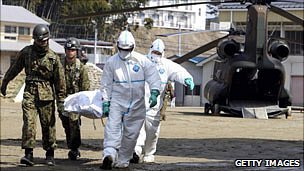 Japanese officials have suspended operations aimed at preventing a stricken nuclear plant from melting down, after a surge in radiation made it too dangerous for workers to remain there.
The chief government spokesman, Yukio Edano, told reporters that radiation levels at the quake-stricken Fukushima plant spiked at mid-morning. He said the remaining workers at the plant were evacuated to a safe area, because of the risk posed by the increased radiation.
Edano said levels have now receded somewhat, and that officials are monitoring them to determine when it would be safe to send the workers back into the plant.
Early Wednesday, what appeared to be white smoke was rising from one of the reactors at the plant, which was crippled by last week's devastating earthquake and resulting tsunami. Edano said officials were trying to determine the cause of the smoke, but that the most likely cause is steam escaping from a ruptured containment vessel in one of the reactors.
Japan's government is trying to avert a major nuclear disaster from the crippled plant. Tens of thousands of people have been evacuated from a 20-kilometer area around the facility.
Authorities also are rushing doctors and emergency supplies to thousands of people who have been left without food, water and shelter following the 9.0 magnitude earthquake and subsequent tsunami. Japan's NHK television on Tuesday quoted government officials as saying that 3,000 are confirmed dead, but more than 10,000 are missing and feared dead.
The scale of the triple disaster is enormous. U.N. Office for the Coordination of Humanitarian Affairs spokesperson Stephanie Bunker told VOA Tuesday she has not seen a disaster quite like this before.
Television pictures from hard-hit Sendai show people lined up for water and canned food, and some stores rationing food sales to 10 items per person. In other areas, the 100,000 personnel deployed by the government are attempting to rescue survivors stranded by the flood waters and mountains of debris.
Rescue crews still are struggling through debris-blocked roads to get to hundreds of thousands of people whose towns and villages were leveled by Friday's earthquake and tsunami.
The government says 15,000 people have been rescued and 450,000 have been evacuated nationwide.
Fire in Japan’s Troubled Nuclear Power Plant
A new fire has broken out at a troubled reactor of northeast Japan's quake-damaged Fukushima nuclear power plant.
The plant's operator, Tokyo Electric Power Company, says the new fire started early Wednesday in the same reactor that had been on fire the day before. Japanese television showed a huge cloud of white smoke rising from the stricken plant at mid-day Wednesday.
The government also reported damage to the protective container shielding another Fukushima reactor . There have been explosions at two reactor locations inside the plant since the massive earthquake and tsunami damaged the facility on Friday.
Japan's government is trying to avert a major nuclear disaster from the crippled plant. About 200,000 of people have been evacuated from the area.
Authorities also are rushing doctors and emergency supplies to thousands of people left without food, water and shelter after the disaster.
Japan's NHK television on Tuesday quoted government officials as saying that 3,000 are confirmed dead, but more than 10,000 are missing and feared dead.
The scale of the triple disaster is enormous. U.N. Office for the Coordination of Humanitarian Affairs spokesperson Stephanie Bunker told VOA Tuesday she has not seen a disaster quite like this before.
Television pictures from hard-hit Sendai show people lined up for water and canned food, and some stores rationing food sales to 10 items per person. In other areas, the 100,000 personnel deployed by the government are attempting to rescue survivors stranded by the flood waters and mountains of debris.
Rescue crews still are struggling through debris-blocked roads to get to hundreds of thousands of people whose towns and villages were leveled by Friday's magnitude-9 earthquake and subsequent tsunami.
The government says 15,000 people have been rescued and 450,000 have been evacuated nationwide.
Prosecutors: Berlusconi Had Sex with Teenage Girl 13 Times
Italian prosecutors say Prime Minister Silvio Berlusconi and a suspected teenage prostitute engaged in sex acts at his house 13 separate times.
The prosecutors wrapped up their investigation into allegations that Mr. Berlusconi paid an underage girl for sex — a crime in Italy. They also recommend that three friends of Mr. Berlusconi be tried on charges of procuring prostitutes for dinner parties at his house.
The alleged prostitutes include the young Moroccan nightclub dancer called “Ruby,” who is at the center of the Berlusconi sex scandal. She and other girls allegedly were brought to the prime minister's home for dinner, at which time he allegedly would choose one or more of the girls for sex.
Mr. Berlusconi goes on trial April 6 on charges of paying Ruby for sex last year when she was just 17 years old — a charge both deny. Mr. Berlusconi calls himself a victim of left-wing politicians.
Prostitution is legal in Italy, but not with women younger than 18.
Moderate Earthquake Shakes Uganda
A moderate earthquake shook parts of Uganda Tuesday, but there were no immediate reports of damage.
The U.S. Geological Survey says the preliminary magnitude of the quake was 5.0.
Its epicenter was in the Lake Albert region of the country, about 200 kilometers northwest of the capital, Kampala.
The USGS says the earthquake struck at a depth of 10 kilometers.
Petraeus positive about US Afghanistan progress
The US commander in Afghanistan has said the Taliban's momentum has been halted in key areas, keeping the US on course to start withdrawing in July.
Gen David Petraeus, commander of US forces in Afghanistan, was giving his first formal assessment to Congress since taking over the role last June.
He said progress so far meant officials could recommend shifting some control to the Afghan forces in the spring.
US forces in Afghanistan number 97,000, alongside 45,000 from Nato allies.
Gen Petraeus took over command of US forces in Afghanistan after Gen Stanley McChrystal was asked to step down in June 2010.
Testifying before the Senate Armed Services Committee, Gen Petraeus said that the Taliban's momentum "has been arrested in much of the country and reversed in a number of important areas".
He said he was optimistic about the course of the fight going forward, after the coalition's recent military successes.
"We believe that we will be able to build on the momentum achieved in 2010, though that clearly will entail additional tough fighting," he said.
However, he warned that the successes so far were "fragile and reversible" and that adequate funding was necessary to avoid jeopardising military gains to date.
"I am concerned that levels of funding for our State Department and USAID partners will not sufficiently enable them to build on the hard-fought security achievements of our men and women in uniform," he said.
In his opening statement, Senator John McCain, the top Republican on the Armed Services panel, suggested that "strategic patience" should be cultivated.
"This patience will be all the more essential as we wrestle with two other key challenges," he said.
"The first is governance and corruption. American taxpayers want to know that the vast resources they are committing to this war effort are not being wasted, stolen, or misused by Afghan officials.
"A second key challenge stems from Pakistan."
Members of Congress are due to roll out a resolution calling for Mr Obama to withdraw US forces from Afghanistan either in 30 days or no later than the end of 2011.
The measure represents impatience with the war and increasing budget pressures, but it has failed in the past and is likely to fail again.
Gen Petraeus made his comments as a new ABC News-Washington Post poll showed a record low in support for the war in Afghanistan among American.
Only 31% of those surveyed said the decade-old war had been worth fighting, with 64% saying it was not worth fighting.
The poll also suggests 73% of Americans believe the US should withdraw a substantial number of its combat forces from Afghanistan this summer, but only 39% think it will.
Last week US defence secretary Robert Gates, on an unannounced visit to Afghanistan, said the US was "well-positioned" to begin withdrawing troops from Afghanistan in July.
He also apologised over the deaths of nine Afghan boys the weekend before in a Nato air strike.
President Barack Obama has said that civilian deaths are the main cause of a worsening in the relationship between Afghanistan and the US.
Track N Field in Provo starts on Wednesday
 Track & Field in the Turks & Caicos Islands will culminate at the National Stadium tomorrow Wednesday March 16th & Thursday March 17th,2011.
High Schools & Invitational groups will do battle on the track for medals, trophies and the quest to be number one.
Defending Champions HJ Robinson from Grand Turk will return to the city Providenciales to defend their championship. Second place rivals Clement Howell from Blue Hills will be aggressive as they felt they were robbed of the 2010/2011 Championships.
Head Coach for HJ Robinson told RTC Sports, 'We have better caliber athletes with a heart of gold and that's what we are carrying back to the capital of Grand Turk.' Other strong contenders are Marjorie Basden from South Caicos & Raymond Gardiner from North Caicos.
Clement Howell Principal Mr. Lloyd Ferron told RTC Sports that HJ was a little lucky but their luck will run out over the next two days. RTC will have the action live on radio and via www.rtc107fm.com.
Sports Watch analysts Donavan Fulford, Rex Swann & Eddie Astwood will be joined by their commentators, track stars past and present to highlight this years prestigious event.
The TCI Sports Commission Director Mr. Alvin Parker has said in his release that this years event is a must see. Mr. Parker believes this will be the biggest event yet. He anticipates us witnessing great races, broken records and is inviting the nation at large to be apart of this years event.
Gates to the stadium opens at 8am with action kicking off at 10am.