
Kanye Wins Again; 'Stronger' Copyright Lawsuit Tossed
Kanye West claimed another victory in court late last week, when a judge threw out a copyright infringement case against the rapper/producer.
Kanye was sued in June of 2010 by songwriter/producer Vincent "Vince P." Peters, who claimed that he produced and wrote Kanye's hit single "Stronger" from the hit album Graduation.
Peters claimed he gave the track to Kanye's longtime business associate John Monopoly in 2006, who played his version for Kanye.
West has emerged victorious in the lawsuit, as Illinois Judge Virginia Kendall through the case out of court last week.
Judge Kendall ruled that the songs were not substantially similar and dismissed Peters' case.
The news comes on the heels that Kanye recently reached a confidential settlement with former Death Row Records' mogul Marion "Suge" Knight, who sued the Chicago artist after he was shot at a pre-VMA party in 2005.

Suge Knight, Kanye West Reach 'Confidential' Settlement
Former Death Row CEO Marion "Suge" Knight has dropped his appeal of a lawsuit involving rapper/producer Kanye West.
Suge Knight took Kanye to court over medicals bills that stemmed from an August, 2005 shooting at a pre-VMA that was hosted by West at The Shore Club.
The party was attended by celebrities like Game, Paris Hilton, Black Eyed Peas, Eddie Murphy and others.
Knight attempted to sue Kanye West for millions, after he was shot in the leg and suffered from a shattered femur.
Additionally, Knight attempted to charge Kanye for a $135,000 earring that was stolen during the melee.
The case was thrown out in November, when a judge ruled that there was no evidence to support Knight's claim that security had been negligent by allowing someone with a gun to enter the club, where security was supposed to be tight.
According to the Associated Press, both sides have reached a confidential agreement to settle the case out of court.
Akon Sues Talent Agency For $750K Over Secret Bookings
Producer/singer Akon is suing a talent agency against his former booking agency American Talent Agency (ATA), claiming the company has held on to hundreds-of-thousands of dollars of performance fees.
Akon and his company Kon Live Touring Inc. filed the lawsuit yesterday (March 4th) in United States District Court for the Southern District of New York, for breach of contract, trademark infringement and unjust enrichment.
According to the complaint, Akon terminated his agreement with ATA in September of 2010, claiming the company was booking unapproved appearances for Akon, in addition to failing to pay earned performance fees.
Akon claims he ordered ATA to stop using his name, image and likeness for commercials purposes, but the company secretly booked him in places like Dubai, India, Nigeria and Singapore.
The lawsuit claims ATA wrongfully kept deposits from promoters who thought they would secure Akon at special events.
Akon's lawsuit claims Kon Live Touring is owed over $750,000 and continues to represent Akon on their website.
Akon, who's stable of artists includes Lady Gaga, Ya Boy, Colby O'Donis, Ray Lavender, and others, is represented by Creative Artists Agency, LLC.
Libyan opposition briefly detains, then frees British troops
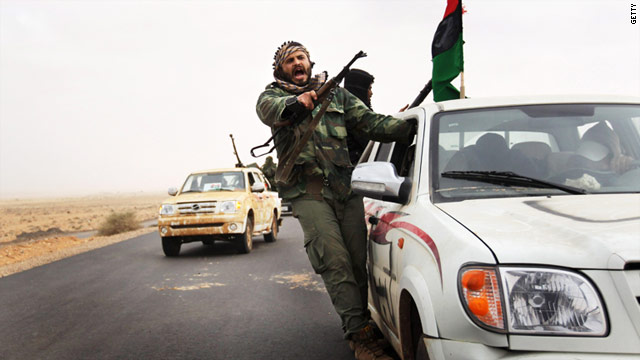 A group of British special forces who were briefly detained by the opposition in eastern Libya have left the country, along with a diplomat, sources told CNN Sunday.
In a statement, British Foreign Secretary William Hague described the group, and their release, in more vague terms.
"I can confirm that a small British diplomatic team has been in Benghazi. The team went to Libya to initiate contacts with the opposition. They experienced difficulties, which have now been satisfactorily resolved. They have now left Libya," Hague said in a statement.
"We intend, in consultation with the opposition, to send a further team to strengthen our dialogue in due course. This diplomatic effort is part of the UK's wider work on Libya, including our ongoing humanitarian support. We continue to press for Gadhafi to step down and we will work with the international community to support the legitimate ambitions of the Libyan people."
Sources said the forces were leaving on board the British warship HMS Cumberland.
Earlier, two sources close to the Libyan opposition told CNN that negotiations between senior British officials and senior opposition leaders in Libya were under way to secure the release of the eight British special forces troops.
The Sunday Times of London reported that the unit of "up to eight men" was being held after "a secret mission to put British diplomats in touch with leading opponents of Moammar Gadhafi ended in humiliation."
British Prime Minister David Cameron said last week his government wanted to contact the opposition to find out who they were and what they wanted.
The newspaper said opposition figures were angry about the "intervention" of special forces troops and "ordered the soldiers to be locked up on a military base."
In an interview with the BBC, British Defense Secretary Liam Fox -- in response to a question -- said there was no plan to use British land forces on the ground in Libya.
Three Dutch Navy troops were held in Libya on February 27 during what the Dutch Ministry of Defense called an effort to evacuate a Dutch citizen from Libya.
Their helicopter was prevented from taking off by forces loyal to Gadfahi, the Netherlands said Thursday, four days after the event. It had kept the capture secret until then for security reasons, the ministry said.
"Intensive diplomatic talks" were underway as of Thursday, it said. There has been no further update since then.
Thousands Protest at Bahrain Prime Minister's Office
Thousands of anti-government demonstrators in Bahrain rallied Sunday outside the prime minister's office -- their latest push in a weeks-long campaign for political reform.
The protesters chanted slogans against the ruling family. Prime Minister Sheikh Khalifa bin Salman al-Khalifa has been in power for 40 years and is the uncle of King Hamad bin Issa al-Khalifa.
The Shi'ite-led opposition in the small Gulf island nation has been demanding the resignation of the entire government, which is dominated by the al-Khalifa family.
Protesters say they want the Sunni monarchy to transfer powers to an elected government that is representative of the Gulf state's majority Shi'ites.
The opposition also complains about unemployment being particularly high among Shi'ites. It claims that the government grants Bahraini citizenship to Sunni foreigners, which the opposition says takes away jobs Shi'ites can potentially access and boosts Sunni numbers in the small Gulf state.
In a move analysts say is a gesture toward the opposition, King Hamad has ordered the creation of 20,000 new government jobs.
A government crackdown on opposition protests that began February 14 killed seven demonstrators before the island state's rulers agreed, under pressure from their Western allies, to allow peaceful demonstrations to continue.
Manama's Pearl Square has been the epicenter of the protests.
Center-Right Coalition Takes Lead in Estonia General Election
Early results from Estonia's general election show the country's two-party center-right coalition taking an early lead, receiving 58 percent of votes counted.
The Electoral Commission results, from early and online voting, show the Reform Party of Prime Minister Andrus Ansip winning 34 percent and its coalition partner, the Pro Patria and Res Republica Union, with 24 percent.
The coalition is aiming for a majority in Estonia's 101-seat parliament. Right now they govern in a minority with 50 seats.
Several opinion polls show Mr. Ansip's coalition being elected to a second term. However, some say he may need to negotiate with a third party to secure a majority.
The opposition Social Democrats so far have received 18 percent of the votes while the opposition Center Party has won 14 percent.
A full preliminary vote count is expected late Sunday.
In January, the Baltic country of 1.3 million people became the 17th European nation to adopt the euro.
Mr. Ansip has been credited with steering the country's economy out of a deep recession back to growth after it shrank by more than 14 percent during the 2009 recession. Estonia remains one of the poorest countries in the EU with jobless rates at one point reaching 20 percent.
Fighting Erupts on Ivory Coast Western Border
Heavy fighting is reported in western Ivory Coast between supporters of the country's two rival presidents.
Reports from the area Sunday said forces loyal to incumbent leader Laurent Gbagbo are clashing with former rebels who back rival leader Alassane Ouattara.
The fighting is said to be centered in the town of Toulepleu, located near Ivory Coast's border with Liberia.
Mr. Gbagbo has rejected international pressure to give up power in Ivory Coast. Most of the international community recognizes Mr. Ouattara as the winner of a November presidential election.
Supporters of Mr. Gbagbo have allegedly looted the homes of at least 10 key Ouattara supporters in the Ivory Coast's commercial capital, Abidjan.
Aides of Mr. Ouattara say members of a pro-Gbagbo youth group, the Young Patriots, began raiding the homes on Thursday. Witnesses report seeing gangs of teenagers stealing cars and valuables from the homes, with police making no attempt to stop them.
All of the targeted homes belong pro-Ouattara businessmen or ministers in his government.
There were no reported injuries from the attacks. The United Nations says at least 365 people have died in post-election violence between Gbagbo and Ouattara supporters since early December/
On Saturday, Mr. Ouattara said he will attend an upcoming meeting of African Union leaders as part of efforts to resolve the country's political crisis.
The trip would mark the first time since the November 28 election that Mr. Ouattara leaves the country. The former prime minister has been barricaded in an Abidjan hotel, surrounded by troops loyal to Mr. Gbagbo. U.N. peacekeepers are guarding the hotel.
A panel of African leaders is trying to find a solution to the standoff. A top African Union official, Jean Ping, met with both of the rival presidents in Abidjan on Saturday. He said he passed a message to both of them but did not elaborate on its contents.
Egypt Gets New Foreign and Interior Ministers, Removes Mubarak Holdovers
Egypt has appointed a new foreign minister and interior minister following demands by reformers for a purge of Cabinet officials named by ousted President Hosni Mubarak.
Egypt's state news agency says Nabil Elaraby, a former judge at the International Court of Justice, has accepted the job of foreign minister. He will replace Ahmed Aboul Gheit, who has been foreign minister since 2004 and stayed in the job after the ouster last month of the longtime president.
The new interior minister is Mansour el-Issawi. He takes over the ministry responsible for the state security police, reviled by many Egyptians for its reputation for brutality. In his acceptance statement, the new minister said he would take all necessary measures to restore confidence between citizens and the police.
The reshuffle is another step by Egypt's ruling military council to respond to popular demands as it charts a course to parliamentary and presidential elections later this year. Last Thursday, the council appointed a former transportation minister, Essam Sharaf, as prime minister to replace Ahmed Shafiq, who was appointed by Mr. Mubarak during his last weeks in power. Sharaf, a civil engineer, has the backing of pro-democracy youth protest groups.
Extradition request flawed, insists Jamaican minister
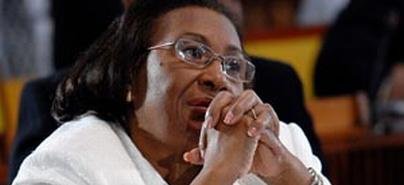 Jamaican’s Minister of Justice and Attorney General, Senator Dorothy Lightbourne, began her testimony at the Commission of Enquiry into the extradition of Christopher ‘Dudas’ Coke, on Thursday.
Lightbourne told the Commission that, on August 25, 2009, she received a telephone call from the Deputy Director of Public Prosecution (DPP), Lisa Palmer Hamilton, stating that Lieutenant Colonel Patrick Cole was with her and that he wished to speak with her.
"Lt Colonel Cole came on the telephone and spoke with me, and told me that he had a request for the extradition of Christopher Coke and that he would like to come to my office with the request," Lightbourne said.
"I told him that he ought not to be involved in this extradition matter, and that there was an established procedure for (how) extradition requests are dealt with and that was not the procedure that he was following," she added.
Lightbourne said that she had concerns about the wiretap evidence presented by the US. She noted that there was no evidence of the wiretaps being used for investigative purposes, "which is what the wiretap is about, that you use it for investigative purposes rather than use it for evidence."
"So that concern jumped at me, then there were the two anonymous statements from convicted criminals who had pleaded guilty and were awaiting sentencing, and the other thing was the Constable (John Doe) who recorded the tape recordings. He just listened, recorded the conversations and merely said he was advised that the voice on the tapes was that of Mr Coke. One of the anonymous victims had never met Mr Coke and his statement was just hearsay; those were the main concern," she said.
The justice minister said she first heard of the two memoranda of understanding (MOUs) during a meeting with the United States Embassy's Charge d’Affairs in Kingston, Isaiah Parnell, at the Office of the Prime Minister (OPM). She noted, however, that she subsequently read the documents in detail.
Lightbourne said the MOUs were in breach of the Interception of Communication Act and, as such, would be unlawful and unconstitutional.
She said that, during the period of deciding whether or not to extradite Coke, the country was being destabilised, as various organisations, church groups, private sector organisations and human rights activist were in an "uproar" over the extradition issue.
She insisted that, although she eventually signed the extradition order, she still felt that the request was flawed. She explained that the delay was in an attempt to get the US government to respect Jamaica's constitutional laws.
"What I was trying to do, over all this period of time, was to ask the United States government to respect our constitution and our laws. We are small, we are poor, but we are a sovereign state. Mr Coke, I understand, consented, so he extradited himself; he did not test his chances here," Lightbourne explained.
Under cross examination by attorney, Frank Phipps QC, Lightbourne said there was no order given by the court to 'John Doe' for any interception to be done. She also added that she has never seen any documents as to what was recorded by Mossel Jamaica Limited.
The Commission of Enquiry will resume on Monday with Lightbourne’s continuing testimony.
Caribbean leaders welcome move to settle border dispute between Guyana and Venezuela
Caribbean leaders have endorsed and welcomed the appointment of University of the West Indies (UWI) professor, Dr Norman Girvan, as personal representative of the secretary-general of the Organization of American States (OAS), Jose Miguel Insulza, to help settle the territorial dispute between Guyana and Venezuela.
Girvan will lend support to Insulza, in his capacity as OAS Good Officer, to which he was appointed by United Nations secretary-general, Ban Ki-moon in April 2010. Ban had also appointed Girvan then to serve as his personal representative in the dispute.
In his role as Good Officer, Girvan will assist Guyana and Venezuela in the search for a practical settlement to the border controversy that emerged from the latter nation’s contention that the Arbital Award of October 3, 1889, governing the matter, is null and void, thus claiming a significant amount of Guyana’s territory.
An internationally renowned Caribbean economist, academic and civil servant, Girvan is a Research Fellow at the Graduate Institute of International Relations, UWI, St Augustine Campus, Trinidad and Tobago.
He previously served as secretary-general of the Association of the Caribbean States (ACS); professor of development studies, and director of the UWI’s Sir Arthur Lewis Institute of Social and Economic Studies, UWI; and head of Jamaica’s National Planning Agency.
A communiqué from the 22nd inter-sessional meeting of the conference of Caribbean Community (CARICOM) government heads in Grand Anse, Grenada, said leaders “expressed satisfaction” with the appointment and the progress made to settle the matter, as well as strengthen relations between the nations. Additionally, the regional leaders re-affirmed their “unequivocal” support to maintaining and safeguarding Guyana’s sovereignty and territorial integrity.
On another matter, the communiqué said the government heads welcomed efforts by Belize and Guatemala to settle the prevailing territorial row between them. They noted a report on the status of the relations between both nations and their commitment to simultaneously conduct referenda to decide whether the dispute should be referred to the International Court of Justice for final settlement, as required by a special agreement.
The communiqué said the leaders also welcomed efforts by both nations to improve the effectiveness of the agreement on confidence building measures to “reduce tensions”, pending a final resolution, and develop modes of functional co-operation in areas of mutual concern.
Additionally, the communiqué said the CARICOM heads commended the support forthcoming from the OAS and other stakeholders in helping to maintain peace and stability in the region. Further, that they have called on the international community to continue supporting the OAS and both countries, while re-affirming their “unequivocal support” for the “territorial integrity and sovereignty of Belize”.