
Riot charges for opponents of Belarus leader Lukashenko
Four Belarus opposition figures have been charged with organising riots after a protest against the re-election of President Alexander Lukashenko.
The four men, who are being held along with a number of campaigners and journalists, face up to 15 years in prison if convicted.
Three other opposition figures are also being investigated.
The US and EU condemned the post-election crackdown and said the ballot itself had been flawed.
Police made some 600 arrests when they broke up the protest in the capital, Minsk, on 19 December.
Hundreds of those detained, including 11 Russian citizens, were released on Wednesday.
The four men charged were named by lawyers as Vladimir Neklyaev, Andrei Sannikov, Nikolai Statkevich and Vitaly Rymashevsky.
Mr Neklyaev has been receiving hospital treatment after being severely beaten up on election day, his lawyer said.
Also under investigation are Rygor Kostusev, Dmitry Uss and Alexei Mikhalevich.
All seven men stood as candidates against Mr Lukashenko, with none polling more than 3% of the vote, according to official results.
Mr Lukashenko was officially re-elected for a fourth term with nearly 80% of the vote.
Police dispersed at least 10,000 anti-Lukashenko demonstrators in Minsk on 19 December, officials said.
Some demonstrators tried to storm a government building, but were pushed back by riot police. Dozens of people in the crowd were injured in clashes after being beaten with batons, according to eyewitnesses.

Australia: Queensland floodwaters still rising
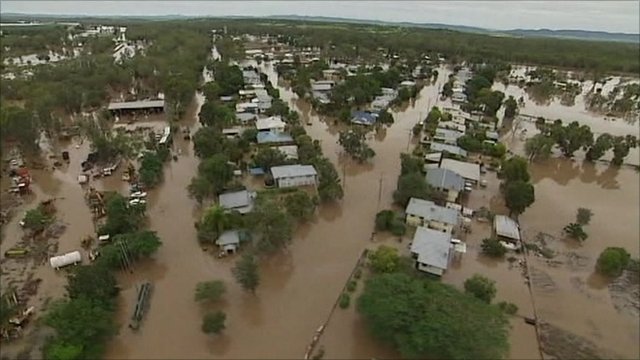
Water levels are continuing to rise in some parts of the Australian state of Queensland as it battles its worst floods in decades.
Days of torrential rain have led rivers to burst their banks, swamping homes, closing roads and forcing residents to evacuate.
The rain has eased but flooding is getting worse in some places as water drains from higher ground.
In Emerald, a flood peak that could inundate 80% of the town is expected.
A helicopter has also crashed in the town, injuring at least two people, the Australian Broadcasting Corporation said.
Queensland Premier Anna Bligh warned that for some communities the worst lay ahead.
"We've still got a number of communities that are facing the prospect of increased flooding over the next couple of days.
"So this disaster that's unfolding on an unprecedented scale is far from over."
Ms Bligh visited Emerald, a town of about 11,000 residents in central Queensland.
About 700 residents have been evacuated from Emerald ahead of a predicted flood peak in the early hours of Friday on the Nogoa River that is expected to deluge the town.
"The worst case scenario is that 80% of the town will be inundated with water. That means a large number of people will be seeking evacuation," said Greg Goebel, director of the Australian Red Cross.
"So, you never know which way the water is going to go, but we've actually got a plan to make sure that people are properly housed and looked after during this time of, you know, real distress for many, many people."
Helicopters including Army Black Hawks have been ferrying residents to safer locations.
A pilot and a boy suffered minor injuries when a helicopter flipped on to its side after taking off from the local race course, the ABC said.
Further south, the town of Theodore has been completely evacuated and 100 residents are also being airlifted from Condamine ahead of another expected flood peak there.
The city of Bundaberg has been split in two by the swollen Burnett River. Four hundred people had been evacuated and 120 properties flooded, the deputy mayor said.
The river has now peaked but officials said the damage could not be assessed until the water levels went down.
Hundreds of residents across southern and central parts of the state are sheltering in evacuation centres, and officials have warned of severe damage to homes, crops and livestock.
"We've got a long way to go ahead of us and when these waters recede, that is when we're really going to know the size of the problem," Ms Bligh said.
Army helicopters are to be used to drop food supplies into isolated areas and officials are also looking at ways of making sure larger communities remain stocked.
"We might have to look at some creative ways of doing that, we may have to look at moving product by sea, by plane," Bruce Grady of Emergency Management Queensland told the ABC.
"There's a whole range of planning that's currently going on."
SOURCE:BBC
Boney M singer Bobby Farrell dies aged 61

Bobby Farrell, lead singer of the 1970s disco group Boney M, has died at the age of 61, his agent has announced.
The singer was found dead in a hotel room in St Petersburg, Russia where he had been performing, John Seine said.
Farrell, he continued, had complained of breathing problems before and after the show on Wednesday. The cause of his death has yet to be established.
Farrell, the only male member of the popular four-piece, had been due to perform in Italy on New Year's Eve.
Born Alfonso Farrell in Aruba, he had been touring with three female backing singers under the name Bobby Farrell of Boney M.
The original Boney M, known for such hits as Daddy Cool and Rivers of Babylon, disbanded in 1986.
Beaten British couple criticises Trinidad and Tobago
A British couple who was badly beaten while vacationing in Tobago has launched a bitter attack on the government of Trinidad and Tobago for its failure to compensate them.
The couple published their ordeal in the British newspapers and called on tourists not to visit the twin island republic.
The adverse publicity had accelerated the appointment of a board to deal with compensation for victims of crime.
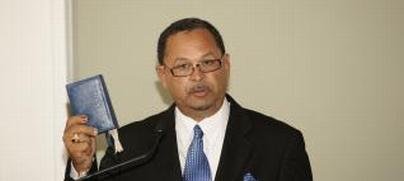
Minister of Justice Herbert Volney, in an interview with the Trinidad Express newspaper, said that he empathises with the situation of the English couple, Peter and Murium Green and commits to assisting them as far as the governing Acts and Laws under which the Ministry of Justice operates.
The Greens were attacked in Tobago on August 1, 2009, and on Sunday went public in an interview with the Daily Mail in London about the ordeal they suffered, levelling a barrage of criticism against medical institutions and broken promises from the Tobago House of Assembly.
Volney said it is the government's intention that some compensation under the Criminal Injuries Compensation Act will be forthcoming in early 2011.
Large numbers of Caribbean nurses and other health workers migrate to developed countries
A recent World Migration Report states that a large number of Caribbean nurses migrated to developed countries, including the United Kingdom, the United States and Australia.
According to Organisation for Economic Cooperation and Development (OECD) data, the top five countries in terms of emigration of nurses are all from the Caribbean: Haiti leads with an expatriation rate of 94 percent, followed by Jamaica at 87.7 percent, Grenada 87.6 percent, St Vincent and the Grenadines 81.6 percent and Guyana 81.1 percent.
India is the top country of origin of migrant doctors to OECD countries, with more than 56,000 Indian doctors in these countries. India also figures in sixth place in the expatriation of nurses to OECD countries (about 23,000). In terms of percentages, however, these figures constitute just eight percent and three percent respectively of the doctor and nurse population in India, comfortingly low compared to some of the small countries severely affected by emigration of doctors such as Mozambique (7 percent) and Angola (70 percent)
The World Migration Report talks about the problem of "medical brain drain" especially in African countries.
One thousand Indian farmers to travel to Cuba
The government of the Indian southern state of Karnataka will send some 1,000 farmers to Cuba during the next few months to learn organic agriculture techniques, reported Prensa Latina news agency.
Farmers owning over 5 acres of land and practicing these techniques will be eligible to travel to Cuba, according to the head of the Karnataka’s Organic Agriculture Mission A. S. Anand.
Anand said they have started the paperwork for the first group of 350 farmers.
In statements to local daily Deccan Herald, the official assured that this trip will allow them to learn about this kind of cultivation, on the disadvantages of using chemical fertilizers, and then pass on that knowledge to others.
The newspaper reported how Cuba was forced to develop strategies to grow its own food without the use of chemical fertilizers due to the US economic, financial and commercial blockade against Cuba that prevents it from getting them in its closest market, among other hurdles.
The Cuban embassy in India confirmed that the first steps for the trip are already underway, according to Prensa Latina.
Ambassador Miguel Ramirez said this is an important example of cooperation among the two nations that share 50 years of diplomatic relationships.
Source:(ACN)
UN disaster assessment team arrives in flood-hit Colombia
A three-member United Nations Disaster Assessment and Coordination team (UNDAC) has arrived in Colombia to support the ongoing response to the floods, which are affecting over 2 million people.
Heavy rainfall associated with the La Niña weather phenomenon has affected Colombia since the middle of this year, causing floods in the Andes region and the Caribbean coastal area, according to the UN Office for the Coordination for Humanitarian Affairs (OCHA).
UN agencies and partner non-governmental organisations have already been assisting those affected in some of the worst-hit areas. Among the most immediate needs are food assistance, water and sanitation, shelters, emergency education and health services.
Earlier this month $6 million was allocated for the post-flood effort from the local UN emergency response fund.
The UNDAC team that arrived in the country yesterday will assist in information management tasks and strengthening of humanitarian partners, both national and international, OCHA stated.
It is initially expected to stay in the country for three weeks but this period could be extended.
Royal Caribbean crew tried to smuggle heroin, cocaine from Dominican Republic
Crew members on a Royal Caribbean cruise ship attempted to smuggle heroin and cocaine into Baltimore from the Dominican Republic, according to criminal complaints filed by US officials on Tuesday.
According to accounts by agents of the Department of Homeland Security filed in federal court, three employees of the cruise line -- 35-year-old Gavin Excell and 27-year-olds John Swart Garth and Kishurn Neptune -- obtained narcotics in the Dominican Republic during a stop of the Royal Caribbean's "Enchantment of the Seas" trip in mid-December.
When the ship arrived in Baltimore on Dec. 18, the documents state, the three men had planned to deliver those drugs at the Port Covington Wal-Mart, near the cruise terminal, to Loxly Johnson and Shenika Nicole Graves, who appear to have driven to Baltimore from Virginia.
Johnson, also known as Desmond Williams, is a Jamaican citizen and a legal permanent resident of the United States, according to the documents. He, Excell and Graves were indicted by a grand jury on charges of conspiring to import drugs into the country.
Customs officials were tipped off by Elhadad David, a ship security officer for Royal Caribbean.
Agents searched Excell when the cruise ship arrived in Baltimore on Dec. 18. According to the documents, agents said they found 700 grams of heroin and 300 grams of cocaine hidden in his waistband and shoes. The documents state that Excell told agents he had picked up the drugs from a Jamaican man in the Dominican Republic with Garth and a man later identified as Neptune, who both worked in the galley of the cruise ship.
That same day, agents said they saw Johnson and Graves in a black GMC Envoy with Virginia plates outside the Wal-Mart, and saw Garth entering and exiting the vehicle. When questioned later, Garth told officers that he had been paid $4,000 to deliver three packages of narcotics to Graves and Johnson, the documents state.
Shortly after Johnson left the Walmart, customs agents stopped him on the 1300 block of Hanover St. in Baltimore and searched the Envoy and found $8,000 in cash. Other agents approached Graves, who was still inside the Wal-Mart, and found 700 grams of heroin and 300 grams of cocaine in her purse, according to documents.
Johnson is being represented by a federal public defender.
Thomas L. Crowe, Graves' attorney, said his client is a "solid citizen" and pleaded not guilty to the charges last week.
"She has absolutely no criminal record," Crowe said. "She's never been accused of being involved in anything like this. She maintains her innocence."
Graves was released and promised to appear later to answer the charges, Crowe said, and is now back home with family in Virginia.
Source:The Baltimore Sun
Turks and Caicos Crown land sales indicate manipulation of policies
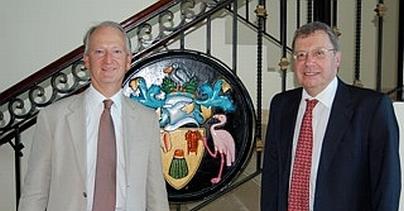
Jon Llewellyn, the British adviser who was reportedly brought in to assist the Turks and Caicos Islands Land registry computerise the land records,
is now chasing land leases with a total of $3 million in default and is now promising new rules for Crown land sales.
Llewellyn has organised the systematic logging of all land ownership records. Recently, the third and more comprehensive registry has been
published and is available online. This record gives immediate access to the ownership status of all TCI Crown land.
Previous Minister of Natural Resources McAllister Hanchell had promised to computerise land records years ago but the programme was never started. In
fact, when Llewellyn arrived, he reported he found the written records in a shambles.
Llewellyn has hosted a number of town hall meetings around the islands, where he met with residents to discuss his assigned duties. The principal
discovery Llewellyn made public was that the previous government, led by Michael Misick, with Hanchell as cabinet Minister (responsible for public
land), had sold off most of the territorys thousands of acres of Crown land.
In the last fiscal year of the prior administration under the Peoples Democratic Movement (PDM), which overlapped the incoming administration of
the Progressive National Party (PNP) for fiscal year April 1, 2003/March 31, 2004, sales of Crown land totaled $16 million.
The Misick/PNP administration took over officially in August 2003. Sales continued in the mid teens until March 2006. Later in 2006, an election
was nearing and, in February 2007, Misick gained a landslide victory, gathering 57 percent of the popular vote.
In fiscal year April 1, 2006/March 31, 2007, Crown land sales swelled to $55 million and, in the following year ending March 31, 2008, sales
reached an astonishing $58 million. Now it appears this figure (provided in the government budget reports) was seriously understated.
The record sales reported appears to be a reflection of activities by Misick's government prior to the 2007 election, when they encouraged
people to apply for land. In numerous cases, land leases were passed out to prospective supporters without applications being made by the
applicants themselves.
The understatement of $58 million has been revealed in recent weeks by two land flip deals dug out by the Civil Recovery Team, who have indicated
that in two cases alone nearly $3 million in Crown land sales to non belongers were facilitated by flips in this period.
It is unknown how many of these flips occurred but, during the Commission of Inquiry conducted in the first quarter of 2009, two other flips were
revealed. These involved two former ministers, Lillian Boyce and Jeffrey Hall. These flips also amounted to a total of about $3 million.
The only portion of this $6 million in land sales that was officially reported and realised by the government was the significantly lower
assessed value, discounted with a 50 percent belonger discount.
The land sale of upwards of 2,500 acres of prime development land in Middle Caicos for less than US$3,000 per acre also grossly understated the
value of crown land sales. This land alone, at a conservative price of $100,000 per acre, would have yielded the government $250 million.
Private land adjacent to these blocks was selling at the time in the $300,000 to $400,000 per acre price range.
In the second part of this article the land policies of the Misick and Williams PNP administrations, as well as the previous Taylor-led PDM
administration, will be reviewed. Also the drop in private real estate sales affecting the income of the government will be shown.
Constitution reform moves forward in Turks and Caicos
The deadline of January 14, 2011 for interested parties who still wish to comment on the revised recommendations, submitted by constitutional and
electoral reform Advisor, Kate Sullivan. the constitutional reform consultant hired by the British Foreign and Commonwealth Office (FCO), has
announced a deadline of January 14, 2011 for submissions from interested parties.
The constitutional and electoral reform process was one of the top stories of 2010 that grew out of public statements by the FCO's then Director of
Overseas Territories Colin Roberts, a Labour Party appointee, who had indicated that the process would go forward with minimum consultation with
Islanders themselves.
This was vehemently objected to by residents in the TCI who voiced their objection via the local and international media and through their
participation in another of 2010s top stories -- the large and peaceful Unity March in Providenciales in March 2010.
The FCO Advisor later switched gears and conducted two rounds of town hall style meetings on all the populated islands. Ms. Sullivan met with
concerned citizens, who did not hesitate to speak out and network with her. In her first round of meetings, many reported she had a laid back,
unconcerned attitude and was not taking notes.
However, her second set of meetings, which came after her first set of recommendations were published and, after the May 2010 general election in
Britain, which put the former Labour government who appointed her into opposition, she appeared more open and consultative.
Unfortunately, on the most populated island of Providenciales (Provo), she was met not only by concerned residents but also by angry demonstrators
who burned her recommendations in the parking lot and who caused her to close down the meeting early.
During the earlier second round of meetings she mentioned she would conduct yet a third round after she issued her second revised set of
recommendations. This second revised set included stronger restrictions on enlarging the voting franchise and the mandatory requirement that the
deputy governor remain, as before, a Belonger.
However, Ms. Sullivan and His Excellency Governor Gordon Wetherell became the target of yet another demonstration at the Provo airport the day that
the new Minister of Overseas Territories Henry Bellingham visited and announced a delay in elections from the proposed date of mid 2011.
Demonstrators known to be activists from the Progressive National Party (PNP) hurried to the airport to intercept Bellingham but met Ms. Sullivan
and the governor instead. Sullivan and the governor had to be escorted by police to their waiting plane, which flew them back to the Nations
capital, Grand Turk.
Sullivan later announced she would not conduct any further meetings, but would meet with the TCI All Party team, which had been initiated by the
Peoples Democratic Movement (PDM) leadership and who themselves conducted town hall meetings around the islands. The All Party Group is headed by attorney Wendell Swan, who was part of a delegation that appeared before the United Nations Committee on Decolonization, pleading the TCI case.
Constitutional reform is one of the principal milestones recently set by Bellingham that must be met and passed before elections can be
rescheduled.
Sullivan has now said that she will be concluding her recommendations and forwarding them to Mr. Bellingham, who will then prepare a draft
constitution and has set a deadline of January 14, 2011 for late submissions from interested parties.