
Jamaica could ditch both Privy Council and CCJ
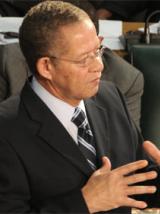
Prime Minister Bruce Golding has suggested the possibility of Jamaica establishing its own final Court of Appeal as an option to the United Kingdom-based Privy Council or the Caribbean Court of Justice (CCJ).
"We have to dispense with the Privy Council. We are not yet satisfied that in doing so, we must take out a final court which is an external entity, over which we do not have final control as a State," Golding said, during the debate on the Charter of Rights in the House of Representatives on December 21.
"We wish to consider this in great detail, and in earnest, we believe that we have the judicial experience to do it. We believe that we have the maturity to do it. We wish to consider establishing our final court of appeal in Jamaica. We would respectfully wish that this is something for which consideration ought to be given," he said.
Golding further noted that the adoption of a final court should be "put to Jamaicans in a referendum."
"I don't think any of us in here must ever make the mistake of presuming that there is any consensus among the people of Jamaica on this, nor must we ever seek to assume that the majority of those people will vote in a particular way," the prime minister said.
He pointed out that there are members of both the government and opposition in favour of the Caribbean Court of Justice as the final court of appeal for Jamaicans.
"We want to give the people something more than what they have, because what they have is something that is not even in their hands. We have given them rights, but we have to ensure that those rights remain in our hands," he added.
Meanwhile, leader of the opposition Portia Simpson Miller noted that the opposition was in support of the CCJ as the country's final court of appeal.
The CCJ is the regional judicial entity established nine years ago, to be the final appellate court for member states of the Caribbean Community. While Jamaica is a signatory to the establishment of the CCJ, the country has yet to utilise the court, as cases from the island are still referred to the Privy Council.

US man sentenced to nearly 20 years for sex abuse in Haiti
It's a story filled with chapters on hope, dark desires, courage and persistence.
On Tuesday, US District Judge Janet Bond Arterton wrote another one -- on justice -- sentencing Douglas Perlitz, the humanitarian-turned-sex predator, to 19 years and seven months in federal prison for his systematic and prolonged abuse of at least 16 homeless boys in a program he created to shelter, feed and educate them in Haiti.
"Our country places a high value on defending citizens' individual dignity and protecting every child," Arterton told Perlitz, 40, Fairfield University's 2002 commencement speaker. "This was a horrific crime ... In a country that's very hard to live in, he took away the childhood they were never able to have. ..."
But Arterton didn't stop there. She looked directly at Perlitz and told him: "Survivors of sexual abuse have unique, long-lasting, permanent injuries -- for these boys, that's on top of being poor, hungry and homeless in Haiti. Now, they have fingers pointed at them in derision."
Arterton set a March 7 hearing on the restitution that Perlitz must provide to his victims.
She feared he might again "injure and abuse" children, so she placed him on 10 years of US Probation Department supervision following his release from prison and banned him from associating with children under 18. She ordered him to enter a sexual abuse counseling program during his confinement, which she recommended take place in the U.S. Bureau of Prisons' medical facility in Devens, Mass.
"This is a vindication of those victimized by this atrocity as well as those who are not yet known," said Joseph M. Champagne, the mayor of South Toms River, N.J., and a member of the Haitian Lawyers Leadership Network, several of whom attended the sentencing. "Now, everyone knows that if you rape and sodomize someone in some other country, you will be brought to the bar of justice."
Before pronouncing Perlitz's sentence, Arterton listened for nearly seven hours to the story of Project Pierre Toussaint.
It was a program of hope for Haitian street boys. It started in a parking lot in Cap-Haitien, the country's second-largest city, whose streets are filled with at least 10,000 abandoned children begging daily for food, clothing and medicine and money and sleeping in courtyards, on roofs or in woods. It grew into an intake center, an enclosed residential school on 10 acres of land and group homes for promising high school students. It was funded with millions of dollars raised by wealthy Fairfield and Westchester county Catholics.
The program began crumbling in 2007 when students went public with accounts of being abused by Perlitz. When funding dried up, the program shut down in the summer of 2009.
On Tuesday, six former students, all victims of Perlitz's abuse, wrote the chapter on courage by describing their years of sexual abuse to the judge. The boys, speaking in their native Creole, which was translated to the judge, related how they would be invited to Perlitz's home, sometimes on their birthday or just before a holiday, sometimes after school on Friday afternoons and sometime when they became disruptive in school.
There, the nightmarish acts would occur. Some would awaken to his abuse, others would be asked to perform sex with him, and some would consent to demands for fondling and for being fondled. To resist could mean expulsion from the program, they said.
Just how many were abused is unknown. The prosecution said they could document 16 cases, but believe there were more.
One boy told how he and others would hear Perlitz's footsteps in their dormitory room and feign sleeping or look for a hiding place "so he wouldn't sleep with us."
"He never made love to us, he made hate," the boy said.
That boy's descriptive story of being sexually abused over five years, struck an emotional chord with Cyrus Sibert, the Haitian journalist who was the first to report on the scandal in 2007.
Emotion overcame Sibert, who spent the last three years counseling and helping the victims. He briefly left the courtroom in the company of Paul Kendrick, an advocate for sexual abuse victims and the Rev. Bob Hoatson, a Catholic priest who operates the Road to Recovery Inc., a New Jersey program that offers help to victims of clergy sexual abuse.
There's the chapter on persistence written by Assistant US Attorneys Krishna Patel, Stephen Reynolds and Richard Schechter. When the original indictment was dismissed in Connecticut after Arterton decided there was no evidence a crime was committed here, prosecutors formulated a plan to charge Perlitz in New York, California, Colorado and Florida -- every state where Perlitz had flown to Haiti with the intention of engaging in sex with a student shortly thereafter.
They filed the first in US District Court in Brooklyn, which required Perlitz to be moved to the federal detention center there, which has a number of Haitians in its population. Perlitz never went there. Instead he and his lawyers, David Grudberg and William F. Dow III quickly negotiated a guilty plea to one charge of traveling from New York to Haiti to have sex with an underage boy.
Patel rebutted one letter from a Perlitz supporter claiming his program took children "lower than dirt and the scourges of society and lifted them up."
"These are not children below dirt," she said. "These are children who showed extraordinary courage ... He preyed on clients he was supposed to protect and nurture ... All Perlitz did was harm that country and harm their children."
Perlitz, 40, dressed in a dark blue sweater covering a white shirt and tie over gray pants, spent nearly 20 minutes apologizing. He admitted living a double life until his guilty plea in August.
Then he turned to the rows of the six boys and spoke to them in Creole asking them and "all of Haiti to forgive me."
"At the time I had contact with you, I wasn't thinking about you or your feeling about how my actions would affect you. No, I was too stingy."
He said he is tormented every day, thinking of how things would be different if he left Haiti. He said he feared that "Project Pierre Toussaint would fall apart ... Now I am going to prison because of what I did ... I can say I deserve this."
After the sentencing hope rose again.
Al Lackey, president of Kids Alive International, an Indiana charity which operates in Cap-Haitien said his organization is close to finalizing a deal with Fairfield University and the Order of Malta, a Roman Catholic charity to provide help for all of the 82 residential students.
"We've got commitments to get these six victims and 34 others into two trade schools next month," said Lackey, who attended the hearing. "Some will need counseling, others just friends and mentors. What I can assure you is we will be part of these kids for the rest of their lives."
Copyright (c) 2010, Connecticut Post, Bridgeport
A Holiday Message from Clayton Greene, The Leader of The PNP, Turks & Caicos
With Christmas just a day away, Leader of the Progressive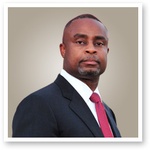 National Party Clayton Green issues his Christmas message for the TCI.
My fellow Turks & Caicos Islanders,"Glory to God in the highest, and on earth peace, good will toward men."
Luke 2:14
More than 2000 years ago the angels welcomed the coming of the baby Jesus with those words. As we gather with family and friends to celebrate this Holiday let us do our part to ensure that the peace and goodwill of which the angels sang is spread throughout every community of the Turks and Caicos Islands.
Let us in this season resolve to love one another, to seek each other's welfare, to banish envy and jealously, to be less arrogant and proud and more respectful of our differences.
These are difficult times. Large numbers of us are without work and others are under a constant threat of losing our jobs. Countless others are today trying to avoid our homes and other assets being repossessed and all of this while we languish in circumstances over which we have no control.
Yet despite it all, I want to encourage you to "Fear Not" for the Christ Child whose birth the angels announced still lives and will forever reign.
We are through our faith and the Grace of God, a strong, resilient, confident and caring people and so at this time, and despite our circumstances, let us not forget our responsibility to each other and show compassion and kindness especially to those less fortunate than we are.
Heather the children and I send our best wishes for a very merry Christmas. May you be surrounded by loved ones and blessed by the Giver of all good gifts during this holiday season and throughout the New Year.
Clayton Greene
LEADER
PROGRESSIVE NATIONAL PARTY
Confusion reigns in Turks and Caicos as holidays loom
Turks and Caicos Islands -- As the British Interim Government in the Turks and Caicos Islands moves on a number of issues, members of the Progressive National Party (PNP) are voicing their discontent.
The early retirement of Police Commissioner Edward Hall and his Deputy Commissioner Hubert Hughes seems to be clouded by a refusal to name an Assistant Commissioner the Governor's press release indicated will also be retired early.
Local television station WIV4 has speculated that this may be Assistant Commissioner Clarke, who is the most senior person in this post. The station has also reported confusion about the retirements at this time. Inquiries to the government have failed to confirm or deny Clarke is the person affected
Several months ago an independent investigation was commissioned into the running of the police force. The report coming out of this investigation, which landed in the governor’s hands months ago, has never been made public. Information that has leaked out has indicated the force was not being properly run. This and the fact that outside Canadians are planned as immediate replacements for the top police officials have caused speculation that the report triggered the early retirements.
Adding to the speculation is an absence of public statements by Hall and Hughes. Both men have long service records on the force. Hall moved to the top spot in 2005 during the Michael Misick administration. The governor has been complimentary regarding both men's service in his press release and recent public statements.
The leave enforced against Clyde Robinson, the former Planning Director, for a land flip in the Providenciales Long Bay area is also causing concern that similar civil proceedings are in the offing. The parcel Robinson flipped was one of several that appear to have ended up in the hands of the same foreign buyer. Richie Arthur, Misick’s former pilot had a similar plot that he flipped.
Long Bay is the election district represented by Galmo Williams, who replaced Misick as premier for a short time when Misick resigned his post. Williams chose Royal Robinson as his deputy and finance minister.
Robinson has now posted a strong letter in this week’s TCI Weekly News admonishing the British Interim administration and the “milestones” recently announced by Foreign and Commonwealth Office minister responsible for Britain’s overseas territories, Henry Bellingham. Robinson took particular issue with the need to achieve a balanced budget. It appears this requirement has been put in place because Britain has been forced to support the interim government with grants and other aid.
It appears that this has amounted to upwards of $30 million since September 2008. In addition to the cash input, the Interim Government has also obtained loans for the purpose of bringing some integrity to the dire financial straits the Misick/Williams government left the territory in.
In fact, shortly after taking over, it was Robinson and PNP-appointed Permanent Secretary of Finance Delton Jones who found an additional $35 million in hidden unpaid commercial debts
Britain's Bellingham is also arranging a strong financial package to further help the financial picture in the TCI. Robinson’s letter also pointed out that Britain experienced bank failures. The TCI Bank, which had a board of directors that included Jones and Misick’s brother Washington Misick, failed earlier this year, taking down the funds of 4,000 depositors and upwards of $22 million in government pension funds.
Robinson also indicated in his letter his personal belief that there will be a series of layoffs in the civil service.
Finally, Robinson indicated there has been no local real estate development since the Interim Government arrived.
In fact, all the developments approved by the Misick/Williams government, of which Robinson was a part, have since failed. However, according to multinational sources, possibly two new developments may soon be seeking approval..
In a public statement issued some days ago by John Smith, who heads the airport expansion, he expressed the opinion that thousands of new tourists are expected from Europe once the airport expansion is complete. This project appears to be running ahead of schedule.
New PNP leader Clayton Greene has just returned from the Bahamas, where he called on government leaders from both sides of the aisle. Greene also met with TCI nationals living in the Bahamas. Greene has appeared on WIVTV saying the purpose of his trip was to marshal support from the Bahamas and TCI Islanders living there.
Greene said he informed the Bahamas that the TCI is in “dire straits”.
When reporting on his meetings, Greene said, “They asked me why the people of the TCI are so passive and why they do not protest.”
New technology to provide medical services to family islands
Cutting edge technology will provide “virtual check ups” to people on the family islands, allowing people to consult a specialist doctor without making the trip to Provo or Grand Turk, thanks to a new Telemedicine scheme provided by the TCIG Ministry of Health and Human Services in partnership with Interhealth Canada.
The high tech equipment will allow doctors in Provo and Grand Turk to do check ups using remote audio/ visual devices, that will allow the specialist doctor to provide the family island doctor with expert advice and guidance in the management of the patient, thereby reducing the need to make a long trip to Provo or Grand Turk for a consultation.
Local health professionals will be on hand to help facilitate the check ups, which could include monitoring heart and blood pressure, or viewing ear and throat problems. The patients will, importantly, be able to talk with the doctor at the same time, to discuss any issues.
Permanent Secretary in the Ministry of Health and Human Services Judith Campbell said:
“This is a real step forward for health on the family islands. The new technology will mean people can receive expert medical advice, without making a long trip away from home. Patients will be able to talk to a doctor, and the doctor will be able to perform vital checks. I urge people to embrace the new technology and be among the first to get a virtual check up.”
The new Telemedicine system will be available initially in South Caicos, before being introduced to the other islands.
April trial for accused Jamaican Ponzi schemer David A. Smith.
A Florida judge has ordered an April trial for accused Jamaican Ponzi schemer and former head of OLINT, David A. Smith.
Judge Mary Scriven this week ruled that Smith`s trial will commence sometime after April 4th.
The government and Smith`s attorneys last week agreed to the speedy trial date after a meeting of the two sides. Both parties agreed that the entire
trial will take approximately nine days with the government`s case concluding in five days.
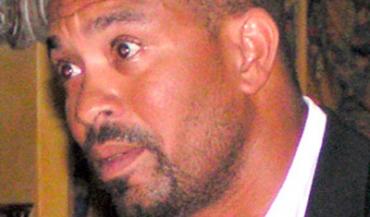 Smith was charged on Aug. 18th in U.S. District Court in Florida with fraud and money laundering in a $200 million Ponzi scheme he allegedly
operated from the Turks and Caicos Islands, Jamaica and Florida.
He waived his right to be indicted by a grand jury, allowing the U.S. Attorney for the Middle District of Florida in Orlando to charge him with
four counts of wire fraud, one count of conspiracy to commit money laundering, and 18 counts of money laundering.
The government also seeks to seize $128 million that Smith handled through allegedly fraudulent wire transfers; a Windermere, Fla., residence;
various jewelry and precious stones; and $40,000 that Smith transferred to a husband and wife, according to court documents.
Smith was on September 23rd convicted on fraud charges in the Turks and Caicos Islands but was last month extradited to the U.S. to face fraud
charges here. He remains in a Florida jail. Special agents from the U.S.
Immigration and Customs Enforcement Office of Homeland Security Investigations picked up Smith from Grand Turk on Nov. 18 and flew him to
Orlando. There he appeared in U.S. District Court on November 19 to face a 23 count information lodged against him on 18th August. Smith had waived
being indicted on the charges and willingly went to the United States to face them.
At his arraignment, he pleaded not guilty.
Bahamas politicians not serious about Turks & Caicos union, says WikiLeaks cable

A secret cable released by Wikileaks has disclosed that the United States Embassy in The Bahamas had expressed the view in 2009 that The Bahamas was not seriously interested in forming a federation with the Turks and Caicos Islands.
The cable was reportedly dated September 3, 2009 and classified by Charge d'Affaires at the US Embassy in Nassau Timothy Zuniga-Brown. It was
published by the British newspaper the Guardian on Tuesday.
In late August 2009, during a visit to The Bahamas, former TCI Premier Michael Misick suggested that a federation be formed, following his
resignation as premier in the light of allegations of corruption.
The United Kingdom assumed direct rule of the TCI in August 2009 as a result of widespread allegations of corruption by Misick and members of
his administration.
In response to the federation idea, Prime Minister Hubert Ingraham said on September 1 that he would be happy to discuss a federation. However, he
added, that could only be done, once the constitutional crisis in TCI was over.
Such talks, Ingraham said, would need to be driven by the peoples of the respective countries.
Former Progressive Liberal Party (PLP) Minister of Foreign Affairs Fred Mitchell was cited in The Tribune on September 2, 2009, as stating that
The Bahamas and TCI joining was a "fascinating idea worth exploring." But he too said the constitutional crisis would need to be resolved before the
idea could be pursued further.
The US Embassy in Nassau regarded the statements by representatives of both political parties as not serious.
The GCOB (Government of the Commonwealth of The Bahamas) and opposition statements on federation are rhetoric, designed to placate a historical
neighbor during uncertain times, said the wiki-leaks cable.
Mitchell was careful to note that the times in which the two countries were united, most recently from 1965 to 1973, were not entirely happy.
If the UK is able to quickly stabilize conditions in the country and restore government confidence, little is likely to materialize from the
federation suggestion. However, if economic conditions worsen, there could be increased calls for The Bahamas to take action; calls The Bahamas is
unlikely to heed, he said.
Mitchell was referenced in a second wiki-leaks cable dated June 3, 2009. Zuniga-Brown's name is attached at the end of the cable, which describes a
fractured TCI political class in response to the intervention by the UK.
The point on the fractured nature of TCI's political leadership was reinforced by former Bahamian Foreign Minister Fred Mitchell. Mitchell,
shadow foreign affairs leader for the Bahamian opposition party, recently led a delegation to TCI that wanted to explore ways to rally CARICOM
against London resuming direct rule, said the cable.
According to the wiki-leaks cable, Mitchell told the Charge d'Affaires at the US Embassy in Nassau that they found surprising ambivalence among TCI
government officials and that the opposition PDM refused even to meet with the Bahamian delegation. This explained the lack of serious
Caribbean-wide efforts, at least for now, against the resumption of direct UK rule, Mitchell said.
Japan agrees record 92.4 trillion yen draft budget
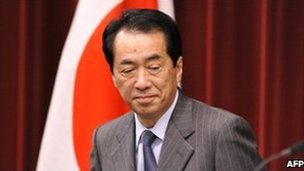 The Japanese government has approved a record level of spending of 92.4 trillion yen ($1.1tn; £711bn) for the next financial year.
The cabinet agreed the draft budget, which must still be approved by parliament before 31 March.
Japan's economy has suffered from deflation, a high yen that hurts exports, weak domestic demand and poor consumer confidence.
The budget is aimed at boosting the economy, but adds to public debt.
And some analysts have said the programme was unlikely to offer a big economic boost.
Reined in
Debt-servicing costs and social security spending making up about 55% of the budget.
Aid for local authorities accounts for another 18.2% of the budget. The remainder of the spending is split among defence, public works projects, education and technology.
The Democratic Party-led administration has promised to keep new borrowing at 44.3tn, in line with this year's level.
But Japan was forced to raise spending due to higher debt servicing costs.
Japan's public debt is expected to reach 891tn yen, or 184% GDP, by the end of March 2012, the highest among developed nations.
The government said tax revenues would be about 40.9tn yen in the next fiscal year, with another 7.2tn raised by raiding special reserves.
The government has already reined in spending programmes including handouts to fund childcare.
Toyota pays $10m to fatal Lexus crash family
 Toyota has paid $10m (£6.5m) to the family of four people killed in a runaway Lexus car in the US in 2009.
The amount, agreed in September but kept confidential, was released by a lawyer for the dealership that lent the Lexus to the family.
Toyota, which did not admit or deny liability in the settlement, said in a statement it was disappointed the amount had been made public.
The crash triggered a series of recalls involving millions of Toyota models.
The car maker said in its statement: "As is common in these cases, these parties agreed to keep the amount confidential, in part to protect the families from unwanted solicitations and to allow them to move on from this difficult period."
The accident which killed off-duty California Highway Patrol Officer Mark Saylor, 45, his wife, their daughter and Mr Saylor's brother-in-law happened in August 2009.
They were killed when their car accelerated to over 120 mph (190km/h), leading it to collide with another vehicle and crash off an embankment, eventually bursting into flames.
Investigators discovered that a faulty floormat trapped the accelerator and caused the crash.
Toyota recalled millions of cars after the accident to replace their floor mats.
That was followed by a second recall involving replacing pedals that it said could stick.
On Monday, Toyota agreed to pay a record fine in the US of $32.4m (£20.8m) over its handling of millions of car recalls.
This is the second big fine the world's largest carmaker will pay to US authorities, after agreeing a $16.4m penalty in April.
Heightened awareness of Toyota vehicles meant subsequent recalls - a common occurence with motor vehicles - took on a high profile.
The publicity has not appeared to dampen the carmaker's popularity. It remains the world's biggest-selling producer, and its most recent profits, for the second quarter, had doubled compared with last year's.
US consumer spending up again, Commerce Department says
 US consumer spending rose modestly in November for the fifth consecutive month, reinforcing the view of a solid if pedestrian economic recovery.
Spending rose 0.4% against the previous month, the Commerce Department said, roughly in line with analysts' forecasts. Consumer incomes rose 0.3%.
Consumer spending is watched closely as it accounts for about 70% of the US economy's total economic output.
Separate data showed new home sales rising by 5.5% in November.
Sales during the month were at an annualised rate of 290,000 homes, slightly below analysts' expectations, the Commerce Department said.
Sales were down by a fifth compared with a year earlier.
The department also said that orders for so-called durable manufactured goods fell 1.3% in November.
However, orders excluding transportation rose by 2.4%.
The Commerce Department also revised the consumer spending figure for October, from 0.4% to 0.7%, which bodes well for the end-of-year GDP figures, it said.
"Consumer spending in November and October is consistent with stronger economic growth during the fourth quarter," said the department's acting deputy secretary, Rebecca Blank.
Analysts were also cheered by the figures.
"The spending numbers are good for the economy, no question about it," said Joel Naroff at Naroff Economic Advisers.
"Consumers are shopping until they are tired, they are not shopping until they drop."
Figures released on Wednesday showed that the US economy grew by an annualised rate of 2.6% between July and September, slightly up on the previous estimate of 2.5%.
However, doubts remain about the strength of the recovery.
Earlier this month, the US Federal Reserve said the recovery was still too slow to bring down the country's high level of unemployment.
Figures released earlier this month showed the unemployment rate rising to 9.8%, its highest rate since April.
This is why the Fed has announced that it will pump $600bn (£390bn) into the economy, and why the government has extended tax cuts enacted by President George W Bush that were set to expire this year.