

Emerging nations more upbeat on 2011 than G7: survey
Power and prosperity are shifting to the east and to emerging economic nations, a new global poll says.
The survey of economic prospects for 2011 suggests the biggest number of optimists live in countries like China, Brazil and India.
The survey, conducted by leading pollsters associated with Gallup International, suggests the most downhearted country is the UK.
The survey questioned 64,000 people in 53 countries.
It measures levels of optimism about personal well-being and the state of the economy in the coming 12 months.
Globally, opinion is evenly divided about whether 2011 will be a year of prosperity, with 30% saying Yes and 28% No, while 42% believe it will be unchanged.
UK gloom
BBC World Affairs Correspondent Adam Mynott says there are marked differences between the Bric countries - Brazil, Russia, India and China - and the rich G7 of the US, Canada, Germany, France, UK, Italy and Japan.
The survey team has drawn up a Global Barometer of Hope and Despair. People in 19 of the countries are generally optimistic about their well-being next year and 34 countries are pessimistic. Our correspondent says it is striking to note that most wealthy countries are firmly in the gloomy sector.
The UK was particularly downbeat in four key questions.
- Will 2011 be a year of prosperity? UK - 8% Yes; World average 30%
- Will unemployment rise? UK 37% Yes; World average 17%
- Will you find a job quickly if you become unemployed? UK 17% Yes; World average 31%
- Will 2011 be better than 2010? UK 23% Yes; World average 42%
Gallup says its findings suggest: "While wealth is still concentrated in Europe and North America, there is a shift in power and prosperity from the West of the 20th Century to the East".
The economies of the Bric countries - with the exception of Russia - typically enjoy rapid growth rates, with gross domestic product expansion of 10% not untypical in China.
In contrast, the developed economies have largely struggled back into positive figures as the credit crisis of 2008 has receded.
UK government borrowing hits record high
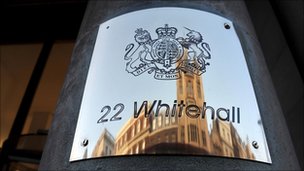
The amount of new public sector borrowing hit a fresh record high in November, according to the Office for National Statistics (ONS).
Net borrowing totalled £23.3bn last month, up from £17.4bn a year ago, and more than analysts had expected.
The borrowing figure was pushed higher by increased spending on health, defence and the EU.
The latest figures are likely to raise concerns about the government's efforts to reduce the UK's budget deficit.
While the government spent 10.8% more in November than the same month last year, its VAT receipts fell 0.1%.
Rogue figure?
A Treasury spokesman said: "November's borrowing figures show why the government has had to take decisive action to take Britain out of the financial danger zone.
"These outturns are also in line with the Office of Budget Responsibility's latest forecast for borrowing to fall by almost £10bn this year compared to last, and for tax receipts to increase by over 7% year-on-year."
The ONS said public sector net debt now stood at 58% of UK GDP.
Total public sector net borrowing for the financial year to date has reached £104.4bn, although this is down slightly from the £105.1bn total for the same period last year.
However, many analysts predict that the government could exceed its annual borrowing target of £148.5bn for the current financial year to 31 March.
Philip Shaw, economist at asset management group Investec, said the latest official figures were "extremely disappointing".
He added: "November's numbers seem to be a result of very strong spending and weak receipts growth, and it is very difficult to judge whether this is just a rogue figure, or whether it represents something more fundamental.
"Our guess is that it's probably the former, but the seeds of doubt have been sown to a certain extent."
The government is now continuing with a range of austerity measures to reduce the UK's public deficit.
These include a £81bn package of public sector spending cuts and a VAT increase to 20% from 17.5% on 4 January.
Jonathan Loynes, chief economist at Capital Economics, said: "Overall, there is nothing here to weaken the government's determination to see through its austerity programme.
"But we continue to doubt that the economy will weather the coming fiscal storm as well as it hopes."
Lowered forecasts
The most recent official figures showed that the UK economy grew by 0.8% between July and September.
However, a number of organisations have recently lowered their forecasts for UK economic growth in 2011.
The CBI business group now expects growth of 0.2% in the first quarter of next year, down from 0.3%, as public sector job losses and higher-than-expected inflation slow the economic recovery.
Meanwhile, the British Cambers of Commerce (BCC) said it now predicts the economy will expand 1.9% in 2011, down from the 2.2% growth it predicted in September.
The BCC blamed the eurozone debt crisis, austerity cuts, weak housing market and forthcoming VAT rise.
The Office for Budget Responsibility has said it expects economic growth of 2.1% next year, compared with an earlier forecast of 2.3%.
BAE Systems fined for Tanzania accounting offence
BAE Systems has been fined £500,000 for failing to keep proper records of payments it made to an adviser in Tanzania.
The defence group paid £7.7m to two firms controlled by businessman Shailesh Vithlani ahead of winning a £28m Tanzanian military radar contract.
The ruling by a judge at Southwark Crown Court comes after BAE had already agreed a deal with the Serious Fraud Office (SFO).
BAE also has to pay £225,000 costs.
The judge, Mr Justice Bean, said he was under pressure to keep the court fine to a minimum.
Under the agreement struck between the SFO and BAE, the company would deduct the fine from the £30m it had offered to the people of Tanzania to settle the case.
"The structure of this settlement agreement places moral pressure on the court to keep the fine to a minimum so that the reparation is kept at a maximum," said the judge.
He also criticised another part of the deal which he said gave any member of BAE Systems group "blanket immunity for all offences committed in the past, whether disclosed or not".
He said the agreement was loosely and hastily drafted.
Cuomo Sues Ernst & Young Over Lehman
The New York attorney general on Tuesday sued Ernst & Young, accusing the accounting firm of helping Lehman Brothers, its client, “engage in a massive accounting fraud” by misleading investors about the investment bank’s financial health.
The lawsuit, filed more than two years after Lehman collapsed and the global economy buckled, is the first major legal action stemming from Lehman’s demise.
Ernst & Young, Lehman’s longtime outside auditor, certified the bank’s financial statements from 2001 until it filed for bankruptcy in September 2008. The suit focuses on Ernst & Young’s approval of a much-criticized accounting maneuver that shifted debt off the books before the close of financial quarters.
The transactions involved “the surreptitious removal of tens of billions of dollars of securities from Lehman’s balance sheet to create a false impression of Lehman’s liquidity, thereby defrauding the investing public,” the complaint said.
The lawsuit seeks the return of more than $150 million in fees that Ernst & Young collected for work performed for Lehman from 2001 to 2008, plus investor damages.
Among the world’s largest accounting firms — and one of the Big Four auditors — Ernst & Young audits the financial statements of many of the world’s largest corporations, including Coca-Cola and Google.
In a statement, Ernst & Young denied the lawsuit’s claims. “There is no factual or legal basis for a claim to be brought against an auditor” when the transactions at issue followed generally accepted accounting standards, the firm said.
“Lehman’s audited financial statements clearly portrayed Lehman as a highly leveraged entity operating in a risky and volatile industry,” it added.
With just 10 days left as the attorney general of New York, Andrew M. Cuomo, the governor-elect, will hand off the lawsuit to Eric T. Schneiderman, who is succeeding him.
Mr. Schneiderman and his yet-to-be-announced legal team will have to bone up on an accounting maneuver known inside Lehman as Repo 105.
This tactic temporarily removed as much as $50 billion of assets from Lehman’s balance sheet to give the appearance that the firm had reduced its debt levels. It often did this just before the end of a financial quarter, the lawsuit said.
“This practice was a house-of-cards business model designed to hide billions in liabilities in the years before Lehman collapsed,” Mr. Cuomo said in a statement. “Just as troubling, a global accounting firm, tasked with auditing Lehman’s financial statements, helped hide this crucial information from the investing public.”
The 32-page complaint, filed in New York Supreme Court, follows the contours of the claims made in a 2,200-page report by a bankruptcy court examiner, Anton R. Valukas, a lawyer. The attorney general’s investigation of Ernst & Young began after the release of the report in March.
“As we said in the report and as I testified before Congress, we believe that the underlying facts of the report would support charges against E.&Y., but it was up to the government to decide whether they would bring them,” Mr. Valukas said on Tuesday.
The New York lawsuit could spur other regulators to act. Both the Justice Department and the Securities and Exchange Commission have been investigating the demise of Lehman but have not filed charges against any of the firm’s executives.
Repo 105, the transaction at issue, was a variation on a corporate finance tool used by every Wall Street bank. In such a transaction, known as a repurchase and sale, or “repo,” agreement, an investment bank like Lehman would typically raise cash by selling assets and buying them back a few days later.
But in the case of the Repo 105 transactions, Lehman moved assets that represented 105 percent or more of the cash it raised, which it claimed that it could treat as a “sale” rather than a “financing” under accounting rules.
Ernst & Young approved Lehman’s Repo 105 transactions, the lawsuit said.
“We believed their conclusions were acceptable under the accounting literature,” Kevin Reilly, the Ernst & Young partner at one point in charge of the Lehman work, said in a deposition with the attorney general.
The attorney’s general lawsuit, however, asserted that the transactions were nothing more than accounting sleight of hand.
“These Repo 105 transactions had no independent business purpose and were designed solely to enable Lehman to manage the company’s financial balance sheet ‘metrics,’” the lawsuit said.
To execute Repo 105 agreements, Lehman also needed legal opinion that the transaction could be treated as a “sale” rather than as a “financing,” the lawsuit said.
Because it couldn’t get the opinion in the United States, the suit said the firm approached Linklaters, a British law firm, to seek an opinion under English law. Linklaters issued an opinion that Lehman could characterize the Repo 105 transactions as a “sale” but that the transactions had to be executed in Britain.
“Armed with the Linklaters letter,” Lehman transferred securities to banks in Britain to execute the Repo 105 transactions, according to the lawsuit.
Lehman aggressively ramped up its use of Repo 105 transactions in the year before it collapsed, the attorney general contends. Because the investment bank was saddled with billions of dollars of hard-to-sell soured mortgages and real estate assets on its books, Repo 105 gave Lehman a way to improve the appearance of its balance sheet.
A Lehman document from February 2007 said, “Repo 105 offers a low-cost way to offset the balance sheet and leverage impact of current market conditions,” according to the lawsuit.
It also detailed how Lehman’s use of these transactions more than doubled to $50.4 billion in May 2008, from about $24 billion at the end of 2006.
At least one Ernst & Young auditor grew concerned over the firm’s use of Repo 105, according to the lawsuit. In 2006, Bharat Jain, an Ernst & Young auditor on the Lehman account, noted to his manager that he would “like to know what is our thought process behind how much of these Lehman should do from reputational risk, etc., perspective. Are we comparing to other competitors, are we referring to any industry publications, any regulatory guidance, etc.?”
Mr. Jain’s manager told him that she would raise the issue of “reputational risk” with the senior Ernst & Young partner on the account, but that conversation appears never to have taken place, according to the suit.
Mr. Cuomo’s lawsuit was brought under the Martin Act, a 1921 New York state law that gives the attorney general broad powers to pursue financial corruption. The controversial law has been aggressively employed by Mr. Cuomo and his predecessor, Eliot Spitzer, in bringing cases against Wall Street firms and their executives.
Deutsche Makes Deal In Tax Case
Deutsche Bank agreed to pay $553 million and admit to criminal wrongdoing on Tuesday, settling a long-running investigation into tax shelter fraud that prosecutors say generated billions of dollars in bogus tax benefits.
In an agreement with the United States Attorney’s Office in Manhattan, Deutsche Bank will avoid prosecution for helping 2,100 customers evade taxes through 2,300 financial transactions. The arrangements, which took place between 1996 and 2002, helped wealthy Americans report more than $29 billion in fraudulent tax losses, according to the Justice Department.
“This settlement marks another victory in the long effort to stop financial institutions, law firms and accounting firms from designing and marketing abusive tax shelters, and facilitating those who use them,” said Senator Carl Levin, chairman of the Permanent Subcommittee on Investigations, which has been investigating tax shelters for nearly a decade.
The investigation into Deutsche stemmed from an earlier inquiry into the accounting firm KPMG, which marketed tax shelters. The $553 million fine amounted to the fees that Deutsche Bank collected from its role in the scheme, the taxes and interest the Internal Revenue Service could not collect from taxpayers and a civil penalty of about $149 million.
The settlement was reached with the I.R.S. and Preet Bharara, the United States attorney for the Southern District of New York.
“Deutsche Bank is pleased that this investigation, which concerned transactions that ceased more than eight years ago, has come to a resolution,” the company said in a statement on Tuesday, noting that the $553 million penalty would not affect net income. “Since 2002, the bank has significantly strengthened its policies and procedures as part of an ongoing effort to ensure strict adherence to the law and the highest standards of ethical conduct.”
The settlement was drafted in recent weeks as Deutsche Bank lawyers grew increasingly nervous about a coming trial of two former employees, David Parse and Raymond Craig Brubaker, who were indicted for fraud and conspiracy in 2009 for their role in selling tax shelters.
Lawyers for Deutsche Bank, Germany’s largest bank, worried about how that trial might progress and about what evidence might emerge that could potentially taint the bank’s reputation and leave it exposed financially, according to two persons briefed on the matter who were not authorized to speak publicly about the case. The case is scheduled to go to trial on Feb. 28 in Federal District Court in Manhattan.
Both Susan Brune, Mr. Parse’s lawyer, and Barry Berke, a lawyer for Mr. Brubaker, declined to comment.
The Deutsche settlement is the latest in a broader government crackdown on banks that aid tax evaders. Last year UBS, the Swiss bank, agreed to pay $780 million to settle charges that it helped wealthy Americans dodge federal taxes from 2000 to 2007.
The Swiss bank — which like Deutsche admitted to wrongdoing — initially provided information on about 265 of its United States customers. UBS later agreed to hand over another 4,500 names of its clients.
The Justice Department dropped its criminal case against UBS in October 2010, after an 18-month probation period.
The inquiry into KPMG, which led to the investigation of Deutsche, resulted in KPMG agreeing to pay $456 million in a deferred prosecution agreement in 2005. Three people associated with KPMG were convicted on criminal charges in 2008. A federal judge dismissed charges against 13 other executives.
As part of its tax shelter deals, Deutche created transactions that generated seemingly legitimate losses for the bank’s clients. But the financial deals were a sham, “intended to create the appearance of investment activity, ” according to the bank’s statement of facts to the Justice Department. The transactions actually helped taxpayers “evade the payment of several billion dollars in federal income taxes.”
Under the terms of the nonprosecution agreement, Deutsche Bank must continue to cooperate with the investigation and install an independent expert to oversee compliance.
The government has chosen Bart M. Schwartz, a former federal prosecutor who is often sought out in such thorny situations. A few years ago, the Justice Department chose Mr. Schwartz to oversee compliance at BP as part of a deferred prosecution agreement related to charges that the company manipulated energy prices. He was also hired by Hewlett-Packard to review its investigative techniques after the tech company’s spying scandal.
The bank must comply with terms of the nonprosecution agreement for two years or until Mr. Schwartz has concluded his tenure — whichever period is longer.
Michael Jackson’s Neverland to become Music School?
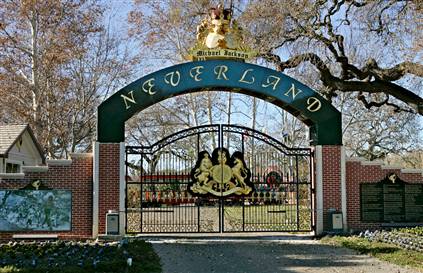
The owners of Michael Jackson’s famous Neverland ranch are reportedly interested in turning the property into a school for teenage musicians.
According to TMZ, Colony Capital wants to transform the 2,800 acre Californian estate into an institute bearing Jackson’s name. The facility would be patterned after prestigious performing arts school Juilliard – which teaches dance, drama and music to undergraduate and graduate students in New York City.
The Neverland school, TMZ reports, would teach talented kids skills across a variety of musical genres.
Before any work can start, Colony Capital needs Santa Barbara County to approve the plan and Michael’s estate must give permission for the King of Pop’s name to be used.
A representative for the estate said: “It’s an interesting idea. And we’d be open to it.”
Jackson bought the property in 1987, with the intention to turn it into a “paradise for children.” After installing a parade of fairground rides and a zoo, which included elephants, snakes, giraffes and llamas, Michael opened up his fairytale home to children.
However, the singer abandoned the fantasy home after being accused of child molestation in 2003. He was acquitted of all charges in 2005.
Will Smith, Mark Wahlberg Offered $1M to Fight Each Other
A boxing promoter is reportedly offering Will Smith and Mark Wahlberg $1 million to face-off in the ring on Feb. 26 in Las Vegas.
The theme: a match between two movie-trained boxers – Smith for “Ali” and Wahlberg for “The Fighter.”
Damon Feldman of the Hollywood Boxing Federation has successfully organized “celebrity” matches in the past… celebrity meaning Danny Bonaduce vs. Michael Lohan and Ricky Gervais vs. Grant Bovey. But Feldman stresses all proceeds would go to Smith and Wahlberg’s charities of choice.
“This will be a great opportunity for both stars to fight in the Superbowl of Hollywood boxing and to donate millions to their favorite charities,” Feldman told RadarOnline.com. “It would be a great event too. Can you imagine?”
Both are also around the same age – Smith is 42 and Wahlberg 39. Smith is 6ft 2in and appeared as a heavyweight in” Ali,” while Wahlberg is 5ft 9in and is a welterweight in “The Fighter.”
Feldman said the actors would only be required to fight three one-minute rounds.
“We don’t think these two are going to rip each other’s heads off,” Feldman said. “We’re just hoping they get into the ring and have a little fun duking it out.”
The fight, if Smith and Wahlberg agree to it, would take place in Las Vegas on Feb. 26, 2011.