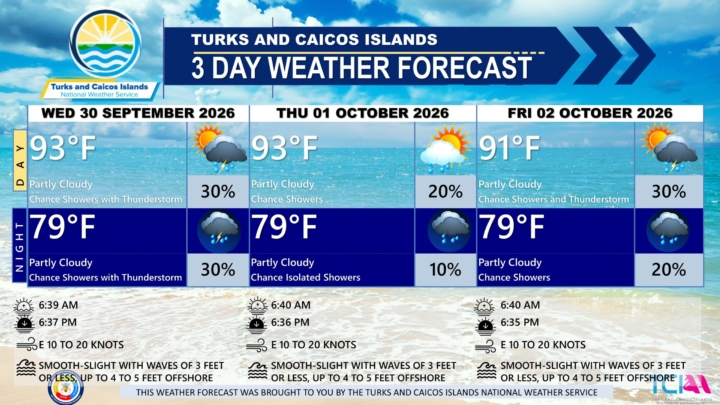
3 DAY PUBLIC WEATHER FORECAST FROM WEDNESDAY SEPTEMBER 30 2026
PUBLIC FORECAST FROM WEDNESDAY 30TH SEPTEMBER 2026
GENERAL SITUATION: A high pressure ridge is maintaining gentle to moderate breezes across the Turks and Caicos Islands today, with lingering moisture possibly triggering isolated showers this afternoon.
SPECIAL WARNINGS: No public warnings in effect at this time.
ALL AREAS
WEATHER: Partly cloudy with a low (20 to 30 percent) chance of showers with isolated thunderstorms possible through tonight.
WINDS: Easterly at 10 to 20 knots
SEAS: Smooth to slight with wave heights of 3 feet or less, building up to 4 to 5 feet offshore
DAYTIME HIGH TEMPERATURE 93°F 34°C
OVERNIGHT LOW TEMPERATURE 79°F 26°C
SUNSET: 6:37 PM
NEXT LOW TIDE: 06:15 PM (1.0 FT)
NEXT HIGH TIDE: 11:51 PM (2.3 FT)
EXTENDED FORECAST: High pressure will persist through the remainder of the week and into the weekend, maintaining moderate easterly winds. Abundant moisture will keep the chance of passing showers in the forecast through the period.
THURSDAY: Partly cloudy with a low (10 to 20 percent) chance of showers. Highs near 93°F (34°C).
THURSDAY NIGHT: Partly cloudy with a low (10 percent) chance of isolated showers. Lows around 79°F (26°C).
WINDS: Easterly at 10 to 20 knots
SEAS: Smooth to slight with wave heights of 3 feet or less, building up to 4 to 5 feet offshore
SUNRISE: 06:40 AM
SUNSET: 06:36 PM
LOW TIDE: 06:00 AM (0.3 FT) 07:12 PM (1.0 FT)
HIGH TIDE: 12:40 PM (3.0 FT) - - - - -
FRIDAY: Partly cloudy with a low (20 to 30 percent) chance of scattered showers and isolated thunderstorms in the afternoon. Highs near 91°F (33°C).
FRIDAY NIGHT: Partly cloudy with a low (20 percent) chance of showers. Lows around 79°F (26°C).
WINDS: Easterly at 10 to 20 knots
SEAS: Smooth to slight with wave heights of 3 feet or less, building up to 4 to 5 feet offshore
SUNRISE: 06:40 AM
SUNSET: 06:35 PM
HIGH TIDE: 12:42 AM (2.0 FT) 01:38 PM (3.0 FT)
LOW TIDE: 06:53 AM (0.3 FT) 08:12 PM (1.0 FT)
TROPICAL WEATHER OUTLOOK:
Active Systems:
Tropical Storm Hanna is located over the central subtropical Atlantic. Hanna is expected to become a post-tropical remnant low by tonight.
Tropical cyclone formation is not expected over the next 7 days.
FORECASTER: H. HAMILTON


Jamaica Welcomes First Cohort of Ghanian Nurses
Jamaica on Monday, September 28th, welcomed the first group of 43 Ghanaian nurses recruited under a four-year bilateral health agreement designed to strengthen the island’s healthcare workforce.
The nurses arrived at Norman Manley International Airport in Kingston as the Government begins implementing an agreement with Ghana that provides for the recruitment and temporary deployment of up to 400 healthcare professionals.
Signed earlier this year, the agreement establishes a framework for the voluntary recruitment of Ghanaian health professionals, particularly nurses and doctors. It also seeks to strengthen cooperation between the two countries while promoting ethical international recruitment practices.
Health and Wellness Minister Christopher Tufton described the arrival of the first cohort as an important step in Jamaica’s efforts to address healthcare staffing needs and strengthen the public health system.
According to the Ministry of Health and Wellness, the initiative forms part of its Vision for Health 2030 plan and Human Resource for Health Stabilization Strategy.
The nurses will be deployed to public hospitals across Jamaica, with most assigned to facilities within the Western Regional Health Authority (WRHA) and the South East Regional Health Authority (SERHA).
The group includes healthcare professionals with expertise in critical care, pediatrics, operating theatre nursing and midwifery, emergency care, oncology, mental health and psychiatric care.
Other members of the cohort will be deployed to facilities in Jamaica’s remaining health regions as well as the University Hospital of the West Indies.
The partnership extends beyond the recruitment of healthcare workers. Jamaica and Ghana are also expected to deepen cooperation in areas such as primary healthcare reform, national health insurance and the prevention and management of non-communicable diseases.
The Ministry of Health and Wellness said the broader partnership is intended to promote the exchange of knowledge, expertise and resources between the two countries as they work to strengthen their respective healthcare systems.
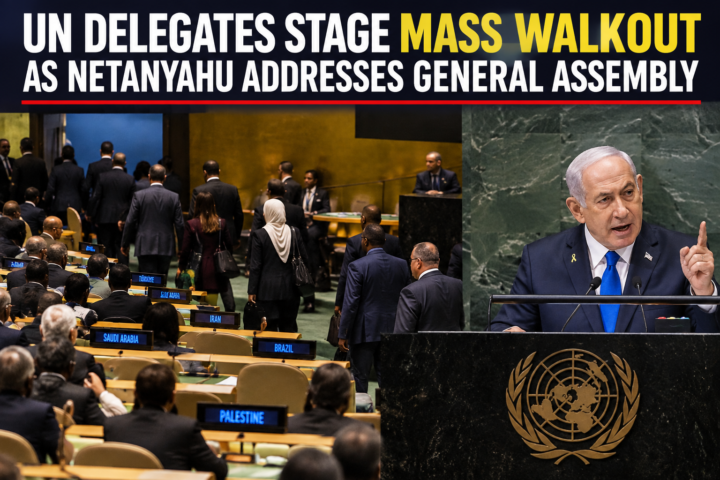
UN Delegates Stage Mass Walkout as Netanyahu Addresses General Assembly
Dozens of delegates walked out of the United Nations General Assembly on Thursday September 24th as Israeli Prime Minister Benjamin Netanyahu took the podium to address world leaders, in a dramatic protest against Israel’s military actions in Gaza and across the region.
The walkout unfolded at the UN Headquarters in New York on Thursday as Netanyahu began his address to the 81st session of the General Assembly. Delegates streamed from the chamber while others remained for the speech.
The Palestinian Mission to the United Nations had urged other delegations to participate in the protest by leaving the chamber when the Israeli prime minister was announced.
Netanyahu responded sharply to the walkout, describing the departing diplomats as “moral cowards.”
The protest highlighted deep international divisions over Israel’s conduct in Gaza and its broader military operations in the region.
During his address, Netanyahu mounted a strong defence of Israel’s military actions, arguing that the country was acting not only to protect itself but also to confront threats that extended beyond Israel’s borders.
He defended Israel’s military campaign against Iran and rejected allegations that Israel had committed genocide in Gaza, describing such accusations as false.
Netanyahu also vowed that Israel would continue its military operations, telling world leaders that his country intended to prevail in its conflicts.
The atmosphere inside the General Assembly hall was tense, with the Israeli leader receiving a mixture of cheers and boos as delegates departed. Supporters of Israel in the gallery also chanted as the president of the General Assembly repeatedly called for order.
The mass walkout came amid mounting international criticism of Israel over the war in Gaza and its military actions elsewhere in the Middle East.
Despite the protest, several delegations remained in the chamber as Netanyahu delivered his address, underscoring the sharp divisions among UN member states over Israel and the continuing conflicts in the region.
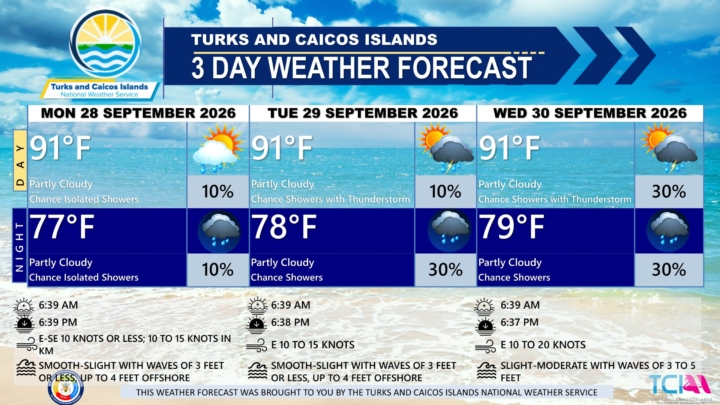
3 DAY PUBLIC WEATHER FORECAST FROM MONDAY SEPTEMBER 28TH 2026
GENERAL SITUATION: A broad upper-level trough interacting with the remnants of a weakening frontal boundary will trigger showers and thunderstorms across portions of the Turks and Caicos Islands today.
SPECIAL WARNINGS: There are no public warnings in effect at this time.
ALL AREAS
WEATHER: Partly cloudy with a low (10 percent) chance of isolated showers through tonight.
WINDS: East to southeast at 10 knots or less, increasing to 10 to 15 knots by this evening
SEAS: Smooth to slight with wave heights of 3 feet or less, building up to 4 feet offshore
DAYTIME HIGH TEMPERATURE 91°F 33°C
OVERNIGHT LOW TEMPERATURE 77°F 25°C
SUNSET: 06:39 PM
NEXT LOW TIDE: 04:32 PM (0.7 FT)
NEXT HIGH TIDE: 10:20 PM (2.3 FT)
EXTENDED FORECAST: High pressure will build across the region through the early part of the week. However, increasing moisture and an upper-level disturbance will bring a return of unsettled weather and showers across the Turks and Caicos Islands from Tuesday through much of the work week. By midweek, winds are expected to increase in strength through Friday as high pressure strengthens.
TUESDAY: Partly cloudy with a low (10 percent) chance of showers with isolated thunderstorms. Highs near 91°F (33°C)
TUESDAY NIGHT: Partly cloudy, with a low (10 to 30 percent) chance of showers. Lows around 78°F (25°C).
WINDS: Easterly at 10 to 15 knots
SEAS: Smooth to slight with wave heights of 3 feet or less, building up to 4 feet offshore
SUNRISE: 06:39 AM
SUNSET: 06:38 PM
LOW TIDE: 04:27 AM (0.3 FT) 05:23 PM (0.7 FT)
HIGH TIDE: 10:55 AM (3.0 FT) 11:04 PM (2.3 FT)
WEDNESDAY: Partly cloudy, with a low (10 to 30 percent) chance of showers with isolated thunderstorms. Highs near 91°F (33°C)
WEDNESDAY NIGHT: Partly cloudy, with a low (10 to 30 percent) chance of showers. Lows around 79°F (26°C).
WINDS: Easterly at 10 to 20 knots
SEAS: Slight to moderate with wave heights of 3 to 5 feet
SUNRISE: 06:39 AM
SUNSET: 06:37 PM
LOW TIDE: 05:12 AM (0.3 FT) 06:15 PM (1.0 FT)
HIGH TIDE: 11:46 AM (3.0 FT) 11:51 PM (2.3 FT)
TROPICAL WEATHER OUTLOOK:
Active Systems: There are currently two active systems in the Atlantic. Tropical Depression Fay is located well to the southwest of the Azores, and newly formed Tropical Storm Hanna is located in the Central Subtropical Atlantic, about 870 miles east-northeast of Bermuda. Neither system poses a threat to the Turks and Caicos Islands. See the latest News Item issued by the Bahamas Department of Meteorology on our Facebook page for more information.
FORECASTER: H. HAMILTON

TCI Joins in Celebrating World Tourism Day
World Tourism Day has been celebrated every year on September 27 since 1980.
The date marks the anniversary of the adoption of the UN Tourism Statutes in 1970. This timeframe is intentionally selected to coincide with the end of the high travel season in the Northern Hemisphere and the beginning of the season in the Southern Hemisphere.
Tourism remains a major pillar of the Turks and Caicos Islands economy, with the destination continuing to attract large numbers of stayover and cruise visitors.
Now we'll hear from some young Turks and Caicos Tourism Leaders.
With visitor numbers remaining high, tourism continues to play a central role in economic activity across the Turks and Caicos Islands, supporting hotels, restaurants, transportation providers, tour operators and other businesses connected to the industry.
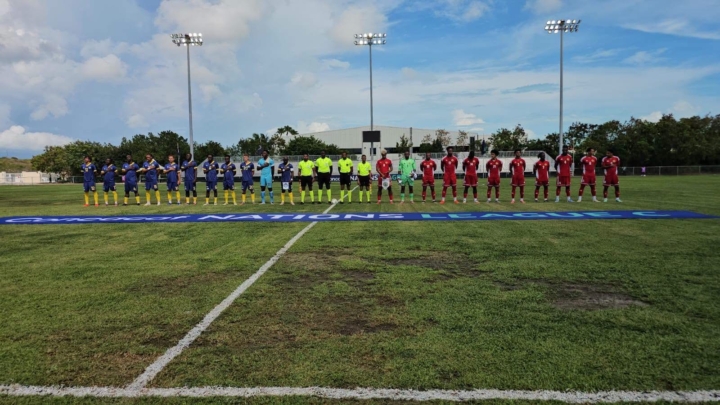
TCI vs Montserrat in CONCACAF Nations League Opener
The Turks & Caicos national football team took part in the opener of the Concacaf Nations League tournament which started on Wednesday September 23rd between the TCI & Montserrat at the TCIFA field in Providenciales.
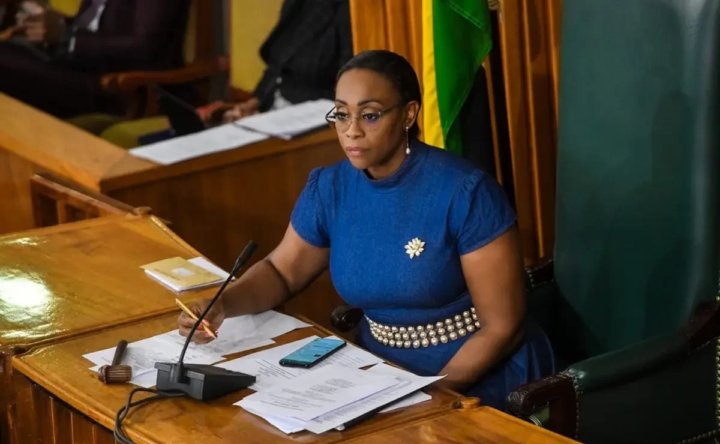
Speaker of Jamaica's House of Representatives Elected Vice-Chairperson of the Commonwealth Parliamentary Association
Speaker of Jamaica’s House of Representatives Juliet Holness has been elected vice-chairperson of the Commonwealth Parliamentary Association (CPA), becoming the first female presiding officer from Jamaica to hold the position.
Holness was elected during the 69th Commonwealth Parliamentary Conference in Cape Town, South Africa, and will serve a one-year term.
Her election marks Jamaica’s return to the CPA vice-chairpersonship after 33 years. The last Jamaican to hold the post was former House Speaker Headley Cunningham, who served from 1992 to 1993.
Holness previously served as chair of the CPA Caribbean, Americas and the Atlantic (CAA) Region. Her tenure included Jamaica’s hosting of the 48th CPA Caribbean, Americas and the Atlantic Regional Conference from August 30 to September 5th.
She credited presiding officers and delegates from across the region for supporting her candidacy, describing her election as the result of a collective regional effort.
Holness said one of her priorities will be ensuring that the perspectives and experiences of small states and smaller jurisdictions remain represented in the CPA’s work.
In her new role, she will continue representing the Caribbean, Americas and the Atlantic Region within the association’s international governance structure and will also serve on the CPA Finance Subcommittee.
Holness assumes the vice-chairpersonship at a significant period for the organization as it implements its 2026–2029 Strategic Plan and transitions to a new international legal status following legislative changes in the United Kingdom recognizing the CPA as an international interparliamentary organization.
The Commonwealth Parliamentary Conference is the CPA’s principal annual gathering, bringing together presiding officers, parliamentarians and parliamentary officials from across the Commonwealth.
This year’s conference is being held under the theme, “Strengthening International Law and Parliamentary Democracy in a Changing World Order: Commonwealth Leadership.”
Established in 1911, the Commonwealth Parliamentary Association represents nearly 180 parliaments and legislatures across nine Commonwealth regions.
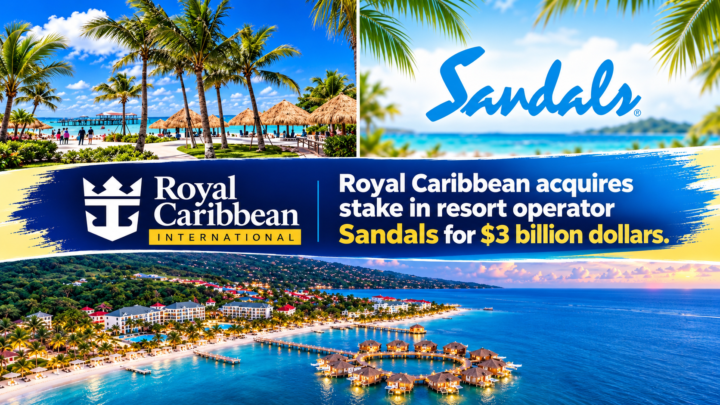
Royal Caribbean Expands Beyond Cruising With $3 Billion Sandals Resorts Deal
On September 23, 2026, Royal Caribbean Group announced a landmark agreement to acquire a 50% equity stake in Sandals Resorts for approximately $3 billion dollars.
The blockbuster joint venture values the iconic Caribbean all-inclusive resort company at roughly $6 billion and represents a major shift in the global vacation industry.
The transaction, which is expected to close in early 2027, will be financed through committed debt funding from Morgan Stanley. By combining one of the world’s largest cruise operators with one of the Caribbean’s best-known luxury resort brands, the partnership significantly expands Royal Caribbean’s presence beyond the cruise sector.
Royal Caribbean’s approximately $3 billion investment will secure a 50% ownership position in Sandals Resorts, implying an overall valuation of approximately $6 billion.
Governance of the new joint venture will be shared between the two companies, with Royal Caribbean Group Chairman and CEO Jason Liberty and Sandals Executive Chairman Adam Stewart providing board leadership.
The deal encompasses Sandals’ portfolio of 20 premier all-inclusive resorts throughout the Caribbean, spanning two of the region’s most recognizable hospitality brands.
Sandals Resorts represents the company’s adults-only luxury offering, with properties across Antigua, The Bahamas, Barbados, Curaçao, Grenada, Jamaica, St. Lucia, and St. Vincent.
Beaches Resorts serves the family vacation market, with large all-inclusive properties in Jamaica and Turks and Caicos.
Together, the brands give Royal Caribbean an immediate and substantial presence in the Caribbean’s land-based luxury vacation market.
The investment represents a major step in Royal Caribbean Group’s strategy to compete across the broader global vacation market rather than focusing exclusively on cruises. Adding a significant land-based resort business could also provide greater diversification when demand fluctuates across individual cruise markets or regions.
The partnership could eventually create new connections between cruise and resort vacations. Although existing reservations and loyalty programs remain unchanged for now, the companies intend to explore joint vacation packages, expanded distribution, and cross-brand benefits. Those opportunities could potentially include special resort access or other exclusive experiences for Royal Caribbean’s most loyal guests.
The deal ultimately brings together two major names in leisure travel—one built at sea and the other on land—and could create a more integrated vacation platform spanning cruises, resorts, and Caribbean destinations.
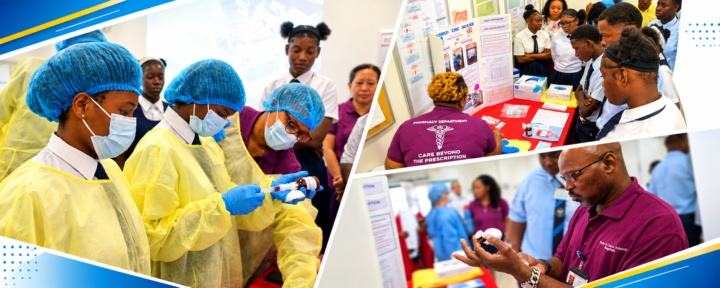
TCI Hospitals Join in Celebrating World Pharmacy Week
TCI Hospital joined healthcare organisations around the world in celebrating World Pharmacy Day from September 21-25, 2026, recognising the vital contribution pharmacists and pharmacy technicians make to patient safety, quality care and stronger healthcare systems.
Under the theme “Empowering Pharmacists for Healthier Futures,” this year’s observance highlighted the importance of enabling pharmacy professionals to use their knowledge, skills and expertise to their fullest potential in improving health outcomes and supporting patients throughout their healthcare journey.
As part of World Pharmacy Week, September 19–25, TCI Hospital celebrated its Pharmacists and Pharmacy Technicians while engaging patients, students and the wider community in activities focused on medication safety, pharmacy careers and the expanding role of pharmacy professionals in healthcare.
Pharmacists and pharmacy technicians are integral members of the multidisciplinary healthcare team at TCI Hospital. While pharmacy is often associated with dispensing and preparing medicines, the work of pharmacy professionals extends far beyond the pharmacy counter.
The hospital’s pharmacy team works collaboratively with physicians, nurses and other healthcare professionals to support the safe and appropriate use of medications throughout the patient journey. Their work includes medication preparation and management, medication reconciliation and review, patient education, and processes designed to identify and reduce medication-related risks.
Their specialised knowledge is particularly important in clinical areas such as the Neonatal Unit, Oncology and Dialysis services, where medication management requires precision, careful calculation, specialised preparation and close attention to individual patient needs.
For TCI Hospital, World Pharmacy Day therefore provides an opportunity not only to celebrate pharmacy professionals, but also to increase public understanding of their important contribution to safe, effective and patient-centred care.
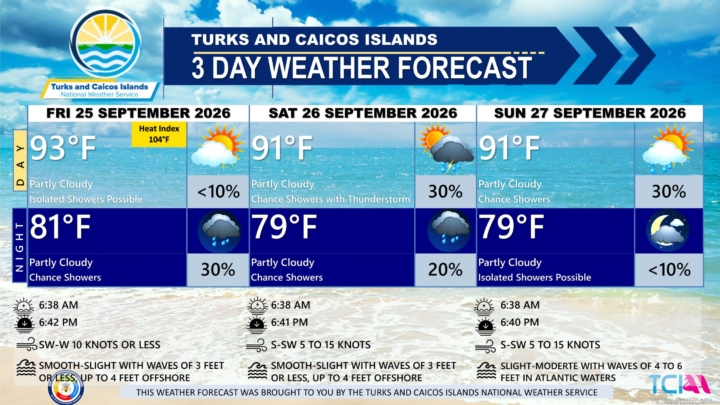
3 DAY PUBLIC WEATHER FORECAST FROM FRIDAY SEPTEMBER 25TH 2026
GENERAL SITUATION: A weak pressure gradient is maintaining light winds and generally quiet conditions across the Turks and Caicos Islands today. However, prefrontal activity ahead of an approaching cold front could trigger a few showers overnight.
SPECIAL WARNINGS: No public warnings in effect at this time.
ALL AREAS
WEATHER: Partly cloudy with isolated showers possible today, then a low (10 to 30 percent) chance of showers tonight.
WINDS: Southwest to west at 10 knots or less
SEAS: Smooth to slight with wave heights of 3 feet or less, building up to 4 feet offshore
DAYTIME HIGH TEMPERATURE 93°F 34°C
HEAT INDEX 104°F 40°C
OVERNIGHT LOW TEMPERATURE 81°F 27°C
SUNSET: 06:42 PM
NEXT LOW TIDE: 02:04 PM (0.7 FT)
NEXT HIGH TIDE: 08:15 PM (2.6 FT)
EXTENDED FORECAST: The cold front will stall near the Central Bahamas on Saturday, bringing cloudy skies and an increased chance of showers across the Turks and Caicos Islands through the weekend. Conditions are expected to improve by Monday as the front weakens and high pressure builds across the area.
SATURDAY: Partly cloudy with a low (30 percent) chance of showers with isolated thunderstorms. Highs near 91°F (33°C)
SATURDAY NIGHT: Partly cloudy, with a low (10 to 20 percent) chance of showers. Lows around 79°F (26°C).
WINDS: South to southwest at 5 to 15 knots
SEAS: Smooth to slight with wave heights of 3 feet or less, building up to 4 feet offshore
SUNRISE: 06:38 AM
SUNSET: 06:41 PM
LOW TIDE: 02:28 AM (0.7 FT) 02:54 PM (0.7 FT)
HIGH TIDE: 08:38 AM (2.6 FT) 08:56 PM (2.6 FT)
SUNDAY: Partly cloudy, with a low (10 to 30 percent) chance of showers. Highs near 91°F (33°C)
SUNDAY NIGHT: Partly cloudy, with isolated showers possible. Lows around 79°F (26°C).
WINDS: South to southwest at 5 to 15 knots, falling light and variable at times.
SEAS: Smooth to slight with wave heights of 3 feet or less in the Caicos Bank; slight to moderate with wave heights of 4 to 6 feet in Atlantic waters.
SUNRISE: 06:38 AM
SUNSET: 06:40 PM
LOW TIDE: 03:06 AM (0.7 FT) 03:43 PM (0.7 FT)
HIGH TIDE: 09:23 AM (3.0 FT) 09:37 PM (2.6 FT)
TROPICAL WEATHER OUTLOOK
Active Systems:
Tropical Storm Fay is located well to the west-southwest of the Azores. Some strengthening is expected overnight before weakening likely commences by Friday afternoon or evening. A generally westward motion with some decrease in forward speed is expected over the next few days.
Tropical Storm Gonzalo is located east-southeast of the southernmost Cabo Verde Islands. The center will pass near or over portions of the Cabo Verde Islands today and tonight. Some strengthening is possible today, with a gradual weakening trend forecast to begin this weekend.
Tropical cyclone formation is not expected in the next 7 days.