King Charles III arrived in the Bahamas on Tuesday, October 27th, beginning a nine-day Caribbean tour overshadowed by renewed demands for an official apology and reparations for Britain’s role in the transatlantic slave trade.
The visit marks King Charles’ first official trip to the Bahamas since ascending the throne, bringing both royal celebrations and public protests as Caribbean nations continue to confront the lasting legacy of British colonial rule.
In preparation for the king’s arrival, the Bahamian government ordered all public schools on New Providence to close, allowing students and residents to participate in welcoming ceremonies.
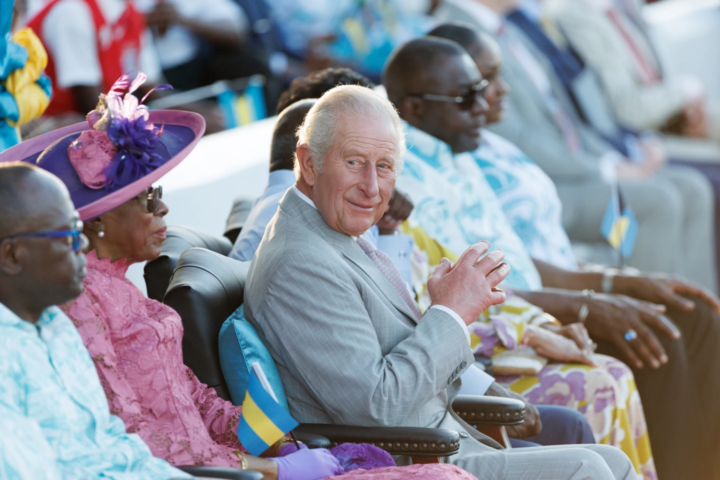
King Charles, dressed in a light gray suit and sunglasses, was greeted by Governor-General Dame Cynthia A. Pratt and Prime Minister Philip ‘Brave’ Davis.
Members of the Royal Bahamas Police Force and the country’s armed forces also participated in a formal welcoming ceremony, marching in formation, with some wearing traditional pith helmets.
Following his arrival, King Charles traveled to Clifford Park, a location with deep historical significance for the Bahamas and the British monarchy.
The King last officially visited the park in 1973 as Prince of Wales, during the historic celebrations marking the Bahamas’ independence after approximately 300 years of British colonial rule.
More than five decades later, his return comes at a time when calls for Britain to acknowledge and address the injustices of slavery and colonialism are growing louder across the Caribbean.
Near Clifford Park, members of the Bahamian Rastafarian community and other demonstrators gathered along the roadway, demanding reparations and accountability from the British monarchy.
The demonstrations reflected the frustration of those who believe the British government and monarchy have yet to fully address the historical suffering and economic consequences of slavery.
Despite the protests, King Charles also received a warm reception from crowds gathered at Clifford Park.
Dozens of schoolchildren waved small Bahamian flags as the monarch arrived for a cultural celebration featuring traditional music, singing and performances by young Bahamians.
The contrasting scenes highlighted the complex relationship between the Bahamas and the British monarchy, with some residents embracing the royal visit while others demanded greater recognition of the country’s colonial past.
During his three-day stay in the Bahamas, Charles is expected to participate in several official engagements, including visits focused on environmental conservation and national development.
His itinerary also includes meetings with members of the Royal Bahamas Defence Force, senior government officials and civil society representatives.
The visit comes as Caribbean nations increasingly discuss the future of their relationships with the British monarchy and the broader Commonwealth.
Following his engagements in the Bahamas, King Charles is scheduled to travel to Guyana on October 29 for a two-day visit.
The King’s Caribbean itinerary also includes Antigua and Barbuda, where he is scheduled to attend the Commonwealth Heads of Government Meeting.
For many across the region, the visit is about more than welcoming a king. It is also about confronting history, demanding accountability and shaping the future of the Caribbean’s relationship with Britain.