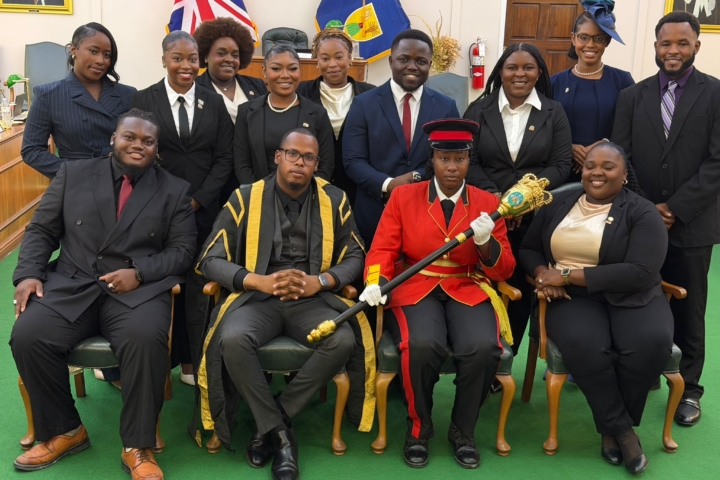
PS Finance Delton Jones made the following remarks at the CPA workshop held in Grand Turk. Here is the full text of his speech.
It is indeed a privilege for me to make remarks at this orientation workshop for the TCI Country Poverty Assessment (CPA).
In bringing these remarks, I must first thank the Caribbean Development Bank for providing the funding for the CPA. I would also like to congratulate the Project Consultants on their winning bid, based on our initial meeting yesterday I am looking forward to working along with you as you work along with us – the National Assessment Team – to undertake this very important and timely survey.
Finally, I would like to thank all of you here for accepting the invitation from the Ministry of Finance to serve on the NAT. I would also like to pay tribute to Mr. and Mrs Forbes and the team at DEPS for their dedication to the CPA process in the current very challenging civil service context.
I would like to point out that during 1999 the Bank provided assistance to the TCI to undertake a CPA, as part of a wider regional project. I was a part of that process and I am pleased that report of the earlier CPA was a seminal work on social and economic development conditions in the TCI, whose recommendations informed poverty reduction and other socioeconomic policies at the time: for example A Poverty Reduction Action Plan was prepared and was the basis for TCI assistance under the Bank’s Basic Needs Trust Fund Program for a number of years. Indeed a number of other empowerment interventions by successive TCI Governments in the areas of health, education and small business development found their genesis in the 1999 CPA report.
When the CPA was undertaken the intention was to develop in-country capacity to carry similar assessments every five (5) years. Due to capacity gaps the CPAs have not been updated. In insuring period economic and social conditions and indeed the face of poverty in the TCI has changed. We have experienced unprecedented economic growth and an even more spectacular bust, whose consequences we are still grappling with today – the impacts of which are influencing the poverty conditions which the CPA will analysis and measure.
The current CPA is critical and will therefore look at poverty conditions in the TCI since 1999 while paying particular attention to building local capacity for future updating of the CPA and carrying out other relevant surveys from time to time. There will no doubt be very revealing results, which I am sure would be widely debated in our community and further afield.
The CPA in the TCI will benefit from the vast experience of the CDB over the years and will be undertaken following tried and tested methodology; which gives us the assurance the objectives of the CPA will be achieved. It should be noted that the overall objective of the CPA is to assess the current conditions affecting the welfare of the people, identify policies, strategies action programs and projects that would reduce the extent and severity of poverty in the TCI. The CPA would analyses poverty conditions taking into consideration gender, age and demographic issues, the processes that generate and maintain conditions conducive to poverty, existing responses to poverty and improved responses to poverty
The CPA methodology has the following elements: a quantitative survey of living conditions; a qualitative assessment of macro-social and economic environment, institutional analyses and participatory poverty assessment. These would be complemented by a poverty and social impact analysis (PSIA) of current programs.
The results of the CPA would inform poverty reduction and alleviation policies and other education, health and employment strategies within the country. They would also inform the design of future donor programs in the TCI. The CPA would also look at progress on achieving the Millennium Development Goals and provide a basis for international comparison with other countries.
This time around the TCI will seek to integrate the CPA with the Census and the Household Income and Expenditure Survey (HIES). This would ensure complementary actions to limit duplication and maximize capacity.
In ending these remarks I would like to make a few comments on the role of the NAT and its importance.
The National Assessment Team (NAT) working in collaboration with the Government, the Project Consultants is actually the owner of the CPA. This why today we have assembled stakeholders and representation consisting of officials from the government statistics department, the departments responsible for social and economic policies, health, education and gender affairs; CBO and NGOs. This proposed broad based NAT will ensure views and perspectives from various disciplines and spheres of influence which both cause and seek to address poverty conditions are brought together as part of the CPA process.
As so today the orientation workshop is designed to elaborate on the CPA process and the roles and responsibilities of the NAT and other parties such as the Bank, the government and the consultant. So once we leave here today we must be assured of our respective role s and what we can do to ensure that the CPA is successful.
The key point we have to promote is local ownership of the CPA through and active NAT. This is vital if we are have the local capacity to update the CPA in the future.
Therefore Your role, our role, my role as a member of the NAT is of critical importance if we are to have a success result. We therefore will work towards ensuring the NAT is effectively organized to carry out its work across the length and breadth of the TCI. This will ensure that local knowledge and islands and community specific conditions are captured and reflected in the CPA process. The NAT would also contribute to successful results by assisting with data collection and organizing and hosting community level meetings. There would also be subcommittees of the NAT to look at specific issues. We also envisage that the NAT would be involved in championing the CPA and also in local public relations. To facilitate the NAT the government will provide secretariat services to prepare and organize meetings, mount a public relations program and ensure information distribution and communications with the members of the NAT.
Thank you for your presence here today and welcome again.
Delton Jones
Related Posts

Man Dies Following Boat Collision Between Dellis Cay and Parrot Cay
Four persons were transported to the Cheshire Hall Medical Centre for medical…

SECURITY IS THE PRECONDITION FOR DEVELOPMENT – Commissioner Fitz Bailey
"WE WILL NOT TAKE THE BAIT! WE WILL REMAIN FOCUSED, united and resolute,"…