
George Michael shelves UK shows due to pneumonia
Singer George Michael has cancelled the remaining dates of his tour because of ill health, his publicist has confirmed.
The 48-year-old was admitted to hospital in Vienna on Monday and is being treated for "severe" pneumonia.
His publicist added that the singer is "responding to treatment and slowly improving".
Discussions are under way about rescheduling the remaining 14 dates that have been put off.
The star's spokeswoman said in a statement: "George Michael is ill with pneumonia and any other speculation regarding his illness is unfounded and untrue.
"He is receiving excellent medical care, he is responding to treatment and slowly improving.
"To ensure his complete well-being, George Michael's doctors have advised that he cannot perform the rest of his Symphonica tour and that he instead takes a full and complete rest."
The former Wham! singer kicked off his European tour in Prague in August.
It was originally meant to include 47 concerts. He was due to bring the tour to the UK on Saturday, with dates continuing until 19 December.
Professor Dr Christoph Zielinski and Professor Dr Thomas Staudinger of the Vienna hospital where the musician is being treated said: "George Michael has severe community acquired pneumonia and is being treated as an inpatient.
"His condition has stabilised and he is responding to treatment.
"From the current point of view, the time until recovery cannot be estimated, but he will not be able to perform the rest of the tour. Besides medical treatment, complete rest and peace and quiet are mandatory."
In October, a viral infection caused Michael to pull out of a show at the Royal Albert Hall in London, following advice from doctors.

Kylie Minogue inducted into Aria hall of fame
Kylie Minogue and children's entertainers The Wiggles have been inducted into the Aria Awards hall of fame in Sydney, Australia.
Minogue, 43, who was inducted by PM Julia Gillard, said she was "a very proud Australian".
"Red Wiggle" Murray Cook said the band, who who have sold 30m albums and DVDs, were "just a bunch of four pre-school teachers... playing music for kids".
The awards are given by the Australian Recording Industry Association.
"I'm always bragging about our country wherever I am in the world and tonight's award means so much to me," Minogue told the audience at the Allphones Arena.
The singer, who has sold more than 68 million records, added: "I just want to let all of you know and everyone at home, that Australia I love you and I thank you very much."
The Wiggles' Cook said he and his fellow members had been on "such a wonderful ride".
"We've been playing for 20 years and this has been a great 20th year anniversary for us to get something like this."
Cook previously told BBC News the band played "early 60s style... but with different lyrics".
"In rock 'n' roll, the songs are mostly about love but with children you can write about anything," he added.
"A ride in the car, what you're going to eat, it's quite limitless so you try to think what's in their world, what interests them. Everything's exciting to a young child."
Past hall of fame inductees include The Bee Gees, INXS, AC/DC, Rolf Harris and Mental As Anything.
Among other winners on the night were rock band Boy & Bear, who picked up five awards including album of the year for their debut collection Moonfire.
Andrea True, who sang More More More, dies aged 68
Disco star Andrea True, whose biggest hit was More More More (How Do You Like It?), has died aged 68.
The singer began her career as an actress in pornographic films, shortening her name from Andrea Truden for the sake of her family.
More More More, a top five hit in the UK, was recorded in Jamaica, where True had been filming a commercial in 1975.
It came about almost by accident, after True was forbidden to leave the country with the earnings from her day job.
True spent the money to flesh out a song she had made up, pairing a hazy piano-based instrumental with girly, breathless vocals.
She took the demo back to New York, where it was remixed by Tom Moulton and released as a single, credited to the Andrea True Connection.
Reaching number four in the US, the single has been called "one of the truly classic club hits of its time" by Billboard magazine.
It was followed by an album, also titled More More More, and a further UK hit single, What's Your Name What's Your Number.
But her second album failed to sell in large numbers, essentially ending her recording career.
Speaking to the Los Angeles Times in 1976, she stressed that she would not return to her former career in adult films - having previously made more than 40 titles, including Deep Throat II.
"I would be a waitress or a typist before I'd star in another," she told the newspaper.
Instead, she moved to Florida and sang in clubs until complications from throat surgery made that impossible.
In later years, she took a variety of jobs - including drug and alcohol counsellor, telemarketer and estate agent.
She continued to earn royalties from her biggest hit, however. It has soundtracked numerous advertisements over the years - including recent campaigns for Nutgrain cereal bars in the UK and Honey Bunches of Oats cereal in the States.
More More More was also sampled by Canadian band Len for their single Steal My Sunshine, which became a top 10 hit in 1999, and covered by Rachel Stevens in 2004.
True died on 7 November in a New York hospital.
The news was announced by the Gilpatric-VanVliet funeral home in Kingston, New York, and confirmed by her friend, Louise Marsello, who told the New York Times the cause had been heart failure.
No immediate family members survive.
Federer ranks World Tour Finals victory among his best
Roger Federer said winning a record sixth season-ending crown was "one of his greatest accomplishments".
The 16-time Grand Slam champion beat Jo-Wilfried Tsonga to end his year with victory at the ATP World Tour Finals.
"It feels very special indeed," said Federer, 30. "I know it's one of my greatest accomplishments. It was the strongest finish to a season I've ever had in my career."
He lifted titles in Basel and Paris before winning all his ties in London.
He has not lost since the US Open in September and will take a 17-match unbeaten streak into 2012.
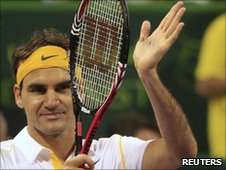 "Right now I'm happy the season is over," said Federer, who finished without a Grand Slam trophy for the first time since 2002.
"It has been long and it has been gruelling, but I'm happy I'm still strong and healthy. I'm really excited for next year - I'm upbeat about what's to come."
A set and a break to the good, Federer looked on course for a routine victory over sixth seed Tsonga.
But the powerful Frenchman broke back and saved a match point to snatch the second set on a tie-break.
However, Federer came through strongly in the decider to collect a 70th title in his 100th career final.
"The relief was amazing," stated the Swiss. "Jo played well. Could I have won it easier? I guess; I had it in my hands.
"I had to go through the third set but eventually I made it, which probably felt even better. The joy was great."
Federer did, however, suggest the season-ending championship final should be the best-of-five sets rather than its current best-of-three format.
"If it's a match like this it's fine as there's enough tennis for the people," he commented. "But if I would have served it [the second set] out, it would have been over in a hurry.
"I think I almost felt the spectators weren't quite ready for it to end quite yet. Although many would have been happy for me, they would have loved to see more tennis.
"I remember sitting in a room in Shanghai where the players were asked, 'Would you like the year-end final to be five sets or three. Everyone said best-of-three sets. I was the only guy that said five.
"I do care actually. I think it makes for a great year end. Sure, you can see why maybe it's healthier to play best-of-three but I believe the final could be a best-of-five set match."
Tsonga was bidding to become the first French player to win this event but despite his defeat, he showed signs of being able to challenge the 'big four' of Federer, Novak Djokovic, Rafael Nadal and Andy Murray in 2012.
"I fought all I could," said the 2008 Australian Open runner-up. "I'm happy because I had a good week. I can look myself in the mirror and say I gave everything, I fought enough.
"I need to improve again. I have to work hard and be quicker on the court. If I can move better next year I will have some better results."
NBA players ask judge to stay court proceedings
A group of NBA players that has filed an antitrust lawsuit against the league is asking a Minnesota judge to hold off on any court proceedings while the two sides work on a new collective bargaining agreement.
The players sent a letter to U.S. District Judge Patrick Schiltz on Monday. The letter informs the judge that the two sides have reached a tentative agreement to resolve their labor dispute, including lawsuits filed in Minnesota by the players and in New York by the owners.
The letter states that both sides are working to “reduce the tentative resolution to a comprehensive, written agreement.” The players ask Schiltz to stay all scheduled court proceedings until Dec. 9, by which time they plan to inform him on whether a settlement has been finished.
AP
Sammy backs young team to come good
West Indies skipper Darren Sammy has backed his young team to deliver in all departments when they face India in the upcoming One-Day series, which bowls off today. Speaking yesterday ahead of the first match, the allrounder said the young players will get their chance to impress and perform on the international stage. The opening match will be at the Barbati Stadium in Cuttack followed by games in Visakhapatnam (Friday), Ahmedabad (Monday), Indore (December 8) and Chennai (December 11).
Kieron Pollard, Andre Russell, Lendl Simmons, Anthony Martin and Danza Hyatt are key members have joined the West Indies One-Day squad, while the selectors have called up new boys Jason Mohammed and Sunil Narine. “We will be having a set of new players in the One-Day squad, and they are fresh after a few days’ rest, and I hope that has helped them to stay sharp. But then again we need a collective effort to beat India, as we can’t depend upon one or two individuals,” Sammy said. “Pollard’s inclusion is quite a blessing for us, as apart from his undoubted skills, he knows the Indian conditions well because of playing in the IPL. So, we would like to tap his brain for some information.”
He hoped that the absence of his Indian counterpart Mahendra Singh Dhoni from the five-match One-Day series would help his team. “Definitely, it will be a boost for us. Dhoni is not just a good captain, but he’s also someone who contributes massively for India at number five or six position. So, it’s something we would like to exploit, but having said that we need to play very good, consistent cricket to beat India at their home.” West Indies have been hugely competitive in the last two series against India, home and away, and Sammy said they have taken a lot of positives from them. “We are happy that we haven’t been mere pushovers against a vastly talented and experienced side like India. In the One-Day and Test series at home, we had managed to compete very well with India, and here also we created a lot of opportunities in the Test series. “But now we need to exploit those opportunities, and get some good results. Yes, we are quite confident that we can compete with India on an equal footing in this series,” he said.
India’s previous home One-Dayer took place in front of a sparse crowd at the Eden Gardens, reinforcing fears over the quantity of cricket being played, but with today’s match taking place at the smaller cricketing centre of Cuttack, a jam-packed stadium is expected. Even though the the biggest crowd-pullers like Dhoni and Sachin Tendulkar are missing, tickets sales at the Barabati Stadium have been brisk, and even the practice sessions drew plenty of spectators. A full-strength India would be expected to roll over West Indies at home, but they are missing at least four of their headliners. In addition, they have lost the most experienced bowler in their squad, Praveen Kumar—he was ruled out of the first three One-Dayers with an injury. That means the most seasoned of the quicks is Vinay Kumar, all of 11 One-DOyers old, giving the stand-in captain Virender Sehwag something of a challenge. India are also missing two of their finishers in Dhoni and Yuvraj Singh, giving the likes of Rohit Sharma an audition for a permanent place in the hugely competitive middle order.
More Info
WI SQUAD: Darren Sammy (Captain), Adrian Barath, Darren Bravo, Danza Hyatt, Anthony Martin, Jason Mohammed, Sunil Narine, Kieron Pollard, Kieran Powell, Denesh Ramdin, Ravi Rampaul, Kemar Roach, Andre Russell, Marlon Samuels, Lendl Simmons
INDIA TEAM: Virender Sehwag (capt), Parthiv Patel (wk), Gautam Gambhir, Virat Kohli, Suresh Raina, Rohit Sharma, Ravindra Jadeja, R Ashwin, Vinay Kumar, Varun Aaron , Umesh Yadav
Medalists encourage young swimmers
Cayman’s superstar Pan Am games medal winners, Brett and Shaune Fraser spoke about their swimming careers to excited young swimmers from the Camana Bay Aquatic Centre and the Stingray Swim clubs at the Camana Bay swimming pool.
The brothers spoke about how they started off, just like many of the kids listening to them, by going to the Lions pool after school, and the Learn to Swim programme.
“When we were about nine or ten was when we started getting more serious about it and we had a coach help us with our technique, which is probably the most important thing in swimming,” said Brett, 23, who won a gold medal in the games.
“Swimming can open a lot of doors for you guys in the future. You just want to keep improving on your best time and that’s the best thing you can do,” he added.
Then 24-year old Shaune who won Silver, described the excitement of participating in his first Olympics at the tender age of 16:
“It was definitely a little bit overwhelming. I don’t know if anybody’s watched the Olympics on TV but it’s like that, but maybe 100 times over in real life,” he said.
Talking about the brothers’ recent triumph in winning both the Gold and Silver medals in the Pan American games, Shaune said: “We just wanted to go out there and give it our all; it was definitely a good experience.
Brett said: “This year was a good year for both of us.”
Shaune said: “We have a big year coming up. We are going to the Olympics and I think we are swimming in the same event in London in July of next year. We are getting excited and I think we are going to be ready to go when it comes time.”
Speed found dead
Gary Speed, who took over as Wales football coach just 11 months ago after playing for his country a record 85 times, has died. He was 42.
The Football Association of Wales (FAW) announced Speed's death yesterday without giving the cause.
Local police said there were no suspicious circumstances surrounding Speed's death.
Speed is survived by his wife and two children.
"We extend our sympathies and condolences to the family,'' the FAW said in a statement. "We ask that everyone respects the family's privacy at this very sad time.''
Speed, whose 85 caps is a Welsh record for an outfield player, had become Wales coach in December in a move long predicted by former teammates and commentators. Only goalkeeper Neville Southall, with 92 appearances, played more games for Wales.
The youngest member of Leeds' 1991-92 title-winning midfield and the first player to reach 500 Premier League appearances, Speed was renowned as a dedicated professional and had just coached his native Wales to three straight wins.
Speed began his career as a skillful, speedy wide midfielder before maturing into a canny central player able to find space for his shots and headers with a well-timed late run into the area. He scored more than 100 goals across spells with Leeds, boyhood club Everton, Newcastle, Bolton and Sheffield United.
Speed became the first player to play in 500 Premier League games and held the all-time record with 535 until it was surpassed by goalkeeper David James in 2009. Ryan Giggs has also since passed the mark.
The midfielder also scored in every topflight season in which he played until dropping out of the Premier League in 2008 when he joined Sheffield United.
Last year, Queen Elizabeth II gave Speed the Member of the British Empire award in her annual Birthday Honors list for his services to football.
US and EU consider bilateral trade talks
US and EU leaders have said at the conclusion of a White House summit that they could launch bilateral trade talks to boost jobs and growth.
They announced a joint working group to explore how to enhance the "untapped potential" of transatlantic economic co-operation.
The statement followed wide-ranging talks between US President Barack Obama and European Union leaders.
The US and EU account for around half of the world's economic output.
The 27 countries of the eurozone make up the largest trading partner for the US.
Doing 'the unthinkable'
Foreign aid and cybersecurity were also on the agenda as President Obama met EU Council President Herman Van Rompuy and European Commission President Jose Manuel Barroso on Monday.
But the eurozone debt crisis loomed over their talks.
President Obama said after the meeting that this issue was of "hu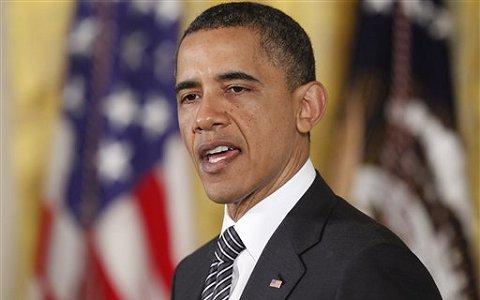 ge importance" to the US economy.
"I communicated to them that the United States stands ready to do our part to help them resolve this issue," he said, adding that it would be tougher to create jobs at home if European markets were contracting.
The two sides said in a joint statement: "We must intensify our efforts to realise the untapped potential of transatlantic economic co-operation to generate new opportunities for jobs and growth."
It is thought the working group could look at the possibility of cutting tariffs and other regulation that might hamper trade.
The group, to be headed by EU Trade Commissioner Karel de Gucht and US Trade Representative Ron Kirk, would "identify and assess options for strengthening the EU-US economic relationship, especially those that have the highest potential to support jobs and growth", said the statement.
An interim report is expected next June, with the final recommendations due by the end of 2012.
After the meeting, Mr Van Rompuy told journalists that the EU had been taking hitherto "unthinkable" measures to try to restore growth.
"But we have to do more," he added.
Although the US has struck free trade deals with countries around the world in recent years, it has not engaged in bilateral trade talks with the EU.
This is said to be partly out of concern it might detract from the Doha round of world trade talks. But those negotiations have dragged on for more than a decade with no clear end in sight.
Monday's summit was held as the Organisation for Economic Co-operation and Development warned the eurozone economy was shrinking and that the UK could dip back into recession.
But world markets were up in response to reports of a proposed fiscal union that would set binding limits on eurozone government borrowing.
US-EU trade was up 15% in the first nine months of 2011, despite uncertainty in the global economy.
Trade between the US and EU is worth around $3.6bn (£2.3bn) per day and overall investment between the two supports around 7.1m jobs, according to the US Trade Representative's office.
The statement from Monday's summit also touched on issues on which the US and EU broadly agree - such as concerns over Iran's nuclear programme, nurturing clean energy technology and encouraging democracy in the wake of the Arab Spring.
BBC
Citigroup's $285 million SEC settlement rejected
A judge rejected a proposed $285 million mortgage securities fraud settlement between Citigroup and the Securities and Exchange Commission on Monday, saying the deal was "neither fair, nor reasonable, nor adequate, nor in the public interest."
Judge Jed Rakoff said that the settlement announced last month, under which Citi neither admitted nor denied the SEC's allegations, deprived the public "of ever knowing the truth in a matter of obvious public importance."
He instead ordered Citi to face trial over the allegations in July 2012.
"[I]n any case like this that touches on the transparency of financial markets whose gyrations have so depressed our economy and debilitated our lives, there is an overriding public interest in knowing the truth," Rakoff, a U.S. district judge in Manhattan, wrote in his decision.
The SEC's pattern of allowing big banks to reach settlements without admitting or denying wrongdoing, Rakoff added, has been "hallowed by history, but not by reason."
Big bank SEC settlements: Toothless face-savers?
Robert Khuzami, director of the SEC's enforcement division, responded that the proposed settlement was "fair" and "reasonably reflects the scope of relief that would be obtained after a successful trial."
He added: "Refusing an otherwise advantageous settlement solely because of the absence of an admission [of wrongdoing] would divert resources away from the investigation of other frauds and the recovery of losses suffered by other investors not before the court."
Citi spokeswoman Danielle Romero-Apsilos said in an e-mail that the bank "respectfully disagree[s]" with the judge's ruling.
"In the event the case is tried, we would present substantial factual and legal defenses to the charges," she added.
The SEC has alleged that in 2007, Citi created and sold a mortgage-related collatarized debt obligation, or CDO, called Class V Funding III.
According to the SEC complaint, one CDO trader characterized the asset group in internal communications as "a collection of dogshit" and "possibly the best short EVER!"
In marketing materials, however, the assets were described as "attractive investments rigorously selected by an independent investment adviser," Rakoff's decision said.
After marketing the CDO, Citi (C, Fortune 500) then took a short position -- or bet against -- the security as the housing market deteriorated, bringing in a net profit of $160 million for the bank. Meanwhile, investors lost more than $700 million.
Litigation is also pending against Brian Stoker, the Citi employee alleged to be primarily responsible for structuring the CDO.
The SEC has settled a string of similar complaints in recent months, including agreements with Goldman Sachs (GS, Fortune 500) and JPMorgan Chase (JPM, Fortune 500).
JPMorgan pays $153 million to settle mortgage case
Rakoff, though, has been in a thorn in the agency's side in recent years, rejecting a proposed $33 million settlement in 2009 between the SEC and Bank of America (BAC, Fortune 500) over allegations that BofA lied about bonuses for Merrill Lynch & Co. employees following the firms' merger. That settlement was later revised upward to $150 million, which Rakoff reluctantly approved, calling it "half-baked justice at its best."
Shares of Citi were up 6%, although the gains came before the judge's ruling.