
NIB cracks down on delinquent contributors
In a continuing effort to collect all delinquent amounts, the National Insurance Board has released the following to RTC News:
NORTH CAICOS
The following matters were called in the Magistrate’s Court, North Caicos on July 14, 2011.
1. NIB v Elizabeth Tamar Gardiner for failing to pay contributions and additional charges as a self-employed person during the period January 2009 to May 2001 in the amount of $1,651.56. The matter was withdrawn as the outstanding amount was paid in full.
2. NIB v Roberta Outten for failing to pay contributions and additional charges as a self-employed person during the period September 2010 to May 2011 in the amount of $369.92. The matter was withdrawn as the outstanding amount was paid in full.
3. NIB v Vivienne Lightbourne for failing to pay contributions and additional charges in the amount of $3,722.40 for the period July 2007 to May 2011. The matter was withdrawn as the outstanding amount was paid in full.
4. NIB v Branford Gardiner for failing to pay contributions and additional charges as a self-employed person for the period May 2010 to June 2011 in the amount of $1,296.08. The matter was withdrawn as the outstanding amount was paid in full.
5. NIB v Goaley Elizabeth Forbes for failing to pay contributions and additional charges in the amounts of $1,183.20 and $2,613.92 respectively for the period January 2009 to May 2011. The total outstanding amount is $3,797.12. The defendant pleaded guilty and was ordered to pay the contributions on or before August 31, 2011 and in default distress warrant to issue. She was also ordered to pay the additional charges on or before the end of February 2012 with payments to commence September 2011. In default distress warrant to issue.
6. NIB v Annie Orlean Gardiner for failing to pay contributions and additional charges as an employer in the amount of $2,636.80 for the period May 2009 to October 2010. The matter was withdrawn as the outstanding amount was paid in full.
7. NIB v Courtney Missick for failing to pay contributions as a self-employed person in the amount of $1,072.36 for the period November 2009 to May 2011. Mr. Missick who was summoned to appear failed to do so. A warrant for disobedience to summons was issued.
PROVIDENCIALES
The following matter was called in Providenciales Magistrate’s Court #1 on July 19, 2011.
8. NIB v Jonathan Gardiner for failing to pay contributions and additional charges as a self-employed person and as an employer during the period July 2006 to August 2008 in the amount of $115,216.42. This matter which is part has been further adjourned to September 23, 2011.
The following matters were called in Providenciales Magistrate’s Court #2 on July 21, 2011.
9. NIB v Dwayne and Denver Pratt on an application by the NIB for distress warrant to be issued for the levying of $14,608.44 that was ordered by the court to be paid to the NIB. The defendants paid off the amount of contributions that were in arrears in the amount of $4,743.10 and was allowed until August 31, 2011 to clear the arrears of additional charges in the amount of $6,971.78. The application was stayed and the matter was adjourned to August 31, 2011.
10. NIB v Ashwood Forbes for failing to pay contributions as a self-employed person during the period January 2010 to April 2010 in the amount of $1,740.80. The matter was adjourned to August 22, 2011.
11. NIB v Thomas Ewing for failing to pay additional charges as a self-employed person and as an employer in the amount of $ 8,623.76 and $80,769.83 respectively for the period December 2007 to April 2009 as an employer and January 2006 to January 2009 as a self-employed person. The matter was adjourned to August 12, 2011 as the defendant’s Attorney was not present and was not informed of the court date.
Also on Thursday July 28, 2011, Devon Eustace Williams of Devcon TCI appeared in the Providenciales Magistrate’s Court to answer to 26 complaints of failing to pay national insurance contributions and additional in the amount of $4866.80. Mr. Williams pleaded guilty to all complaints. The matter was adjourned for September 01, 2011.

CIBC FirstCaribbean Increases Its Community Efforts
CIBC FirstCaribbean continues to be a good corporate citizen throughout the Turks and Caicos Islands and has increased its social responsibility efforts by donating to various schools and non-profit organisations.
The most recent recipients of donations by the Bank are the students of Enid Capron Primary School and the Community Christian Academy who received assistance with their 2011 graduation ceremonies.
Sherma Hercules, Country Manager explained, "Our level of commitment extends beyond the walls of our Bank. It spreads into the communities we serve. Our commitment ensures a brigther future for everyone. We know that the students look forward to these ceremonies as they get the opportunity to be awarded for their hard work and dedication. CIBC FirstCaribbean enjoys celebrating with them on their special day and we hope that they choose us as their prefered bank when they have
the buying power in the future."
Other recipients of 2011 donations by CIBC FirstCaribbean included Raymond Gardiner High School, TCHTA's Lil Chefs, Jadot Golf Tournament, Provo Hockey League and Fools' Regatta.
TCHTA to officially launch Maskanoo 2011 today
The Turks and Caicos Hotel and Tourism Association is currently holding a press conference at the Cultural and Arts Commission’s office in Turtle Cove, to officially launch  Maskanoo 2011.
We recall the thousands who came from all walks of life to enjoy the fun and festive atmosphere as they danced the night away in the streets along the main tourist stretch of
 Grace Bay Road and on the beaches of Grace Bay for 2010’s Maskanoo.

A blending of the traditional Christmas masquerade celebrations with elements of Bahamian’s Junkanoo, Maskanoo was born in the Turks and Caicos Islands, and judging last year’s
success, it will be celebrated for many years to come.
Thousands of adults, children, tourists and residents walked, danced and partied in the streets during the first ever Maskanoo.

The night’s festivities were captured in lights with a miraculous display of fireworks over the beach at midnight, followed by an after party that went on through the morning.
Following the festivities, Director of the Cultural and Arts Commission David Bowen said he was amazed and very much impressed with the level of support and participation
that they were able to attract for Maskanoo 2010 and were excited and ready for Maskanoo 2011 and had already begun putting things into place in order to have a larger showcase
of TCI’s Cultural Heritage.

Presented by the Turks and Caicos Hotel and Tourism Association in conjunction with the Cultural and Arts Commission, Maskanoo was held on Monday, Dec. 27, in the tourist capital
of Grace Bay, which organizers say will be celebrated each year on Boxing Day.

RTC News will have details of the launch in our subsequent newscasts.
Police News in the TCI
Police Police officers from Sexual Offence Domestic Violence unit receive related training
Two women Police officers will be returning to the country more knowledgable and with sharpened skills that will assist them with the challenges of a new of their work in the Police Force.

The Royal Turks and Caicos Islands Police, in its drive to ensure that their officers are more informed and better trained, has sent two officers from the newly formed Sexual Offence
 Domestic Violence unit to Barbados to attend a Pan-Caribbean Police Conference on Supporting Victims of Sexual Assaults.

This conference covers numerous topics ranging from sexual equality, cultural & religious issues, approaches to sexual crime prevention, achieving best evidence to judicial process,
human rights and the rights of a fair trial.

Officer in Charge of the Sexual Offence Domestic Violence unit, Insp. Irene Butterfield, made a presentation on the processes now being employed by her newly formed unit.

Inspector Butterfield joined approximately 40 representatives from across the Pan-Caribbean region, including the Overseas Territories at this conference.

Butterfield and her colleague Deserie Forbes are expected back in the country this weekend.

Meanwhile Police have confirmed that their investigations into the robbery homicide of a Dominican female have yielded positive responses and while they did not divulge any of the
details of their investigations, Police did say that they would be releasing information to the media pretty soon.
The Royal Turks and Caicos Islands Police say they have "a subject of interest" in custody in the July 20 murder of a female employee during what is believed to be a robbery
at the Sailing Paradise Bar & Restaurant on Bay Road in Blue Hills.
Police also identified the victim as Santa Ramirez Suarez age 29, originally from the Dominican Republic.
"The Criminal Investigation Division supported by officers from several other units within the Royal Turks and Caicos Islands Police continues their investigation
 into this senseless homicide," police said in a statement July 22.

Police are asking the public for any information they may have as it relates to this incident to contact police at 941-3327, 946-4259 or 911.
People with information can also contact Crime Stoppers by calling 1-800-TIPS (8477), or send an encrypted web tip on www.crimestoppers.tc or friend Crime Stoppers
Turks & Caicos on Facebook.

The homicide is the country's first this year.
Box office preview: 'Cowboys & Aliens' takes aim at 'The Smurfs' invasion
With the debt ceiling crisis still looming, this could be the final weekend before the entire American economy collapses in an explosion so magnificent that Michael Bay wouldn’t cut away from it for two whole seconds. Realizing that you may never have discretionary income again, Hollywood is offering three — three! — new major releases this weekend. One’s a genre mash-up whose title tells you exactly what to expect (Cowboys & Aliens), one is a TV-series adaptation whose title can be used as both a noun and a verb (The Smurfs), and one is a romantic comedy whose title, for reasons we may never know, contains two commas and a period (Crazy, Stupid, Love.). Here’s how I think the box office will stack up this weekend:
1. Cowboys & Aliens: $42 million
Just look at its fanboy pedigree: director Jon Favreau (Iron Man); writers Damon Lindelof (Lost), Roberto Orci and Alex Kurtzman (Star Trek), Mark Fergus and Hawk Ostby (Iron Man); and producers Steven Spielberg, Ron Howard, and Brian Grazer. Not to mention that it stars Han Solo (Harrison Ford) and James Bond (Daniel Craig). All that’s missing is Nathan Fillion, and the geek assembly would be complete. Anyhow, what the $163 million Cowboys & Aliens has going for it is star power (both in front of and behind the camera) and an easy-to-understand concept that should feel unique in a summer stuffed with sequels, superheroes, and superfluous 3-D.
However, the fact that Cowboys & Aliens isn’t based on a popular property (it’s adapted from a little-known graphic novel) may discourage some moviegoers, as will its mediocre reviews. And past experiments with the Western (see Wild Wild West and Jonah Hex) haven’t received the warmest of embraces. For comparison, the alien-themed Super 8 and Battle: Los Angeles both debuted to about $35 million. Cowboys & Aliens will open a bit larger than that thanks to its big-name talent, but don’t expect a monster smash.
2. The Smurfs: $32 million
This is the real wild card. Will the $110 million live-action/animation hybrid follow in the footsteps of Yogi Bear ($16.4 million opening) or Alvin and the Chipmunks ($44.3 million)? Unsurprisingly, reviews have been abysmal, but star Neil Patrick Harris is among Hollywood’s most likable actors, and I get the sense there’s a lot of nostalgia out there for these little blue guys. (At the time of this writing, the ticket service Fandango was reporting that The Smurfs was selling more tickets than any other movie.) Toss in a slight box-office bump from 3-D showings at 2,042 locations, and I’m thinking The Smurfs makes it past $30 million.
3. Captain America: The First Avenger: $31 million
Cap opened to a solid $65.1 million last week. The year’s other two Marvel-based movies, Thor and X-Men: First Class, dropped 47 and 56 percent their second weekends, respectively. Look for Captain America to drop somewhere in between those two figures — let’s say a tad more than 50 percent. With an “A-” rating from CinemaScore graders, it’s got encouraging word of mouth, but Cowboys & Aliens should steal a significant portion of its older male audience.
4. Harry Potter and the Deathly Hallows — Part 2: $23 million
Deathly Hallows plummeted 72 percent last weekend, but keep in mind it was coming off of the biggest opening weekend of all time ($169.2 million). In fact, Deathly Hallows crossed $900 million worldwide on Wednesday, reaching that milestone in a record-breaking 15 days — three days faster than Avatar. The final Potter movie is well on its way to becoming the franchise’s only entry to pass $1 billion globally.
Domestically, the film should hold up better this weekend. The last two Potter flicks to open in July — The Order of the Phoenix and The Half-Blood Prince — suffered large second-weekend drops of 58 percent and 62 percent, respectively. Their third-weekend declines, however, were more reasonable: 46 percent and 39 percent. For Deathly Hallows, a drop of around 50 percent seems right.
5. Crazy, Stupid, Love.: $17 million
After The Hangover Part II, Bridesmaids, Bad Teacher, Horrible Bosses, Larry Crowne, and last week’s Friends with Benefits, the moviegoing public could be the verge of suffering from adult-comedy fatigue. However, Crazy, Stupid, Love. is earning positive reviews, Steve Carell has been a consistent box-office draw, and — in case the marketing campaign hasn’t tipped you off yet — Ryan Gosling shows some skin. Now if only that title could be Photoshopped.
Dancehall deejay Mavado arrested and charged
DANCEHALL deejay Mavado was yesterday arrested and charged by the St James police for assault occasioning bodily harm and malicious destruction of property.
Mavado, whose real name is David Brooks, turned himself in to police early yesterday subsequent to being named as a person of interest when a man complained that he and his teenage son were physically assaulted by the artiste and members of his entourage.
The incident took place following the artiste's performance Dancehall Night on Reggae Sumfest.
Police report that about 7:00 pm on Friday, Mavado assaulted the man and damaged his Toyota Camry motor vehicle along the Belmont main road in the parish.
The complainant allegedly stopped along the main road to allow a line of traffic to pass when he and his son were attacked by Brooks and members of his entourage.
The complainant sustained injuries to his back, leg and forehead, while his son reportedly lost several of his teeth after being hit in the mouth with a machete.
Brooks is to appear in the Montego Bay Resident Magistrate's Court on August 8.
Mavado, who got back his US visa just a few days ago, is known for songs such as On The Rock, Hope and Pray, Send Them Out, Tumping and Final Destination.
Rachel Weisz and Daniel Craig's Newlywed Night Ou
It was one of the first comfortable summer evenings in Manhattan following a brutal heat wave.
Until Daniel Craig and Rachel Weisz showed up, that is.
After the Cinema Society & Dior Beauty screening of The Whistleblower, the newlyweds made their first public appearance as a couple, heating things up with a very public rooftop smooch.
"When Daniel arrived on the roof deck, he embraced Rachel and gave her a long tender kiss on the lips – it was very romantic," a source at the James Hotel after-party tells PEOPLE.
"I wanted to be part of that kiss," says an onlooker. "It was very hot," added another.
Weisz, 41, and Craig, 43, were wed in a secret ceremony in New York in June.
Tiger Woods will return to professional golf next week
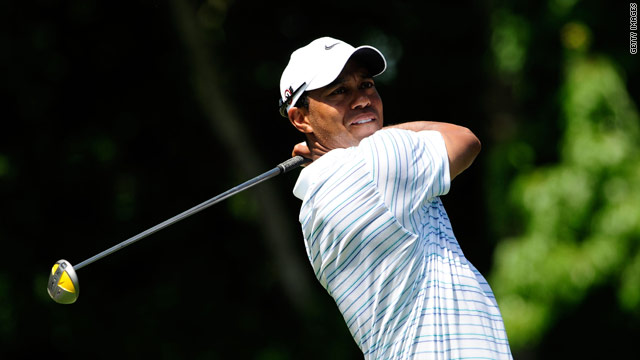 Golfer Tiger Woods returns to professional play next week, according to statements on his Twitter account and his website.
He will participate in the World Golf Championships-Bridgestone Invitational in Akron, Ohio, which begins on August 3.
Woods withdrew from the PLAYERS Championship in May because of an injured left knee and a strained Achilles tendon. He missed the British Open earlier in July, along with the U.S. Open last month, because of his injuries.
He has since been working to rehabilitate his injuries, and recently began hitting practice shots, the statement on his website said.
The 35-year-old Woods, winner of the British Open in 2000, 2005 and 2006, also missed the 2008 tournament at Royal Birkdale following reconstructive knee surgery after his U.S. Open victory a month earlier.
But Woods hasn't won a tournament since he took a break from the game after revelations about his private life emerged.
Woods divorced Elin Nordegren, his wife of six years, in August 2010 after admitting to transgressions in his private life and following reports of extramarital affairs.
He also recently fired his caddie, Steve Williams, who worked for him for 12 years.
Patriots trade for Albert Haynesworth, Chad Ochocinco
The New England Patriots brought out the best in often-disgruntled players such as Corey Dillon and Randy Moss.
So why not Albert Haynesworth?
Now, the Patriots will get their chance. On Thursday, the team reportedly traded a fifth-round draft pick in 2013 to Washington for Haynesworth, a two-time All-Pro defensive tackle who is occasionally awesome but far more often apathetic. The deal is contingent on Haynesworth passing a physical, which is no guarantee.
Haynesworth and Redskins Coach Mike Shanahan never clicked. Haynesworth will go down as the most expensive bust in Washington history so far, seeing as the Redskins gave him a seven-year, $100-million contract in 2009, with $41 million guaranteed.
Haynesworth is scheduled to make $5 million this season.
"He'll see how we do things around here, point blank," Patriots defensive lineman Vince Wilfork told reporters. "We had guys come through here with a rap sheet and [people] say he can't be handled, this guy can't do this, and you know what, it worked out fine for us.
"So I don't think it will be a big problem."
It wasn't Coach Bill Belichick's only eye-catching move of the day. According to multiple reports, he also traded for Twitter-happy Cincinnati receiver Chad Ochocinco, the Bengals' all-time leader in receptions (751), yards receiving (10,783) and touchdown catches (66).
Among the league's more active players on Twitter, Ochocinco was uncharacteristically quiet after the deal, simply tweeting: "God is so good."
As of Thursday afternoon, the Patriots had not announced their trades, and neither had the Redskins or Bengals. That was in keeping with the murkiness of this unprecedented week of eleventh-hour transactions. Teams can make trades and release players but are not allowed to sign unrestricted free agents until 3 p.m. PDT Friday.
Still, handshake deals have been going on all over the league this week, promising for an interesting month of training camps before the regular season starts in six weeks.
Some of the notable moves Thursday:
• In a trade that was telegraphed for quite a while, Philadelphia sent quarterback Kevin Kolb to Arizona for cornerback Dominique Rodgers-Cromartie and a second-round draft choice. That came a day after news that Minnesota had worked out a trade with the Redskins for quarterback Donovan McNabb. Not so long ago, the Eagles' depth chart once read, 1. McNabb, 2. Kolb, 3. Michael Vick.
• Brad Smith, the ultra-versatile receiver for the New York Jets, agreed to terms with Buffalo, stirring speculation that the Bills will use him frequently as a Wildcat quarterback.
• Two former starting quarterbacks were shown the door, with Cleveland releasing Jake Delhomme and Tennessee saying goodbye to Vince Young.
• Miami reportedly made a trade with New Orleans for running back Reggie Bush. Nine years ago, the Dolphins made a swap with the Saints for another Heisman Trophy-winning running back, Ricky Williams. Although Williams wound up winning a rushing title in Miami, the Dolphins have not won a playoff game since making that deal.
Lochte fires up Phelps with world title and record in Shanghai
Beaten again by a record-breaking effort from U.S. rival Ryan Lochte at the world swimming championships in China, Michael Phelps says he now has all the motivation he needs to bounce back at next year's London Olympics.
Defending champion Lochte claimed the men's 200-meter individual medley title on Thursday in one minute 54 seconds, breaking the record he set in Rome in 2009 -- when Phelps did not swim in the event.
He shaved a tenth of a second off that time to register the first long-course world record since the high-tech, polyurethane swimsuits were banned in 2010.
Lochte's lead over Phelps -- who came home in 1:54.16 -- was never more than the 29-hundredths of a second he held at the final turn, having moved to the front in the second backstroke leg.
"That's why we have records -- to get broken," Lochte told the U.S. Swimming website.
"I'm just happy that all that hard work I've done this year, and dedication is definitely paying off. Hopefully everyone now can start realizing, 'Hey, it's possible.' Hopefully a lot more records can fall."
Phelps, who has won a record 14 Olympic gold medals after bagging an unprecedented eight in Beijing 2008, was beaten by Lochte for the second time in Shanghai following his runner-up finish in the 200m freestyle on Wednesday.
"I think that race is going to be a lot of motivation for the next year," said Phelps, who won the 200m butterfly on Thursday. "There's a lot of frustration right now going through my head, and this is going to help me through the tough months of training for the next year.
"(Lochte) is super focused right now, and I think you can see that. He keeps putting the races together that are helping him win. To be honest, he's just more prepared. That's really what it comes down to. Races are always won by people who are most prepared."
At the last world championships in Italy, Phelps saw his previous dominance challenged by swimmers using the new-generation suits that were banned soon after.
On Thursday he predicted that more of the best times set before the ban will be falling in the near future.
"I sat there two nights ago at dinner, and I was talking to some of the coaches about it that this was going to be the first world record that was going to be broken," Phelps said.
"It says something that we're still able to do those times, and that it's not impossible for us to see world records right now. I think we're going to start seeing more, and hopefully they're more often."
The U.S. also won gold in the women's 4x200m freestyle relay, with Missy Franklin, Dagny Knutson, Katie Hoff and Allison Schmitt heading off Australia by half a second and defending champions China back in third.
Franklin also won bronze in the women's 50m backstroke, which was won by Russia's Anastasia Zuevea from Aya Terkawa of Japan.
China won gold and bronze in the women's 200m butterfly, as Jiao Liuyang finished 0.04 seconds ahead of Britain's Ellen Gandy and 0.45s in front of Liu Zige.
James Magnussen confirmed his undoubted promise as the 20-year-old became the first Australian to win the men's 100m freestyle title, heading home Canada's Brent Hayden and France's William Meynard.
Defending champion and world record-holder Cesar Cielo finished back in fourth place.
At the start of the championships, Magnussen helped Australia earn a surprise victory in the 4x100m relay, condemning Phelps' U.S. team to third place.
Leading off the team, he set the fastest 100m time by a swimmer not using a banned suit since Dutchman Pieter van den Hoogenband, the 2000 and 2004 Olympic champion.