
Revived Prison Farm to Enhance Rehabilitation
Prison authorities are giving inmates new options for rehabilitation and skills training with the revival and expansion of the prison farm on Grand Turk.
The project involves the planting of food crops for which the lands have already been cleared, ploughed and planted; rearing of chickens, goats and pigs; and classroom training in animal husbandry and horticulture. Additional benefits of the project will be education to the community of what can be grown on Grand Turk.
Ms. Barbara Higgs, Under Secretary of the Ministry of Home Affairs and Public Safety, said the Ministry is delighted to be supporting this initiative. Reintroducing this farm is offering rehabilitative and job training skills to inmates whilst further exemplifying the principles of food security such as inmates feeding themselves.
Inmates growing food for themselves nourishes responsibility and rehabilitation, and they receive skills that are appropriate to the environment they will be returning to. Prisoners can start to produce wholesome food, earn their keep, learn skills and improve work habits - all of which help them to stay out of prison in the future - an initiative worth supporting."
The Prison has received support from the Ministry of Finance and from OTIS construction which provided machinery to help clear the lands.

Salt Cay Breakwater
The Ministry of Housing, Works and Utilities and the Department of Engineering and Maintenance Services, (EMS) announces the completion of Salt Cay Breakwater.
It is believed, that this is the first major refurbishment of Salt Cay Breakwater since being built around 1790 by the Royal Navy, to salvage HMS Endimion. The Breakwater was built to modern standards than previously, and now uses technically higher performance materials, such as high strength reinforced concrete to bond the new dock to the seabed.
The level of the top of the Breakwater has also been raised and it is expected that boats will be able to anchor safely in heavier seas than previously. The Breakwater should have been completed before the Christmas holidays; however, due to an unusual number of northwesterly storms the project was delayed.
Also, while in Salt Cay, the team from EMS took the opportunity to upgrade a number of main roads and the Salt Cay Airport, where the airstrip apron were repaired, thus providing the residents there with smoother roads and sufficient landing and parking space for aircrafts, simultaneously. A considerable portion of the costs for the road improvement works and in particularly materials was sponsored by Salt Cay residents and friends, the reminder from EMS maintenance budget.
Acting Permanent Secretary of Housing, Works and Utilities, Mr. Desmond Wilson noted that, Despite the current economic conditions within the Turks and Caicos Islands, the team from EMS was able to complete three projects in Salt Cay and as such, would like to thank the Ministry of Finance and Department of Economic and Planning for the financial assistance received, North Caicos Contracting for the revised works to the Breakwater, Sturrups Contracting for the upgrades to the roads, airstrip and apron, Turks and Caicos Islands Airport Authority and of course, to our hard working team within EMS, for a job well done.
Special thanks to the community of Salt Cay, for their patience and understanding over the years and for partnering with this Ministry and EMS, to bring this project to fruition.
Libya no-fly zone a UN decision, says Hillary Clinton
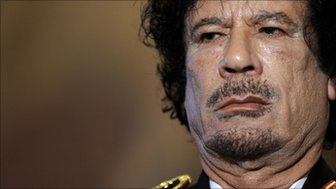 Any decision to impose a no-fly zone over Libya should be made by the UN and not by Washington, US Secretary of State Hillary Clinton has said.
Mrs Clinton said it was important such a move came from the Libyan people, rather than being a US-led effort.
Calls for military intervention are growing as pro-Gaddafi forces bombard areas held by Libyan rebels.
Meanwhile, Col Gaddafi has made a defiant speech on Libyan TV, labelling rebels and opposition leaders traitors.
Addressing a room full of cheering supporters he again claimed that the rebels had been brainwashed by al-Qaeda.
The rebel forces are fighting to end Col Gaddafi's 41 years in power, and more than 1,000 people are believed to have died. Some 200,000 others have been displaced by the fighting.
Mrs Clinton reiterated her government's call for Col Gaddafi to step down peacefully, but warned that the crisis in Libya could be protracted.
"I think it's very important that this not be a US-led effort, because this comes from the people of Libya themselves," Mrs Clinton told Sky News.
"We are going to support the efforts that are being made, because we think that the people of Libya themselves have to be supported, and we know how difficult this struggle is."
US President Barack Obama and UK Prime Minister David Cameron discussed a possible no-fly zone on Tuesday, but both countries maintain that any intervention must have wide international support.
A White House statement said the two leaders discussed a "full spectrum of possible responses" in their telephone call.
It is believed other options include more surveillance, humanitarian help and the enforcement of an arms embargo on Libya.
Mr Cameron told the BBC: "We have got to prepare for what we might have to do if he (Gaddafi) goes on brutalising his own people."
The UK and France are working on a UN Security Council resolution for a no-fly zone, however Russia has already stated its opposition to military intervention.
Nato defence ministers will discuss options for Libya on Thursday and Friday.
In Washington, President Obama has faced criticism that he is being too cautious over the turmoil in Libya.
Republican Senator John McCain said: "Every day and every hour that goes by, innocent Libyans are being attacked and massacred from the air."
Calls for a no-fly zone have also come from the Organisation of the Islamic Conference, which represents Muslim countries, and Gulf Arab states.
In Tripoli on Tuesday night, Col Gaddafi arrived at a hotel surrounded by tight security and held exclusive interviews with Turkish and French television stations.
He then left without addressing other journalists, some of whom had been waiting several hours to hear him.
On Tuesday, forces loyal to Col Gaddafi bombarded the rebel-held western town of Zawiya all day, shelling its suburbs with tank and artillery fire and trying to seize control of the town's main square.
Japan's new Foreign Minister Matsumoto faces challenges
Japan has named a new Foreign Minister, Takeaki Matsumoto, at a challenging time for ties with China and Russia.
The 51-year old former banker has been the vice foreign minister in Prime Minister Naoto Kan's government, which is struggling to survive.
The country's new leading diplomat comes from an illustrious family - he is a great great grandson of Japan's first prime minister.
Mr Matsumoto replaces Seiji Maehara who resigned due to a donations scandal.
Mr Kan's spokesman, Yukio Edano, said Mr Matsumoto had been chosen for his "capability, knowledge and to ensure continuity of diplomacy".
Japan has in recent days protested against a Chinese overflight of a Japanese ship in the disputed East China Seas.
It was the latest in a series of diplomatic battles over maritime territory, reflecting growing tension over the region's realignment of roles as China's economy and armed forces grow.
Japan is also in a territorial dispute with Russia over the south Kuril Islands.
The resignation of the previous foreign minister, Mr Maehara, was seen as a blow to Prime Minister Kan, who has been struggling to get budget bills through parliament and hold on to his own job.
Yemen security forces open fire at Sanaa protest
Security forces in Yemen have opened fire at a large protest outside the university in the capital, Sanaa.
They were trying to stop thousands of people joining a protest camp at the university calling for President Ali Abdullah Saleh to resign.
At least 50 people were injured. Medical sources told the BBC that five were in a serious condition.
There were also reports of protests in other Yemeni cities, amid widespread unrest in the region.
The Yemeni protesters, mostly students, have been camped out in front of the university since mid-February.
They want Mr Saleh to stand down and are calling for more job opportunities, an end to corruption, and a fairer distribution of wealth.
As large crowds tried to build up the camp, security forces fired rubber bullets, tear gas and live rounds.
Medics told BBC Arabic that 20 people had been shocked by electric stun guns and that 85 people had suffered the effects of tear gas.
Several thousand women had also joined the march to mark International Women's Day.
Opposition spokesman Muhammad Qahtan said the incident had been "a massacre".
It is a crime by security troops against students engaged in a peaceful sit-in," the Associated Press quoted him as saying.
'No teaching'
Tuesday also saw protests in the southern city of Aden and in Ataq.
In Ataq, hundreds of children took mark in anti-Saleh demonstrations chanting "No studying, no teaching until the president falls," Reuters reports.
In Ibb province, thousands of people took to the streets to demand action against Saleh loyalists who attacked a protest camp on Sunday.
More than 50 were injured in that attack and 18-year-old Omar Atta was killed.
His father told the protest: "My son sacrificed himself, this is my family's gift to the revolution in Yemen."
At least one person was reported to have been killed during a riot at a prison in the capital.
A prison official told AP that inmates had set blankets and mattresses on fire and occupied the central courtyard late on Monday night.
He said guards had fired tear gas and shot into the air but had not managed to subdue the violence, which continued throughout Tuesday.
Yemen is one of a number of countries in the North African and Middle East region that have seen increasing unrest since the presidents of Egypt and Tunisia were ousted in popular revolts.
Thousands of people have turned out for regular demonstrations in cities including Sanaa, Aden, Taiz and elsewhere, calling for corruption and unemployment to be tackled and demanding the president steps down.
The protests have often been met by riot police or supporters of President Saleh armed with knives and batons.
The president has been power for 32 years, facing a separatist movement in the south, a branch of al-Qaeda, and a periodic conflict with Shia tribes in the north.
He has said he will not seek another term in office in 2013 but has vowed to defend his regime "with every drop of blood".
Ivory Coast: Anti-Gbagbo protesters killed in Abidjan
Four people have been shot dead in Ivory Coast's main city, Abidjan, after a march to protest about the killing of seven female demonstrators last week.
Journalists have seen the bodies of three men and a woman in clinic.
The shooting has been blamed on rogue army officers supporting disputed President Laurent Gbagbo.
He refuses to cede power although his rival Alassane Ouattara is internationally recognised as the winner of last year's poll.
News of the latest trouble came as the US said Mr Gbagbo's order for the government to take control of all cocoa purchases and exports "amounts to theft".
It is another desperate act in his campaign to cling to power," US state department spokesman PJ Crowley told journalists.
Ivory Coast is the world's biggest cocoa producer - the cocoa sector accounts for 40% of global supplies and is currently dominated by multinational companies.
Last month, Mr Ouattara called for a temporary ban on exports to try to force Mr Gbagbo from power.
The UN-backed electoral commission says Mr Ouattara won presidential elections in November, but the Constitutional Council overruled it, citing rigging in the north.
'Bullets'
The protest march in Abidjan's central Treichville district had passed off peacefully before shots were heard, journalists say.
Hundreds of demonstrators had planned to march to mark International Women's Day.
"They were hit by bullets," said a medical official who declined to be named, reports the AFP news agency.
"Two arrived dead and two died at the clinic from their wounds."
The AP news agency says the clinic was overwhelmed.
Some 300,000 people have fled their homes in Abidjan following fighting in the city in recent weeks, according to the UN refugee agency.
Another 70,000 have fled violence in the west, seeking sanctuary across the border in Liberia.
Meanwhile, Mr Gbagbo has declined an invitation to attend an African Union meeting in Ethiopia on Thursday.
He had been invited along with Mr Ouattara to hear the AU's intended resolution to the crisis; instead he is sending the head of his party and his foreign minister - two known hardliners.
The BBC's John James in Abidjan says if the AU mission fails, it is likely to increase the chances of a return to civil war.
He says things remain calm along most of the former ceasefire line between the pro-Ouattara New Force former rebels in the north and the pro-Gbagbo army in the south.
But in the far west, where the former rebels have been taking territory, movement seems aimed at securing areas around the town of Toulepleu, which was captured on Sunday.
Publicly the New Forces says their objective is to cut off access to Liberian mercenaries rather than to move on to bigger towns in the south and east.
Our reporter says cocoa goes right to the heart of the conflict between Mr Gbagbo and his rival Mr Ouattara.
The price of cocoa has been trading at its highest levels for a year, as supplies have been strangled by recent sanctions and the near collapse of the banking system.
The European Union, US and West African states have adopted various financial sanctions against Mr Gbagbo and his closest allies.
Exporters have stopped registering new beans for export - as a result, there is close 500,000 tonnes of cocoa piling up in port warehouses. Up country, the market has collapsed for the estimated 700,000 small holder cocoa farmers.
Given the financial crisis since the election, it is very difficult to see how the government will be able to implement its radical reforms of the cocoa sector, our reporter says.
Madoff trustee ready to distribute $2.6B to victims
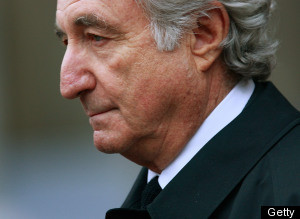 The court-appointed trustee charged with recovering assets stolen by Ponzi schemer Bernard Madoff is ready to distribute $2.6 billion worth of recovered funds to the victims.
This will be the first time that Madoff's victims will receive recovered funds.
Together on a press call Tuesday, trustee Irving Picard and chief counsel David Sheehan said that they will make a request to federal bankruptcy court at the end of March to free up a portion of the $10 billion in assets that the trustee has recovered so far.
"We will make a distribution as soon as we can after the hearing [at the end of March] and assuming the court approves it," said Sheehan.
But Sheehan and Picard said they aren't sure when they will be able to distribute the remaining $7.2 billion that the trustee has collected, because there are two lawsuits that object to the way the trustee plans to distribute the money.
The trustee recently said that he'd recovered about half of the $20 billion lost to Madoff's scheme. Much of this comes from the $7.2 billion settlement agreement reached with Barbara Picower, the widow of Jeffry Picower, who died of a heart attack in 2009. Picower is believed to be the number one beneficiary in Madoff's Ponzi scheme, because he withdrew $7.2 billion more than he invested with Madoff's firm, according to Picard.
Sheehan said that distribution of the Picower funds is being disputed by some Madoff investors. These people claim that since they were led to believe they had a certain net worth, that they should be compensated in that amount.
Madoff victims: 'The man is a monster'
Of the 16,269 claims that have been filed with Picard's firm, the trustee has determined that only 2,408 claims, worth a total of $6.58 billion, are eligible for compensation. Most of the rejected claims were tossed because they're from "third party" investors who went through hedge funds, instead of individual investors, who are covered by the Securities Investor Protection Corp. (SIPC), an industry-sponsored organization that provides financial protection.
The 2,408 victims acknowledged by the trustee have already received full or partial compensation from SIPC, which is funded by dues paid by brokerage firms and covers up to $500,000 worth of losses for individual investors.
So far, SIPC has paid more than $793 million to Madoff victims. The remaining $6.06 billion worth of recognized losses must be compensated through the recovery of stolen assets.
The trustee, with the help of the U.S. Marshals, has confiscated Madoff's properties to pay back his victims, including lavish homes in Manhattan, the Hamptons, Florida and France, as well as yachts and diamond-studded watches and jewelry.
Lawyers make millions off Madoff mess
The trustee has also sued about 500 investors, who withdrew more money from Madoff than they invested, in his effort to recapture lost assets. The trustee is seeking about $100 million from these investors. But many of these investors insist that they're victims, not beneficiaries, who had no idea that they were withdrawing money from a Ponzi scheme.
The trustee is also suing financial firms for allegedly participating in the scheme, including HSBC, UBS and JPMorgan. Picard has also sued members of the Madoff family, as well as the owners of the Mets.
During the call Sheehan said that he is taking the position that family members "knew or should have known" about the Ponzi scheme.
The trustee estimated that he might possibly track down another $7 billion or $8 billion in stolen funds, in addition to the $10 billion already recovered. If that's the case, then he will have collected between 85% and 90% of the $20 billion stolen by Madoff.
"This is litigation and you don't always get everything you're looking for," said Sheehan.
Meanwhile, Madoff is languishing in a federal prison in Butner, N.C. He was sentenced to 150 years after pleading guilty, in March of 2009, to orchestrating the largest Ponzi scheme in history.
Source:CNN
Oil nears US$107 a barrel then retreats
Oil prices continued to set new post-recession highs Monday as forces loyal to Moammar Gadhafi pounded rebels near a key oil port in Libya.
It's unclear how long the country's oil exports will be cut off, and traders prepared for a worst-case scenario in which world supplies would be under pressure for months.
Benchmark West Texas Inter-mediate crude for April delivery gained 52 cents at US$104.95 per barrel on the New York Mercantile Exchange.
The price almost hit US$107 per barrel earlier in electronic trading, the highest since September 26, 2008.
In London, Brent crude added 32 cents at US$116.29 per barrel.
The rise in oil is driving US gasolene prices to levels that weren't expected for at least another month. Pump prices have jumped an average of 39 cents per gallon since the Libyan uprising began in mid-February, forcing motorists to pay an additional US$146 million per day for using the same amount of fuel. The national average hit US$3.509 per gallon on Monday, according to AAA, Wright Express and Oil Price Information Service.
Libya, which sits on the largest oil reserves in Africa, has been engulfed in a four-week rebellion as militants try to oust Gadhafi after 41 years in power. Officials in the country say oil fields continue to operate, but daily exports of 1.5 million barrels could be cut off for some time.
On Monday, Libyan warplanes launched more air-strikes on rebel positions around the Ras Lanouf oil port as forces loyal to Gadhafi tried to keep rebels from advancing on his stronghold in the capital, Tripoli.
Saudi Arabia has increased production to make up for the loss of Libyan crude, which goes mainly to Europe.
The Obama administration was also considering tapping the US strategic oil reserves of 727 million barrels.
Releasing those supplies could cool off overheated energy markets, but it also would put a tighter squeeze on the world's oil supplies as the global economy recovers and consumption rises.
"They'll remove the cushion of extra supplies," said Jim Ritterbusch, president of energy consultancy Ritterbusch and Associates.
"Until this situation gets resolved, prices are going to continue to grind higher."
The Energy Information Administration estimates OPEC can crank up production by another 4.7 million barrels per day. An extended shut-down of Libya's exports would slice that capacity by about 32 per cent to around 3.2 million barrels per day. Most of the world's spare capacity lies in OPEC nations, primarily Saudi Arabia.
"The question then is what else can happen," said Erik Kreil, who covers international energy markets for EIA.
"If it gets worse in North Africa or the Middle East, production could fall further and you'll have less spare capacity."
Global spare capacity fell below two million barrels per day in 2008 before oil prices spiked to an all-time record of US$147 per barrel.
In other Nymex trading on Monday for April contracts, heating oil was unchanged at US$3.0896 per gallon, while gasolene futures lost a penny at US$3.0332 per gallon. Natural gas rose six cents to US$3.870 per 1,000 cubic feet.
- AP
West Indies sharpen for Ireland
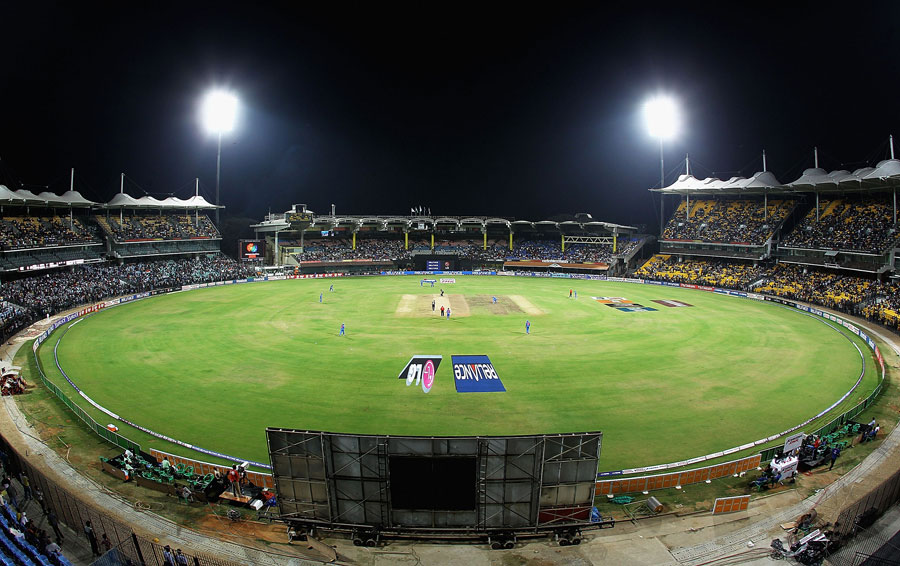 With a week-long break between games, West Indies ensured there would be no complacency in their World Cup quest as they turned in a three-hour training session here yesterday.
The Caribbean lads focused mainly on fitness and fielding drills as they went through their paces at the Sector 16 Cricket Ground under the care of head coach Ottis Gibson.
West Indies are preparing for their next assignment against Ireland on Friday at the Punjab Cricket Association Stadium in Mohali.
They have won two of their three games so far, crushing the Netherlands by 215 runs and hammering Bangladesh by nine wickets four days ago in their last outing. They lost their opening match to South Africa by seven wickets.
Good cricket
Pacer Kemar Roach, who has led the Windies attack admirably with 10 wickets, said they would be taking no chances against the Irish, who upset England last Wednesday to claim their only win in three matches so far.
"We will put our best foot forward when we play against Ireland later this week," the 22-year-old said.
'They are a good team and they are playing good cricket, so we are not taking things for granted and will play our best game. We are going to go out there and give our best shot."
West Indies have four points from three matches and a win over Ireland will put them firmly on course for the quarter-finals as one of the four teams progressing from Group B.
Following the Ireland clash, West Indies wind down their preliminary round schedule with testing matches against England in Chennai on March 17 and pre-tournament favourites India three days later in the same city.
Tiger, Phil paired together for first and second round at Doral
Tiger Woods and Phil Mickelson will be paired together—along with U.S. Open champion Graeme McDowell—in the first and second rounds of the WGC-Cadillac Championship at the Doral Resort in Miami on Thursday and Friday, according to PGATour.com.
The Woods-Mickelson-McDowell group will tee off at 11:51 a.m. EST on Thursday, and they will tee off at 12:54 p.m. EST on Friday. Golf Channel coverage of the tournament will begin at 2 p.m. and Golf.com will carry live updates of the match throughout the day.
According to the PGA Tour, the marquee first- and second-round groupings were determined by the Official World Golf Ranking order of the top 21 players.
Tee times for the first two rounds were released Tuesday, with the top 21 players in the Official World Golf Ranking grouped together in threesomes based on their positions in the rankings.
That means the top three players in the world — No. 1 Martin Kaymer, No. 2 Lee Westwood and No. 3 Luke Donald, who elevated to that spot thanks to his win two weeks ago at the World Golf Championships-Accenture Match Play Championship — are together for the first two days.
McDowell (No. 4), Woods (No. 5) and Mickelson (No. 6) followed in the World Rankings. For Woods and Mickelson, Thursday’s round will the 26th round in which they’ve been paired together at an official PGA TOUR event, and the first since the final round of last year’s BMW Championship.
Paul Casey, Rory McIlroy and Steve Stricker (Nos. 7, 8 and 9, respectively) are in another group, as are Matt Kuchar, reigning FedExCup champion Jim Furyk and Ernie Els (Nos. 10, 11 and 12, respectively).
The PGA Tour also has a cool list of the results when Woods and Mickelson play together. Mickelson has been winning the matchup lately, but Woods famously got the better of Mickelson when they were paired together with then-No. 3 Adam Scott in the first and second rounds of the 2008 U.S Open. Woods also played with Mickelson in the final pairing at the 2001 Masters, which Woods won after shooting a final-round 68 to Mickelson's 70.