
Stocks end at fresh multi-year highs
U.S. stocks ended at fresh multi-year highs Thursday, as investors focused on an upbeat manufacturing report and looked past indications that inflation is heating up.
Dow Jones industrial average (INDU) edged up 30 points, or 0.2%, with 21 of the Dow's 30 components heading higher. Shares of Intel (INTC, Fortune 500) led the advance, while American Express (AXP, Fortune 500) lagged.
The S&P 500 (SPX) rose 4 points, or 0.3%, with Sears Holding (SHLD, Fortune 500) leading the way. Meanwhile, the Nasdaq (COMP) ticked up 6 points, or 0.2%, with Research in Motion (RIMM) among the biggest gainers.
All three of the major indexes finished the session at their highest levels in more than two years for a second day on Thursday.
Investors have been in a bullish mood so far this year, as the outlook for the U.S. economy improves. While inflationary concerns are now creeping into the picture -- with key readings on inflation this week showing that prices are rising more than expected -- investors remain assured that the Federal Reserve remains willing to step in if conditions deteriorate.
"Inflation has been the story du jour lately, and there's definitely a concern about the rising cost of commodities and how that's going to affect the margins of companies," said Tyler Vernon, CIO of Biltmore Capital.
"But at the same time, the Fed continues to be focused on the stock market and supporting the market. So at this point any news is good news, because investors are just thinking the Fed will step back in if things start slowing down," he added.
Is the stock rally getting ridiculous? - The Buzz
While stocks may take a breather in coming weeks, the trend is likely to remain positive until the Fed pulls the plug on its quantitative easing policy, said Dean Barber, president of Barber Financial Group.
"We're up significantly from where we were in September of last year, so I doubt it's sustainable, but we'll continue to be in a gradual, slightly upward trend at least through the summer," he said.
Economy: The consumer price index for January rose 0.4% month-to-month seasonally adjusted, compared to expectations of a 0.3% increase. The core CPI -- which excludes food and energy prices -- rose 0.2% month-to-month, compared to an expected increase of 0.1%.
The report follows on the heels of the government's Producer Price Index, a measure of wholesale inflation, which came out Wednesday. That index rose 0.8% in January, which was also larger than expected.
"Inflation is definitely out there, with both reports coming in hotter than expected," said Vernon.
Because the Producer Price Index is rising at a faster pace than the consumer price index, this indicates that companies aren't passing on the cost of raw materials to consumers, which Vernon said is a concern as companies' margins start to shrink.
In fact, 25% of companies in the S&P 500 that have reported earnings this season had lower margins because of rising commodity costs, he added.
Not only do rising prices hurt companies' margins, it means that the Federal Reserve may eventually be unable to continue propping up the economy with its policy of quantitative easing, he said.
"In the short term that's good news for stocks as investors get out of fixed income and look for a home in stocks, but in the longer term it represents issues, because investors are looking at the fact that if we're getting inflation, the Fed can't continue its process of of supporting the market."
Higher prices - coming soon to U.S. shores
Meanwhile, the government's weekly report on the number of people filing for jobless benefits jumped to 410,000 for the week ended Feb. 12, which was close to expectations. The report was expected to show an uptick to 408,000, from 383,000 in the previous week.
The preliminary Philadelphia Fed index, a regional reading on manufacturing, surged to 35.9 in February from 19.3 in January. The index was forecast to rise modestly to 21.
Keith Springer, president of Springer Financial Advisors, said the balance of good news like the Philadelphia Fed Index and weaker news like the report on jobless claims provides "a Goldilocks environment where the economy is not growing too fast to make the Fed stop the easing but not slow enough to give us a double dip." And this is what will help the momentum continue, he said.
Currencies and commodities: The dollar rose modestly against the Japanese yen, the British pound, and the euro.
Barber said the devaluing of the dollar through the Fed's quantitative easing is not only boosting the stock market, but causing commodity prices to climb.
"Prices aren't increasing because of increased demand -- the Fed is pumping so much money into the system and purposely devaluing the dollar, and that's where inflation is coming from," said Barber. "People are buying gold, gold, gold, and things like wheat, corn and cotton have all been driven higher too."
Gold futures for April delivery rose $10 to settle at $1,385.10 an ounce. Oil for March delivery gained $1.37 to settle at $86.36 a barrel.
The World Bank said in its latest report on the global food crisis that its price index jumped 15% between last October and last month, hovering just below its 2008 peak. Wheat, corn, sugar, fats and oils have led the price increases.
Companies: Redbox is planning a subscription movie streaming service to compete with Netflix (NFLX), according to news reports. Shares of Coinstar (CSTR), Redbox's parent company, gained nearly 8%.
Shares of Timberland (TBL) surged 30% after the outdoor goods maker logged a jump in fourth-quarter profit that widely beat economists' expectations.
Weight Watchers International (WTW) also reported a solid quarter, posting earnings per share that blew past expectations. Shares of the weight loss company soared more than 45%. The better-than-expected earnings also benefited NutriSystem (NTRI), with shares of the company rising more than 6%.
Shares of Dr. Pepper Snapple Group (DPS, Fortune 500) rose 6% after the soft drink company reported an 11% jump in earnings per share. The company's net sales rose to more than $1.4 billion.
Shares of Williams Partners (WMB, Fortune 500) -- a company focused on natural gas transportation, processing and storage -- jumped 8% after the company said it would hike its dividend and split into two entities. The company also raised its guidance for 2011-2012.
The stock price for Cliffs Natural Resources (CLF) climbed more than 7% after the company reported that it doubled its full-year revenue to $4.7 billion.
World markets: European stocks finished little changed. Britain's FTSE 100 was flat, the DAX in Germany edged lower by 0.1% and France's CAC 40 was barely above breakeven.
Asian markets ended higher. The Shanghai Composite edged higher 0.1%, the Hang Seng in Hong Kong rose 0.6% and Japan's Nikkei ticked up 0.3%.
Bonds: The price on the benchmark 10-year U.S. Treasury rose, pushing the yield down to 3.58% from 3.62% late Friday.

US inflation rises 0.4% on higher food and energy costs
US prices rose 0.4% in January compared with the previous month, mostly due to rising food and fuel prices.
The rate of change was the same as seen in December.
The Consumer Price Index rose by 1.6% over the last year, before seasonal adjustment, the Department of Labor said.
The core rate of inflation, which strips out food and energy costs, rose by 0.2% - the largest rise in more than a year.
This measure has increased by 1% over the last 12 months, still within the Federal Reserve's effective target of closer to 2%.
Food prices increased by 0.5% in January with the food-at-home index increasing by 0.7%, the largest gain since 2008.
And airline fares increased for the fifth month in a row, rising 2.2% in January, as carriers faced higher fuel costs.
However, the data showed that some goods and services were getting cheaper - including the price of both new and used cars, hotel rates and computer equipment.
"With the unemployment rate still at 9%, there will be plenty of downward pressure on underlying prices and so we don't expect core inflation to trend upwards," said Paul Ashworth, an economist at Capital Economics.
European inflation
Inflation is currently causing concern in Europe with the eurozone's annual inflation rate rising to 2.4% in January, up from December's figure of 2.2%.
The European Central Bank's inflation target is just below 2%.
In the UK, the Consumer Prices Index annual inflation rate rose to 4% in January, up from 3.7% in December.
Earlier on Thursday, Andrew Sentance, a member of the Bank of England's rate-setting panel, warned in a speech that the Bank was underestimating inflationary pressures in the UK economy.
G20 meeting urged to act on food price inflation
The G20 begins a two-day meeting on Friday against a background of rising food and commodity prices.
Finance ministers and central bankers from 20 of the world's biggest developed and developing nations will gather in Paris.
They are being urged to tackle the issue of price inflation affecting basic goods, like food and fuel.
Ahead of the meeting the International Monetary Fund warned that these have increased economic imbalances.
Earlier this week, the World Bank said food prices were at "dangerous levels" and had pushed 44 million more people into poverty since last June.
John Lipsky, first deputy managing director of the IMF, told the BBC that the G20 needed to work to remedy the instability: "There is great concern over the obvious high volatility of basic commodity prices especially food."
French President Nicolas Sarkozy, who is currently the head of the G20, has argued that commodity speculators should be reigned in in order to reduce food price spikes and volatility.
Unchecked speculation
Meanwhile, more than 100 European and international organisations led by the World Development Movement (WDM) have signed a statement warning the G20 of what they see as the dangers of unchecked speculation.
Julian Oram of the WDM said: "By taking action now to curb excessive speculation on food, G20 leaders could save lives, reduce chronic hunger and prevent civil and political unrest."
Rapid food price inflation in 2008 sparked riots in a number of countries. At that time, the World Bank estimated 125 million people were in extreme poverty.
The World Bank also called on this week's G20 meeting to address the problem, saying in a report that rising food prices were an aggravating factor of the unrest in the Middle East, although not its primary cause.
Some analysts have pointed to the difference between speculation, which can provide up-front money to a farmer to plant new crops, for example, and market manipulation, which is designed purely as a play on prices.
Currency and trade
Mr Lipsky said the market for food and other basic commodities was heavily burdened by controls and subsidies: "I think it would be very useful for the G20 to look at these markets in much better detail and see if they can be improved to better serve the global community and not be a source of instability and worry."
Other key imbalances on the menu will include currency and trade.
Mr Lipsky said that the idea was that some of the fast-growing "surplus" countries, like China, whose exports far outweigh its imports, have been relying too much on exports to fuel growth, while deficit countries, like the UK and the US, who buy in more than they export, rely too much on domestic demand to fuel their growth.
Currency values are at the heart of this, with critics arguing the Chinese keep their currency artificially low to make its exports more attractive.
China denies this.
Although G20 countries have been working for some time on how to correct mismatches in the global economy they have not reached agreement even over what criteria they should use as a starting point.
Summit host Christine Lagarde, the French finance minister, said her focus was going to be on finding those criteria: "What we want to achieve Friday and Saturday is to identify a list of indicators, measuring tools, that will allow us to identify imbalances, then the causes of these imbalances, so that we can propose methods to coordinate our economic policies."
The list includes countries' trade deficits or surpluses, budget deficits and levels of debt.
South African government helping Aristide return to Haiti
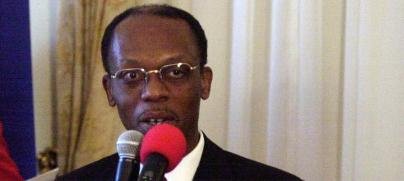 The South African government said on Thursday that it is helping ousted Haitian President Jean-Bertrand Aristide prepare to return to Haiti after nearly seven years in exile.
BBC Caribbean reported that Foreign Minister Maite Nkoana-Mashabane did not specify when Aristide might leave South Africa, nor did she say what has held up his return since the Haitian government granted his request for a new passport earlier this month.
The South African minister said they were consulting with all interested parties to facilitate Aristide's return back home at the appropriate time.
US and CARICOM officials differ over the implications of Aristide's return to Haiti. Unlike CARICOM, the US feels he could further destabilise the country.
Minister's supporters want Anguilla governor to back off
Supporters from the constituency represented by Anguilla's Home Affairs Minister Walcott Richardson on Wednesday told the British appointed governor to back off and in essence stop calling for the minister's suspension.
Governor Allistair Harrison has called on Chef Minister Hubert Hughes to investigate allegations of misconduct on the part of Richardson.
But protesting supporters of the minister on Wednesday delivered a letter to the governor, contending that he was unfairly targeting Richardson.
Governor Harrison in response said that he was acting in the interest of good governance in Anguilla, and urged Richardson's supporters to endorse the call for a full investigation to have the matter resolved.
BBC Caribbean reported that Chief Minister Hughes, who was himself been at odds with the governor over budget matters, says Harrison is attempting to get back at Walcott.
He said that's because the minister has refused to approve work permits for non-nationals applying for positions that the minister said Anguillans are qualified to perform.
US committed to boost Caribbean's maritime capabilities, says St Kitts-Nevis PM
St Kitts and Nevis Prime Minister Dr Denzil Douglas says the Barack Obama Administration in the United States is committed to boost the Caribbean’s maritime capabilities.
Speaking during his weekly radio call in programme “Ask the Prime Minister” on Tuesday, Douglas said he decision of the United Kingdom to halt certain naval implications as a cost-cutting measure “has caused the region great concern due to the negative implications regarding our anti-drug-trafficking efforts.”
“Inquiries are therefore being made as to whether this decision might be reversed,” said Douglas.
He said while the results of these efforts are being awaited “the government of the United States has committed to boost our maritime capabilities with interceptor vessels that will greatly assist us with our anti-narcotic trafficking operations. This is a definite plus and I wanted to share this with you. So, then, our work continues. We forge ahead.”
Britain recently announced plans to pull out its warships from the Caribbean for the first time in over 65 years.
The Royal Navy has been associated with several major seizures in Caribbean waters over the last ten years.
Back in 2002, HMS Grafton busted a fishing vessel of Venezuela and netted nearly $400 million. However, the biggest haul of illicit drugs ever, by a British warship, worth close to $4 billion, occurred back in 1999.
Closer to home, in 2006 the RFA Wave Ruler intercepted the Venezuelan registered fishing boat Oliana 1 carrying over $700 million in cocaine. The following year the warship RFA Largs Bay seized over $160 million worth in cocaine from a small fishing boat off the coast of Barbados.
Thousands to lose jobs, says Trinidad opposition leader
Trinidad and Tobago opposition leader, Keith Rowley, has criticised the government over the hiring and firing of employees.
He told a public meeting on Tuesday night that 4,000 contract employees in the public service will lose their jobs because government will not renew their contracts, as a result of improper and hiring and firing practices by government.The Trinidad Express newspaper reported that the opposition leader also disclosed hundreds of community-based Environmental Protection and Enhancement Programme (CEPEP) workers will be jobless after 17 contractors were given notices that their contracts will not be renewed by government.
Rowley said that Prime Minister Kamla Persad Bissessar during her election campaign promised to serve the people, but said "she is shafting the people".
He pointed out that 65 contracts were handed out to government supporters. There was no advertisement, and the contractors were handpicked.
In a fiery speech, Rowley spoke out against the hiring of the inexperienced and unqualified 31-year-old Reshmi Ramnarine for the top post as head of the Strategic Services Agency (SSA).
Bahrain urged to show restraint after bloody clampdown
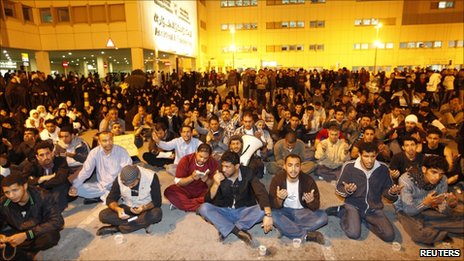 Washington has urged Bahrain to show restraint in dealing with protesters and called for meaningful reform in the small Gulf state kingdom.
Security forces cleared hundreds of demonstrators from a square in the capital Manama on Thursday, leaving four people dead and hundreds injured.
Prayers and funerals are due to take place in the city on Friday.
A pro-government demonstration is also expected to be held, just hours after Bahrain banned public gatherings.
Tanks prowled the streets of Manama on Thursday as the military was ordered to tighten its grip.
Soldiers would take every measure necessary to preserve security, the interior ministry said.
The use of the military is a course that puts the Bahraini royal family into direct confrontation with members of the Shia Muslim majority who make up the bulk of the protesters, the BBC's Middle East correspondent, Jon Leyne, reports from Cairo.
Since independence from the UK in 1971, tensions between the Sunni elite and the less affluent Shia have frequently caused civil unrest. Shia groups say they are marginalised, subject to unfair laws and repressed.
Washington is watching with growing concern as unrest and violence spread across the Middle East, threatening its regional interests, BBC state department correspondent Kim Ghattas reports from Washington.
While Bahrain is tiny, with a population of less than one million, it is home to the US navy's Fifth Fleet and is near another key US ally in the region, Saudi Arabia.
Because of its Shia majority, it is seen by other Arab Gulf states as vulnerable to influence from Iran.
US Secretary of State Hillary Clinton telephoned her Bahraini counterpart, Sheikh Khaled bin Ahmed al-Khalifa, to tell him of her "deep concern" over events.
She urged him to make sure that the prayers and funerals expected on Friday were not marred by violence.
On a visit to the kingdom in December, Mrs Clinton said she was impressed by the commitment the government had shown to walking on the democratic path.
She has not retracted that statement in the wake of the violence but said Bahrain needed real and meaningful reforms, our state department correspondent notes.
But the Bahraini foreign minister argued that police action was necessary to pull the country back from the "brink of a sectarian abyss".
"Police took every care possible," he told a news conference in Manama.
US Secretary of Defense Robert Gates, for his part, said the US had consistently, publicly and privately encouraged political and economic reform in the Arab world.
Countries, he said, now had to "move on with it".
UK Foreign Secretary William Hague also called on Bahrain's government to exercise restraint, as did UN Secretary General Ban Ki-moon.
The army in Bahrain announced it had taken control of key parts of the capital and restored control after the security forces cleared protesters from the area around Pearl Square.
Abdul Jalil Khalil, a senior member of the main Shia party Wefaq, said the deaths and injuries were an "atrocity".
"Whoever took the decision to attack the protest was aiming to kill," he told Reuters news agency.
Ibrahim Sharif, of Bahrain's secular Waad party, told the BBC protests would continue until the country became a "proper, functioning, constitutional democracy".
"We are going to do what's necessary to change this into a democratic country, even if some of us lose our lives," he said.
Libya protests: Death in al-Bayda as unrest spreads
 At least one person has been killed in protests across Libya on Thursday in what anti-government activists described as a "Day of Rage".
Amnesty International says a man was shot dead when security forces opened fire in the city of al-Bayda.
Police and protesters also clashed in Zentan and Benghazi, where one witness told the BBC at least 16 people are believed to have been killed.
This week's protests are the first in Libya, where dissent is rarely allowed.
Pro-government activists were also out on the streets in the capital, Tripoli. They shouted slogans in support of Libya's leader, Muammar Gaddafi.
The demonstrators in Green Square shouted: "We are defending Gaddafi and the revolution!" and "The revolution continues!" Others hurled insults at foreign media.
Pro-democracy protests have recently swept through several Arab nations, with the presidents of Tunisia and Egypt forced to resign amid growing unrest.
Gunfire in Benghazi
Amnesty International says protester Nacer Miftah Gout'ani was shot dead when security forces opened fire on demonstrators in al-Bayda. Dozens more were injured.
However, it said unconfirmed reports suggested as many as 12 people had been killed in the last two days.
Activists used social networking websites such as Facebook and Twitter to call for a "Day of Rage" on Thursday.
One witness, a woman in Benghazi who joined the protests on Thursday, told the BBC she saw hundreds of people taking part in the demonstrations.
She saw police firing their guns and she said they were not just firing into the air, but firing at people as well.
She said the word was that at least 16 people were killed in Benghazi alone.
However, it is impossible to confirm that figure independently.
A regional head of security was removed from his post in al-Bayda after the violence on Wednesday, local media reported.
In Zentan, a number of government buildings were set on fire, including a police station. A semi-independent local newspaper said five people had been arrested, two of them of Tunisian origin.
Wave of protests
Col Gaddafi is the Arab world's longest-serving leader, having ruled oil-rich Libya since a coup in 1969.
He has always insisted that the country is run by a series of people's committees, though most outside observers believe it is a police state with him firmly in control, the BBC's Jon Leyne reports.
The Middle East has recently seen a wave of protests fuelled by discontent over unemployment, rising living costs, corruption and autocratic leaderships.
This began with the overthrow of Tunisia's leader, Zine al-Abidine Ben Ali, in January. Last week, President Hosni Mubarak of Egypt resigned.
In recent days there have also been anti-government demonstrations in Yemen, Bahrain, and Iran.
G20 meeting urged to act on food price inflation
The G20 begins a two-day meeting on Friday against a background of rising food and commodity prices.
Finance ministers and central bankers from 20 of the world's biggest developed and developing nations will gather in Paris.
They are being urged to tackle the issue of price inflation affecting basic goods, like food and fuel.
Ahead of the meeting the International Monetary Fund warned that these have increased economic imbalances.
Earlier this week, the World Bank said food prices were at "dangerous levels" and had pushed 44 million more people into poverty since last June.
John Lipsky, first deputy managing director of the IMF, told the BBC that the G20 needed to work to remedy the instability: "There is great concern over the obvious high volatility of basic commodity prices especially food."
French President Nicolas Sarkozy, who is currently the head of the G20, has argued that commodity speculators should be reigned in in order to reduce food price spikes and volatility.
Unchecked speculation
Meanwhile, more than 100 European and international organisations led by the World Development Movement (WDM) have signed a statement warning the G20 of what they see as the dangers of unchecked speculation.
Julian Oram of the WDM said: "By taking action now to curb excessive speculation on food, G20 leaders could save lives, reduce chronic hunger and prevent civil and political unrest."
Rapid food price inflation in 2008 sparked riots in a number of countries. At that time, the World Bank estimated 125 million people were in extreme poverty.
The World Bank also called on this week's G20 meeting to address the problem, saying in a report that rising food prices were an aggravating factor of the unrest in the Middle East, although not its primary cause.
Some analysts have pointed to the difference between speculation, which can provide up-front money to a farmer to plant new crops, for example, and market manipulation, which is designed purely as a play on prices.
Currency and trade
Mr Lipsky said the market for food and other basic commodities was heavily burdened by controls and subsidies: "I think it would be very useful for the G20 to look at these markets in much better detail and see if they can be improved to better serve the global community and not be a source of instability and worry."
Other key imbalances on the menu will include currency and trade.
Mr Lipsky said that the idea was that some of the fast-growing "surplus" countries, like China, whose exports far outweigh its imports, have been relying too much on exports to fuel growth, while deficit countries, like the UK and the US, who buy in more than they export, rely too much on domestic demand to fuel their growth.
Currency values are at the heart of this, with critics arguing the Chinese keep their currency artificially low to make its exports more attractive.
China denies this.
Although G20 countries have been working for some time on how to correct mismatches in the global economy they have not reached agreement even over what criteria they should use as a starting point.
Summit host Christine Lagarde, the French finance minister, said her focus was going to be on finding those criteria: "What we want to achieve Friday and Saturday is to identify a list of indicators, measuring tools, that will allow us to identify imbalances, then the causes of these imbalances, so that we can propose methods to coordinate our economic policies."
The list includes countries' trade deficits or surpluses, budget deficits and levels of debt.