
Waka Flocka: "Stress Is Gone Kill Me"
After yesterdays shooting of his tour bus, rapper Waka Flocka has indicated that these incidents are wearing him down.
On Twitter, the rapper said, "Damn stress gone kill me im only 24 #needabackrub."
The rapper indicated that he was in good health and was on his way to Los Angeles to partake in the All-Star Weekend festivities.
Additionally, he tweeted out a picture of his child as a reminder of what is truly important to him in life.
The rapper was also critical of the media and the social media world for running with the shooting as some form of condemnation of him as a rapper.
"Yo its crasy how the world hear s**t and just add they spice to N run with with the bull," Waka wrote in a post wrought with grammatical errors.
Oddly, he continuously tweeted "Shoot Me or Salute me," which is the name of a mixtape he previously released.
She alleges her son was not even on the bus at the time of the shooting and couldn't definitely say that it was an attack on the rapper.
In January of 2010, Waka Flocka was shot twice in an attempted robbery-turned-attempted murder.

Diddy Funds Budding Entrepreneurs With $100K Donation
Hip-Hop mogul Sean "Diddy" Combs is backing up claims to support young entrepreneurs with a $100,000 donation to help fund startup businesses for urban youth across the country.
Diddy was honored on Sunday (February 13th) during the 2011 Annual Bryan-Michael Cox Pre-Grammy Brunch at the Four Seasons hotel in Beverly Hills, California.
The annual event was organized by Cox, SESAC and 100 Urban Entrepreneurs, a non-profit organization dedicated to serving urban youth and developing future business leaders.
Diddy was so moved by the stories of the budding moguls in the 100 Urban Entrepreneurs program that he has personally committed $100,000 to the non-profit organization.
“"Puff challenged me early on by asking, Son, do you know how hot you really are? I walked away wanting to make even greater music," Cox said. "Minorities are fundamentally at a disadvantage because many lack the access to financial resources and mentoring opportunities to start sustainable businesses."
In related news, Diddy and his group Dirty Money recently dropped a new mixtape titled loveLOVE vs. hateLOVE.
Rapper Kanye West Headlines Essence Music Festival
Superstar rapper Kanye West will head to New Orleans this July to headline the 2011 Essence Music Festival.
Kanye is slated to hit the stage during the three-day festival, which will also include performances by Mary J. Blige, Trey Songz, funk legend George Clinton, Parliament-Funkadelic, Irma Thomas, MC Lyte, Charlie Wilson, Fantasia, Boyz II Men, Rebirth Brass Band, TBC Brass Band others.
"Essence is proud to present our most beloved and rising talent across all R&B categories for our first announcement. We listen to our audience and the performers in our first roll-out are the musicians they want to see under one roof over the Fourth of July weekend," said Michelle Ebanks, President, Essence Communications Inc. "Our mission this year was to celebrate community through the prism of the art form that continues to tell our reader's stories: R&B."
Over 400,000 people are expected to attend the 2011 Essence Music Festival, which will take place on July 1st, 2nd and 3rd.
According Ebanks, more artists will be announced in the months and weeks leading up to the Essence Music Festival, which is in its 17th year.
Cricket World Cup: Grand ceremony launches tournament

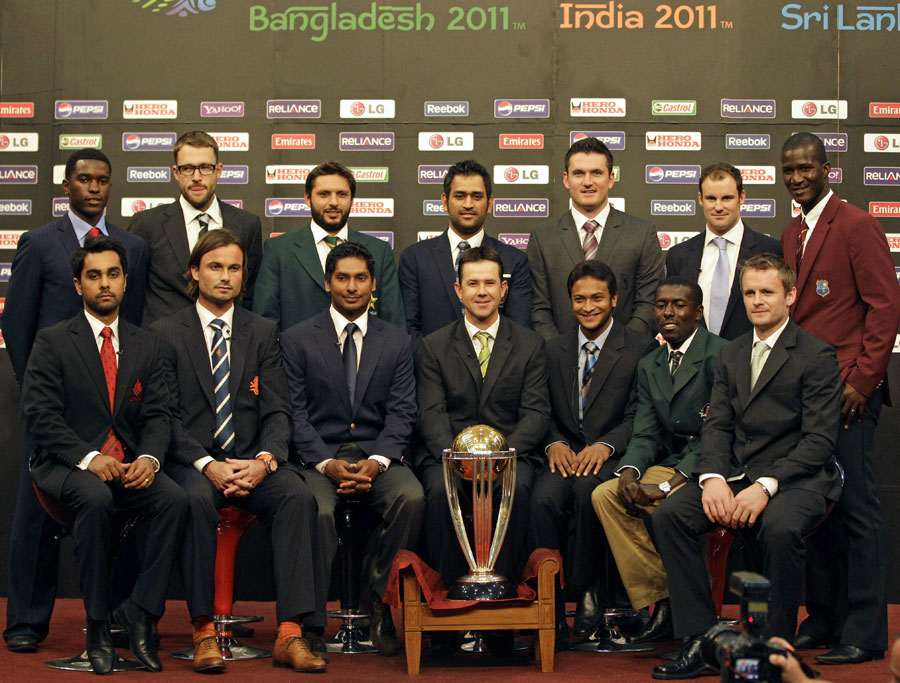
The 10th Cricket World Cup has been launched following a $30m (£18.6m) opening ceremony in Bangladesh.
All 14 captains were paraded in rickshaws around the Bangabandhu Stadium in Dhaka as 3,500 performers demonstrated local cultures.
Indian singer Sonu Nigam, Bangladesh-based Runa Laila and Canadian Bryan Adams provided further entertainment.
The more modern stadium in Mirpur hosts Saturday's tournament opener, in which Bangladesh host favourites India.
The 49-match, six-week tournament is spread across cricket-crazy south Asia, with Sri Lanka and India also hosting matches. Of the original four host nations, Pakistan was forced to withdraw over security fears.
A number of commentators felt the highlight of the two-hour spectacle was an aerial cricket match, where high-flying acrobats hit and chased a laser-beamed ball against a vertical backdrop of a pitch.
Speaking four years after a poorly received World Cup in the Caribbean, Bangladesh prime minister Sheikh Hasina said: "I hope that the games will be memorable and exciting."
ICC president Sharad Pawar, addressing 21,000 spectators, said: "Our flagship event provides the stage on which players have the rare opportunity to create legend and to write their own chapter in the history of this great sport.
"The greatest cricketers in the world will grace this event and I am sure that their ability, whether with bat or ball, will provide excitement and enjoyment for all cricket lovers."
The often chaotic roads in Dhaka witnessed relatively light traffic on Thursday with the government declaring a half-day public holiday so its people could return home in good time to view the opening ceremony on television.
It is the first time the country, which is slowly making a mark in world one-day cricket if not the five-day Test version, has helped stage the showpiece event which features eight matches in Bangladesh, 12 in Sri Lanka and 29 in India, including the 2 April final, in Mumbai.
Bangladesh, whose first six matches will be in Mirpur and Chittagong, are enjoying their moment in the sporting spotlight.
National board president Mostafa Kamal said: "We will be able to improve our image if we can successfully hold the opening ceremony and host the World Cup matches slated for us."

NFL, NFLPA agree to enter mediation
Less than three weeks from the expiration of the collective bargaining agreement, the NFL and its players' union agreed Thursday to mediation in their labor dispute.
The Federal Mediation and Conciliation Service, an independent U.S. government agency, will oversee negotiations in Washington beginning Friday.
"Any time that both sides of negotiations can get together, whether through conventional means of bargaining or mediation, to come to an agreement that can benefit all parties, it is a good thing," NFLPA president Kevin Mawae told The Associated Press in an e-mail.
Friday will be the first of seven straight scheduled days of negotiations between the league and the players' union.
The two sides agreed to meet twice a week two weeks ago, yet have met only once since.
"Personally, I would be surprised if they met more than two or three days in a row," one source familiar with the talks told ESPN NFL Insider Adam Schefter.
FMCS director George H. Cohen can make suggestions and recommendations, but he has no authority to impose settlements. Coming to an agreement on a new collective bargaining agreement still will be up to the two parties.
"Our agency director will be working with the parties to assist them in reaching a voluntary, mutually acceptable agreement," FMCS public affairs director John Arnold said in a telephone interview with The Associated Press.
After holding separate discussions with representatives from the league and the union, Cohen said both sides accepted an invitation from his agency to get involved in the stalled negotiations.
"Due to the extreme sensitivity of these negotiations and consistent with the FMCS's long-standing practice, the agency will refrain from any public comment concerning the future schedule and/or the status of those negotiations until further notice," Cohen said.
The collective bargaining agreement between the league and the players expires at 11:59 p.m. ET on March 3. Last week, talks broke down, leading to the cancellation of one planned session.
NFL spokesman Greg Aiello told The Associated Press in an e-mail: "We are now in mediation."
The league also switched an owners meeting from Fort Lauderdale, Fla., on March 3, to Chantilly, Va., on March 2-3.
In a statement, NFLPA spokesman George Atallah said: "The NFLPA has always focused on a fair collective bargaining agreement through negotiations. We hope that this renewed effort, through mediation, will help the players and owners reach a successful deal."
Indianapolis Colts center Jeff Saturday, an executive board member of the NFLPA, told ESPN's "NFL Live" on Thursday that he was "excited" about the prospect of entering mediation. "It can do nothing but help," Saturday said.
The biggest issue separating the owners and players is how to divide about $9 billion in annual revenues. Under the old deal, the owners receive $1 billion off the top, and they want to increase that to $2 billion before players get their share.
Among the other significant points in negotiations: the owners' push to expand the regular season from 16 games to 18 while reducing the preseason by two games; a rookie wage scale; and benefits for retired players.
The NFL and union went more than two months without holding any formal bargaining sessions, until a meeting Feb. 5, the day before the Super Bowl.
The NFL filed an unfair labor practice charge against its players' union with the National Labor Relations Board on Monday.
The league's filing said the union "consistently has failed to confer in good faith" during negotiations for a new contract and the union's "conduct amounts to surface bargaining and an anticipatory refusal to bargain."
Aiello told the AP the mediation would not have an effect on the NLRB complaint.
Indianapolis Colts owner Jim Irsay recalled the last CBA negotiations in 2006, which resulted in a deal that the owners opted out of in 2008.
"Since the last time, things have broken off and guys have gone their separate ways," Irsay said Thursday. "I remember that happened the last time and [then-commissioner] Paul Tagliabue ended up texting [union chief] Gene Upshaw and said, 'Why don't we get back together.' So you never know when something positive can happen and something good can get done.
"I don't have a strong anticipation something will get done before [March 3], but I think it's possible."
Player sources told ESPN senior NFL analyst Chris Mortensen that last week's talks ended when owners walked away from the negotiating table when the NFLPA proposed to take an average of 50 percent of all revenue generated by the league.
However, other sources familiar with the talks told Mortensen and Schefter that the negotiations broke off when the union characterized its documents as an "illustration" that NFL officials believed represented a proposal for revenue sharing between owners and players.
The FMCS website says it "provides free mediation services in contract negotiation disputes between employers and their unionized employees. All the parties have to do is make a request."
Bulls nip Spurs for fourth straight win
Derrick Rose had a career-high 42 points and the Chicago Bulls headed into the All-Star break with an impressive 109-99 victory over the NBA-leading San Antonio Spurs on Thursday night.
Luol Deng had 19 points and Carlos Boozer finished with 15 for Chicago, which shot 54 percent in its fourth consecutive win. The Bulls improved to 38-16 after winning 41 games last season.
Once again hearing "M-V-P! M-V-P!" chants, Rose was at his best when San Antonio challenged Chicago in the fourth quarter. He had 13 points in the final period, answering Spurs baskets with acrobatic drives and long jumpers.
Rose's long 3-pointer as the shot clock expired with about 3 minutes left gave Chicago a 101-90 lead and took the steam out of one San Antonio rally. He also finished with eight assists and five rebounds.
Tony Parker scored 26 points and All-Star Manu Ginobili added 16 for San Antonio, which had won six of seven. Reserve Gary Neal made four 3-pointers and finished with 16 points.
Chicago led 83-75 after three quarters and grabbed control early in the fourth. Ronnie Brewer kickstarted a 11-2 run with a dunk and finished it off with a jumper that made it 94-80 with 8:08 remaining.
Tim Duncan had 14 points and nine rebounds hours after Spurs coach Gregg Popovich announced he would replace Yao Ming in the Western Conference's starting lineup for Sunday's All-Star game in Los Angeles.
Duncan enters the break with career-low averages in points and rebounds, but is a key reason why San Antonio leads the NBA with a 46-10 record.
The Spurs trailed for much of the night in the finale of their annual rodeo road trip but challenged Chicago with several bursts. Rose and the Bulls had an answer each time while improving to 25-4 at home in their best start at the United Center since 1997-98 championship team won 25 of its first 27 home games.
Duncan hit a running hook and Parker converted a three-point play to help San Antonio pull within two with 4:49 left in the third. But Deng stopped the spurt with a 3-pointer and Boozer had three straight points to make it 79-71.
Even with the loss, it was a banner first half for San Antonio, which set several franchise records for fastest starts. The Spurs went 6-3 on their nine-game trip and open the second half with a three-game homestand.
Rose grabbed a microphone before the game and thanked the fans for making him Chicago's first All-Star starter since Michael Jordan in 1998.
The dynamic point guard then put on another show as the Bulls finished a strong start to the season that established them as one of the NBA elite teams once again.
Rose slithered through San Antonio's stout defense for 21 points in the first half, making eight of 12 shots from the field. He scored Chicago's last six points of the second quarter, connecting on a nice runner, a jumper and two free throws to give the Bulls a 58-51 lead at the break.
Injury forces Baugh, Barath out World Cup
West Indies have suffered another setback in their preparation for the World Cup.
Official sources have confirmed that Carlton Baugh Jr and Adrian Barath have suffered hamstring injuries, and will return home earlier than scheduled from the tournament. Baugh retired out on 29 during the team’s second World Cup warm-up match on Tuesday, and Darren Bravo was required to keep wicket. Barath did not bat or field in the match. He has also been struggling with his injury, and is also likely to miss the tournament, which opens on Saturday, and will be co-hosted by India, Sri Lanka, and Bangladesh. West Indies Cricket Board officials are awaiting the outcome of final tests on Baugh and Barath, but it’s hardly likely they will decide to allow them to stay on the sub-continent, considering the format of the competition, and the limited time available. This would mean that either opener Devon Smith, or veteran left-hander Shivnarine Chanderpaul could open the batting for West Indies in the competition.
There is also the possibility of a recall for wicketkeeper/batsman Denesh Ramdin, following his solid start to the regional first-class championship. But the WICB had previously announced batsman Kirk Edwards and wicketkeeper/batsman Devon Thomas as two of their three World Cup reserves, and they are likely to be chosen. No official replacements however, have been named, and the WICB will also have to submit a request for a change of personnel to the tournament's event committee for approval before confirming their replacements. West Indies open the World Cup against South Africa next Thursday at the Feroz Shah Kotla Stadium in Delhi, India. Darren Sammy’s side have been drawn in Group-B, where they will also face Netherlands, Bangladesh, Ireland, England, and co-hosts India.
Digicel Carib Cup date changed
The Finals of the 2012 Digicel Caribbean Cup will be contested between June and July.
Jack Warner, president of the Caribbean Football Union, announced on Monday that the region's premier tournament will undergo a massive transformation for the 2011-12 season.
competition
The announcement followed a CFU Congress on Monday.
"The 2010 edition of this competition catapulted Caribbean football into another chapter of our great story," said Warner, who is also a vice-president of the sport's World governing body.
"But we cannot sit idly by and allow our leading ship to sail on seas of uncertainty. Our actions plant the seeds that become our fate, and eventually blossoms into our destiny, a destiny of greatness."
Warner hopes that the switch of dates for the tournament would allow the region's best players to make themselves available after playing in overseas leagues, and that they contest the finals.
"Our game is developing, and we as administrators must continue to pursue strategies, which will foster further growth," he said. "We must strive for excellence.
"I am cognisant of all of the complaints made by our members over the difficulties they encounter in gaining access to their internationally based players."
international talent
He added: "But this competition must be used as a device to propel our talent on to the world stage, and by allowing our federations greater access to their international talent, we will ensure that the standard of the competition is lifted.
About two-dozen teams took part in last year's DigiCup, which was contested between September and December, and was won by Jamaica.
The congress also decided to review, with CONCACAF, the format and regulations for the Caribbean Club Champions Cup, which decide the CFU's three berths in the CONCACAF Champions League.
The Club Champions Cup will be staged from March to May 2011, and regional bosses intend to implement changes, which would result in an increase in the participation level for the 2012 tournament.
Palin: America 'on a road to ruin'
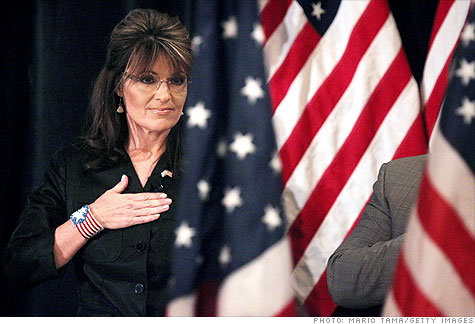 Sarah Palin delivered a harsh critique of President Obama's budget proposal during a rare Q-and-A session Thursday, and urged lawmakers to resist raising the nation's debt ceiling.
Palin warned that Obama's budget fails to address the "$14 trillion dollar debt that will bring America to her knees."
The former vice presidential nominee's comments on the nation's fiscal state were delivered during a luncheon hosted by the Long Island Association, which bills itself as as the largest business organization in New York.
Many of the questions were focused on the economy and fiscal policy, and provided a glimpse into the thinking of the possible 2012 presidential candidate.
Palin was quick to criticize the spending levels in Obama's fiscal 2012 budget, and took the president to task for failing to propose entitlement reform.
"What President Obama is doing and what this administration is supporting is America being on a road to ruin, unless we do take seriously this monumental debt," she said.
Surprise! Obama, GOP agree on these cuts
Palin also said she is thankful for lawmakers who are prepared to vote against raising the nation's debt limit, which is a cap set by Congress on the amount of debt the federal government can legally borrow.
"To me, all that is going to do is create this allowance for more big spenders to get in there and say 'more debt ceiling, OK we are going to keep spending then up to that ceiling,' " Palin said.
Actually, raising the debt ceiling is not an agreement to spend more money. The need to raise the debt ceiling reflects prior legislative decisions that both Democrats and Republicans made to spend more.
Palin said a failure to increase the debt ceiling would not necessarily result in a government shutdown. She noted that the government would continue to collect revenue that can be used to service the nation's debt.
"There are a lot of people though who are saying shut her down, if that's what it takes," Palin said. "Let it be for a week or two there this message that is sent to our politicians who are so tone deaf to what the people of America are saying."
If lawmakers fail to authorize an increase in the debt limit, the Treasury Department can raise funds for a limited time to meet federal obligations without exceeding the debt ceiling.
But Treasury Sec. Tim Geithner has warned lawmakers that even a short-term breach of the ceiling could have devastating implications.
"Even a very short-term or limited default would have catastrophic economic consequences that would last for decades," Geithner wrote earlier this year in a letter to lawmakers.
At a minimum, a default could pummel U.S. bonds, the dollar and U.S. investors' portfolios. And that, in turn, could create a debt crisis for the United States that would likely be even harder to combat than the financial crisis of 2008, Geithner said.
Borrowing costs would rise across the board -- for federal, state and local governments, and for businesses and consumers, he said. Millions of jobs could be lost and stock prices, home values and retirement savings would suffer, Geithner added.
Treasury unveils new financial services watchdog
A powerful new "financial policy committee" (FPC) at the Bank of England has been unveiled by the government.
It will oversee the government's new system of regulators, set to replace the Financial Services Authority (FSA).
FPC members will include Donald Kohn from the US Federal Reserve, and Sir Richard Lambert, until recently head of the Confederation of British Industry.
The FSA will be split up into two new bodies tasked with curbing risk-taking by banks, and protecting consumers.
The moves follow Chancellor George Osborne's decision last summer to abolish the old FSA, whose previously hands-off approach to financial regulation was criticised in the wake of the 2008 financial crisis.
Outside experts
The new 12-person committee will be organised along similar lines to the Bank of England's existing monetary policy committee, with a mixture of internal appointees and independent experts from outside the Bank.
The Treasury has announced who will sit on an interim version of the FPC during a transition period this year until the FSA is formally scrapped. Members will include:
- Mervyn King, the Bank governor, who will chair the committee
- four other senior Bank of England staff
- Donald Kohn, who served as number two at the US Federal Reserve during the financial crisis
- Sir Richard Lambert, formerly head of the CBI
- Michael Cohrs, an investment banker who has worked at Deutsche Bank and Goldman Sachs
- Alastair Clark, a long-time adviser to the Bank and the Treasury about financial stability
- Lord Turner and Hector Sants, respectively chairman and chief executive of the FSA
The committee will eventually have a fifth independent expert added to it.
Its job will be to spot and contain risks within the UK financial system, and to work with regulators in other countries when the risks are international in nature.
In order to stop risky financial activities from simply migrating into unregulated parts of the economy, the FPC will also be allowed to expand its own remit.
However, in order to prevent the FPC from being too draconian in clamping down on the banks' activities, it will also be required to consider the longer-term impact of its decisions on economic growth.
Financial police
The committee will oversee, and have the power to instruct, two new financial watchdogs to be formed out of the carcass of the FSA, outlined in a new government paper.
A "Prudential Regulation Authority" will ensure that banks and other financial firms do not take on too much debt or make excessively risky investments.
The authority will work closely with the Bank committee, and will be able to temporarily penalise excessive lending - or certain types of loans like mortgages - in order to stop market bubbles from forming.
Meanwhile a "Financial Conduct Authority" (FCA) will be tasked with protecting consumers from sharp practices, and making sure that workers in the financial services sector comply with rules.
In the worst case, it will be able to ban financial products that it deems inappropriate for ordinary customers and censor promotions it considers misleading.
Peter Vicary-Smith, chief executive of the consumers association Which?, gave the new regulator an enthusiastic reception.
"It's... encouraging that the new regulator looks set to ditch the FSA's hands-off approach to product regulation and be willing to intervene immediately to ban toxic products," he said.
"The FCA must proactively stand up for the interests of consumers and actively promote competition, so that there are stronger incentives to treat customers fairly and offer good value for money."
The FCA will also be given a role in policing competition amongst financial firms.