

Orange County University Confers Honorary Doctorate on Courtney S. Robinson
Orange County University has awarded an honorary Doctorate of Philosophy in Strategic Communications and Leadership to Dr. Courtney S. Robinson in recognition of his distinguished career in communications, cultural development, tourism, and public service.
The honorary degree was conferred during the university’s June 6 convocation ceremony, where civic leaders, alumni, family members, and guests gathered to celebrate Robinson’s decades of contributions to institutional leadership, creative industries, and national development.
University officials praised Robinson for his work in government communications, destination marketing, media production, and mentorship, noting that his leadership has strengthened public institutions through the implementation of editorial governance, crisis communications protocols, and integrated communications systems. His efforts have also promoted authentic and sustainable approaches to tourism and cultural preservation while creating opportunities for local talent.
Robinson’s career has included service with the Turks and Caicos Islands Government Information Service, the Turks and Caicos Tourist Board, Experience Turks and Caicos, and a number of international consulting roles.
He is also the founder of Islander Fashions and the TCI Top Model Contest, initiatives that helped transform fashion, modelling, and the creative arts into viable professional careers through training, international exposure, and industry partnerships.
Accepting the honorary doctorate, Robinson described the award as both a personal honour and a renewed commitment to public service.
RTC spoke with Dr. Robinson on the honor.
In recognising Dr. Robinson, Orange County University said the award reflects its commitment to honouring leaders whose work combines creativity, ethical leadership, and public service while making lasting contributions to their communities.
Congratulations Dr. Robinson! 🥳

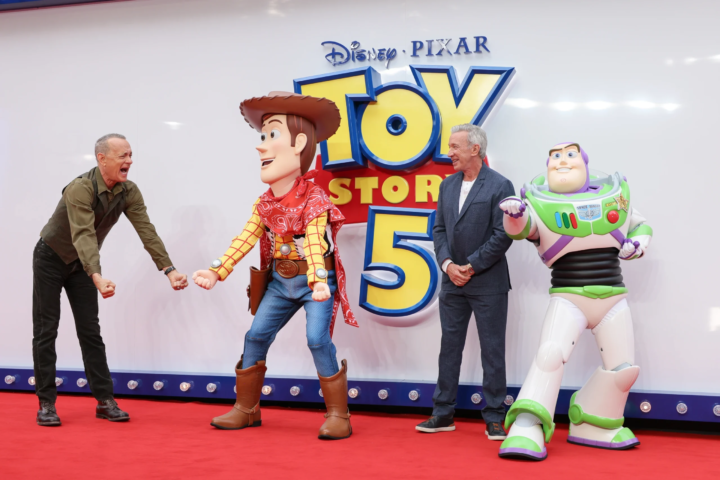
Toy Story 5 Rakes in Biggest Box Office Debut of the Year
Moviegoers are proving that their affection for Toy Story remains as strong as ever.
Pixar’s Toy Story 5 opened to an impressive $160 million dollars at the domestic box office, according to studio estimates released Sunday.
The debut easily set a new franchise record and marked the largest opening weekend of the year.
More than three decades after the original Toy Story premiered in theaters, the latest installment surpassed the previous franchise-best opening of $120 million dollars, achieved by Toy Story 4 in 2019. Overseas audiences also turned out in force, helping the film earn $152 million internationally and bringing its global opening-weekend total to $312 million dollars.
The Toy Story series has long been one of the crown jewels of The Walt Disney Company.
Prior to the release of Toy Story 5, the franchise had generated more than $3 billion dollars in worldwide box-office revenue, in addition to billions more from merchandise sales.
Although many fans viewed 2010’s Toy Story 3 as a fitting conclusion to the saga, Disney’s decision to continue the franchise nearly a decade later has paid off financially. Toy Story 4 crossed the $1 billion mark globally, and Toy Story 5 appears poised to achieve a similar milestone.
Among animated features, only Incredibles 2 (2018), which debuted with $182.7 million, has posted a larger opening weekend than Toy Story 5.
The success has come with a hefty price tag. Production costs for the fifth film reportedly reached $250 million, excluding marketing expenses. The movie reunites much of the franchise’s beloved voice cast, including Tom Hanks as Woody, Tim Allen as Buzz Lightyear, and Joan Cusack as Jessie.
In the new adventure, the toys find themselves competing for attention after Bonnie receives a tablet, leaving them feeling sidelined. The film is directed by Pixar veteran Andrew Stanton, known for directing Finding Nemo and WALL-E. It also features a new original song by Taylor Swift titled “I Knew It, I Knew You.”
Critics have responded positively to the sequel, while audiences awarded it an “A” CinemaScore.
With strong reviews and enthusiastic fan reception, Toy Story 5 is expected to remain a major draw at theaters in the weeks ahead.

Lionel Messi Becomes Outright All Time Leading Goalscorer in World Cup History
Lionel Messi officially became the outright all-time leading goalscorer in World Cup history.
He achieved the historic milestone on June 22, 2026, during Argentina's 2-0 group stage victory against Austria at AT&T Stadium in Arlington, Texas.
The 38-year-old captain rebounded from a missed early penalty to score both goals for the defending champions, securing their place in the tournament's knockout stage.
Messi entered the match tied for the men's record after netting a spectacular hat-trick against Algeria in Argentina's 2026 World Cup opener.
Messi is only the third player in men's history to score in six consecutive World Cup matches.
Messi is widely regarded as one of the greatest football players in history, currently playing as a forward and captain for both Major League Soccer club Inter Miami CF and the Argentina national team. He is currently representing Argentina in his record-breaking sixth FIFA World Cup tournament in North America.
He brought his career goals total to 18 passing Germany’s Miroslav Klose who had 16 goals.
He leads the 2026 Golden Boot race with 5 goals in just 2 games.
Major Career Honors
8x Ballon d'Or Winner (2009–2012, 2015, 2019, 2021, 2023) — The most in football history.
World Cup Champion (2022) & 2x Golden Ball Winner (2014, 2022)
2x Copa América Champion (2021, 2024)
4x UEFA Champions League Titles
10x La Liga Titles (with FC Barcelona)
2x MLS MVP (2024, 2025)
2025 MLS Cup Champion (with Inter Miami)

Giannis Antetokounmpo Traded from Milwaukee Bucks to Miami Heat
Giannis Antetokounmpo has made it clear he wants to compete for more championships. The Miami Heat share that goal — and now they have a new superstar to lead the pursuit.
After years of speculation about Miami’s next blockbuster move, the Heat have acquired Giannis from the Milwaukee Bucks.
The two-time NBA MVP, 10-time All-Star, and one of the league’s most dominant players arrives in South Florida as part of a franchise-altering trade completed Monday night.
According to a person familiar with the deal who spoke to The Associated Press on the condition of anonymity pending league approval, Miami will receive Antetokounmpo and Bobby Portis.
In return, Milwaukee Bucks acquires Tyler Herro, Jaime Jaquez Jr., Kel’el Ware, Kasparas Jakucionis, and at least four draft picks, including the No. 13 selection in Tuesday night’s NBA Draft.
The move concludes one of the NBA’s most closely watched trade sagas. In the final days of negotiations, the Bucks reportedly weighed offers from both Miami and Boston before ultimately agreeing to send their franchise cornerstone to the Heat.
Antetokounmpo leaves Milwaukee after an extraordinary run that included leading the Bucks to the 2021 NBA championship. A member of the NBA’s 75th Anniversary Team, he is a ten-time All-NBA selection and remains one of basketball’s premier talents despite an injury-shortened season in which he averaged 27.6 points per game.
Now, Miami is betting that Giannis can deliver the franchise’s next title run. At just 31 years old, the Heat clearly believe he remains in his prime and capable of anchoring a contender for years to come.
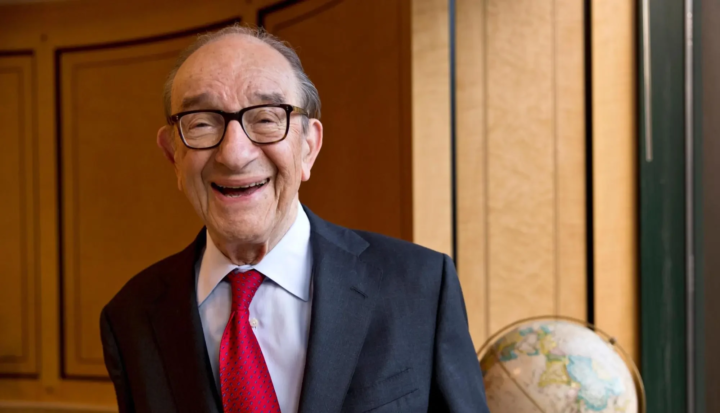
Longtime Chairman of Federal Reserve - Alan Greenspan Dies at 100 Years Old
Alan Greenspan, the longtime chairman of the Federal Reserve, has died at the age of 100, from complications of Parkinson's disease.
The economist is remembered for leading the American central bank amid periods of historic U.S. economic expansion, while critics have also said his policies contributed to and exacerbated the mortgage crisis and financial crash of 2008.
Greenspan, a libertarian Republican, became the 13th chairman of the Board of Governors of the Federal Reserve System two months before the stock market crash on Oct. 19,1987, known as Black Monday. He was credited with moving quickly to alleviate investors' fears after the crash and was instrumental in ensuring the Federal Reserve made plenty of money available to alleviate the impact on financial markets. Stocks quickly rebounded.
He was appointed Fed chair by four different presidents during his career, first by Ronald Reagan in 1987. Greenspan continued to serve as Fed chairman under presidents George H. W. Bush, Bill Clinton and George W. Bush. He steered the U.S. economy through the economic boom in the 1990s, the dotcom bubble, and the Sept. 11, 2001, terrorist attacks. His final term as chair ended on Jan. 31, 2006.
Under his leadership, the Fed fostered a distaste for regulation and promoted very low interest rates in the early 2000s -- two phenomena critics say encouraged a bubble in housing prices that eventually burst with disastrous effects on the global economy.
During his tenure, and before the financial crisis began, the nation experienced one of the longest periods of economic growth in its history.
President Richard Nixon nominated Greenspan to chair the President's Council of Economic Advisers in 1974, the first of many government economic positions he would hold. Nixon resigned as president hours after Greenspan was nominated, but he continued to serve under President Gerald Ford. Greenspan also served as a member of President Ronald Reagan's Economic Policy Advisory Board and was a consultant to the Congressional Budget Office.
In the private sector, Greenspan served as corporate director for many companies, including Alcoa, General Foods and J.P. Morgan & Co. He also served as a member of Time magazine's Board of Economists and a senior adviser to the Brookings Panel on Economic Activity.
In 2002, Greenspan received an honorary knighthood from Queen Elizabeth II in recognition of his contribution to global economic stability. In 2005, President George W. Bush presented Greenspan with the Presidential Medal of Freedom.
He held the position of Fed chairman from the time Reagan appointed him in 1987 until 2006, serving an unprecedented five terms under four presidents before being succeeded by Ben Bernanke.
He led the Federal Reserve through several events with major economic consequences, including two U.S. recessions, the 1997 Asian financial crisis and the Sept. 11, 2001, terrorist attacks.

Nassau Cruise Port Exceeds 33,000 Passengers in a Single Day
The Nassau Cruise Port (NCP) achieved a historic milestone on June 8th, 2026, welcoming a record-breaking 33,254 cruise passengers in a single day.
The achievement marks the first time the port has surpassed the 33,000-passenger threshold and represents a significant accomplishment for Nassau Cruise Port, the City of Nassau, and The Bahamas’ thriving cruise tourism industry.
The record-setting day was driven by the simultaneous arrival of six major cruise ships: Oasis of the Seas, Allure of the Seas, Mardi Gras, Carnival Celebration, Caribbean Princess, and Disney Fantasy, highlighting the destination’s strong appeal across multiple cruise lines.
The new record surpasses the previous high of 30,538 passengers, set on March 11, 2025, by 2,716 passengers—an increase of approximately 8.9 percent. This underscored the port’s continued ability to efficiently manage high-volume cruise operations while delivering a positive guest experience.
Mike Maura Jr., CEO and Director of Nassau Cruise Port, in a statement stated quote, “This is a proud and meaningful achievement for Nassau Cruise Port and for The Bahamas, Reaching 33,254 guests in a single day reflects the strength of Nassau as a premier cruise destination, the confidence of our cruise line partners, and the dedication of the many stakeholders who contribute to an exceptional visitor experience. We share this accomplishment with the tour operators, artisans, retailers, transportation providers, entertainers, downtown businesses, and tourism partners who help showcase the very best of The Bahamas.” End quote
The milestone comes as the Nassau Cruise Port has been nominated for Caribbean’s Leading Cruise Port 2026 in the World Travel Awards, further reinforcing Nassau’s reputation as one of the region’s premier cruise destinations. NCP previously earned the title in 2008 and has continued to receive regional recognition through successive nominations.
Nassau Cruise Port remains committed to working with its partners to strengthen its position as one of the world’s leading cruise destinations while ensuring that continued growth delivers broad economic benefits and an exceptional experience for every guest.

Ministry of Health & Human Services Staff Trained In North & Middle Caicos
The Ministry of Health and Human Services is pleased to announce the completion of training in the proper operation and use of the centrifuge equipment for healthcare professionals, serving the communities of the twin islands North and Middle Caicos.
The training will equip staff with the knowledge and hands-on skills needed to safely and effectively operate the centrifuge equipment used in preparation of samples for medical diagnostics and laboratory procedures. This reflects a continued commitment to strengthening healthcare capacity across the Turks and Caicos Islands' family islands.
The training was conducted on June 12, 2026, at the Naivelyn Butterfield Community Clinic in Kew, North Caicos by Latricia Ingham, Laboratory Technician at the National Public Health Laboratory.
Topics covered included centrifuge safety protocols, proper sample preparation, handling and transport, routine maintenance, and troubleshooting.
In a statement, Minister of Health & Human Services, Hon. Kyle Knowles, said,
"This training is an important step in building local capacity and ensuring that residents of Middle and North Caicos have access to quality diagnostic services. Investing in our healthcare workers means investing directly in the health of our communities"
The Ministry of Health and Human Services is dedicated to advancing health services and professional development across the Turks and Caicos Islands.


Skippings Appointed As Deputy Director of Special Education Needs Services
The Office of the Deputy Governor of the Turks and Caicos Islands is pleased to announce the promotion of Mrs. Lashaunda Skippings to the position of Deputy Director of the Department of Special Education Needs Services within the Ministry of Education, Youth, Sports and Culture.
Mrs. Skippings began her career in education in 2011 as a Special Education Teacher at Enid Capron Primary School, where she established a strong foundation in supporting students with diverse learning needs. She later served at Thelma Lightbourne Primary School, advancing through a number of leadership positions, including Special Education Programme Coordinator for Zone 2 in Providenciales and Vice Principal.
Over the course of her career, Mrs. Skippings has made significant contributions to the advancement of special education services across the Turks and Caicos Islands. She has been instrumental in supporting educators, enhancing student services, and promoting inclusive learning environments. Most recently, she served as Coordinator of Assessments within the Department of Special Education Needs Services and as a Quality Assurance Officer within the Ministry of Education.
With fourteen years of dedicated service, Mrs. Skippings has demonstrated exceptional leadership, professional growth, and a steadfast commitment to improving educational outcomes. She holds a Master of Arts in Educational Leadership from Liverpool John Moores University, a Bachelor of Education in Special Education, and a Diploma in Special Education from The Mico University College in Jamaica.
In addition to her academic and professional achievements, Mrs. Skippings is a certified trainer for the National Screening Tool – Ages and Stages Developmental Screener, supporting the early identification and intervention of developmental needs among children. She is also deeply committed to youth development, serving as a Youth Ministry Leader at Firm Foundation Ministries International, where she mentors and guides young people within the community.
As Deputy Director, Mrs. Skippings will provide strategic and operational leadership in support of the Director and the department’s mandate. Her responsibilities will include overseeing the national student referral and assessment systems, guiding the implementation of Individual Education Plans (IEPs), and driving the continuous enhancement of special education programmes throughout the Turks and Caicos Islands. She will also play a key role in strengthening partnerships with local, regional, and international stakeholders while leading a multidisciplinary team to ensure the effective delivery of services and implementation of policies.
The Office of the Deputy Governor congratulates Mrs. Skippings on this well-deserved promotion and wishes her continued success in her new role.

40 Irregular Migrants Intercepted in Providenciales
Shortly after 5 am on Monday June 22nd 2026, the Marine Branch of the Royal Turks and Caicos Islands Police Force intercepted a vessel suspected of being involved in illegal migration as it made its way toward Providenciales.
Based on information received, the Coastal Radar Unit reported tracking a vessel outside
Northwest Point.
The Marine Branch was notified, and during the operation, officers intercepted a vessel
measuring approximately 36 to 38 feet in length, transporting FORTY (40) persons.
The vessel was secured and towed to shore, where all relevant agencies coordinated their
response.
The irregular migrants were subsequently handed over to the Turks and Caicos Islands Border
Force for processing.
The police force is asking the public to notify the closest police station, contact 911, the Serious Crime Unit at 649-231-1842, or Crime Stoppers at 1-800-8477 to anonymously provide any information on illegal entry into the TCI.
Additionally, individuals are encouraged to download the Crime Stoppers P3 app to share
information anonymously.

The Bight Park in Providenciales Temporarily Closed
The general public is being advised that the Bight Park, in Providenciales will be closed from June 22nd - June 28th 2026 to facilitate scheduled refurbishment works.
During this period, access to the park will be restricted to ensure the safe and efficient completion of essential works.
The Department of Environment and Coastal Resources (DECR) apologizes for any inconvenience this temporary closure may cause and appreciates the public’s cooperation and understanding.
Please note that these works form part of a broader refurbishment initiative aimed at enhancing the Bight Park. The Department remains committed to maintaining a safe, clean, and enjoyable environment for all visitors and residents alike.
The department will continue to keep the public informed on project updates.