

Virgin Islands Man Pleads Guilty to Smuggling Nearly 89 Grams of Fentanyl into St. Croix
A Virgin Islands man has plead guilty to smuggling nearly 89 grams of fentanyl into St. Croix through the mail—an amount authorities say was potentially lethal enough to kill every resident of the island.
According to the U.S. Department of Justice, Mario Felix, 36 years old, mailed a hollowed-out black book from Hollywood, Florida, to St. Croix on Dec. 27, 2022.
Hidden inside the book were 800 fentanyl tablets.
Federal officers intercepted the package on Dec. 31, and investigators later linked it to Felix through fingerprints and other evidence.
Authorities said the seized fentanyl weighed 88.67 grams, or 88,670 milligrams. The Drug Enforcement Administration warns that as little as two milligrams of fentanyl can be fatal, depending on a person’s body size and tolerance.
Based on that estimate, officials said the shipment contained approximately 44,335 potentially lethal doses—more than enough to kill St. Croix’s estimated population of about 41,000 residents.
Felix plead guilty to attempted possession with intent to distribute fentanyl, a charge carrying a mandatory minimum sentence of five years in prison and a maximum of 40 years. Prosecutors have not announced a sentencing date.
Court records show Felix has an extensive criminal history dating back more than a decade.
In 2010, he plead guilty to reckless endangerment, property destruction, and firearms offenses. A year later, federal authorities charged him with possession with intent to distribute crack cocaine, powder cocaine, and marijuana, along with additional firearms violations.
In 2014, Felix plead guilty to possessing, distributing, or manufacturing a controlled substance as part of a plea agreement that resulted in the dismissal of several firearms charges. In 2016, he plead no contest to charges involving vehicle tampering and property destruction.
Federal prosecutors again charged Felix in 2020 with illegally possessing firearms and ammunition as a convicted felon in a school zone.
Online court records also indicate Felix faced additional felony arrests in 2009, 2011, and 2012, although available documents do not provide further details on those cases.

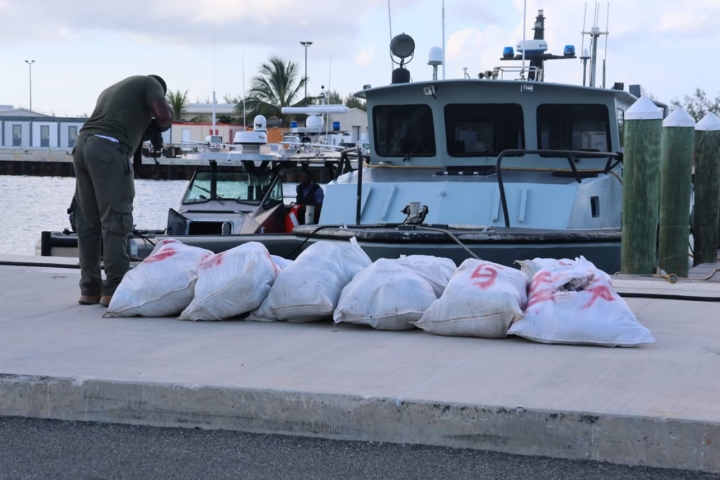
Bahamas Defense Force Recovers Suspected Bales of Marijuana
On Sunday, 14 June 2026, Royal Bahamas Defence Force interceptor P-51 recovered 12 suspected bales of hydroponic marijuana while conducting routine patrol, boarding, and search operations in the general vicinity of Fresh Creek, Andros in the Bahamas.
The suspected narcotics consisted of 12 crocus sacks containing 146 packages, with a total weight of approximately 359 pounds and an estimated street value of $718,000.
This represents the second drug recovery by the RBDF within the last two months.
On Sunday, 4 May 2026, the RBDF interdicted 66 bales of suspected hydroponic marijuana, weighing approximately 2,576 pounds, with an estimated street value of $6.4 million.
Investigations remain ongoing.

Quality Assurance Unit Launches Cohort 2 of its “Principles and Practices of School Inspection” Certification Training
The Quality Assurance Unit (QAU) of the Ministry of Education, Youth, Sports and Culture officially launched Cohort 2 of its “Principles and Practices of School Inspection” Certification Training during an opening ceremony held on June 8, 2026.
Building on the success of Cohort 1, the second phase of the programme seeks to expand the pool of certified Quality Assurance Officers (QAOs) while strengthening the QAU’s capacity as it prepares for the full implementation of the national school inspection programme during the 2026–2027 academic year.
The training facilitated by Dr. Maureen Clarke-Dwyer of Jamaica’s National Education Inspectorate brings Her extensive experience in Caribbean school inspection to ensure that the Turks and Caicos Islands’ inspection cadre is trained to internationally recognised standards.
Addressing participants at the ceremony, Minister of Education, Youth, Sports and Culture, Hon. Rachel Taylor, described the initiative as a major milestone in the Ministry’s commitment to establishing a robust, evidence-based national school inspection framework. She noted that the programme will help transform quality assurance into an embedded culture within schools by equipping educators with the knowledge, skills, and tools required for effective school inspection.
Participants in Cohort 2 were selected from across the education system and include principals, vice principals, heads of department, and senior primary school teachers. Officials say this approach ensures that trained officers bring practical knowledge of school operations and instructional leadership to the inspection process, strengthening the credibility and effectiveness of the national programme.
Quality Assurance Manager Kadean Cunningham said the launch of Cohort 2 reflects the Ministry’s ongoing commitment to building a rigorous and transparent school inspection system tailored to the realities of TCI schools.
Upon successful completion of the programme, participants will be certified as Quality Assurance Officers and join a growing cadre of professionals working alongside the QAU to conduct school inspections across the Turks and Caicos Islands.
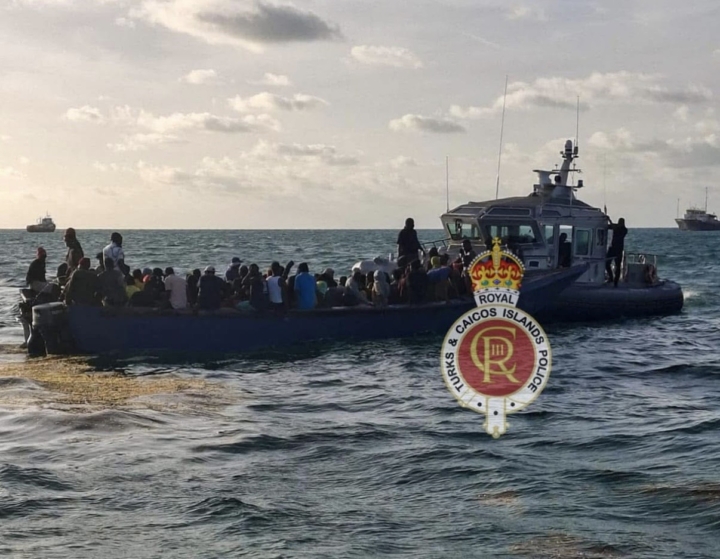
Over 800 Irregular Migrants Intercepted Aboard 6 Vessels in 2026
The Royal Turks and Caicos Islands Police Force (RT&CIPF) Marine Branch successfully intercepted an overloaded migrant vessel carrying 135 irregular migrants, including four minors, during a maritime operation conducted on June 12th.
The interception was the result of a highly coordinated and complex operation involving several local and international partners. The mission was further strengthened by the support of the United States Coast Guard Air Support Unit.
With this latest interception, the total number of irregular migrants intercepted at sea in 2026 has risen to 859 individuals aboard six vessels.
Acting Deputy Commissioner of Police Kendal Grant, who has responsibility for Marine Operations, said the successful outcome highlights the importance of intelligence-led policing, interagency collaboration, and strong regional partnerships in protecting the borders of the Turks and Caicos Islands.
The RT&CIPF is urging members of the public to report any information related to illegal entry into the Turks and Caicos Islands. Reports can be made by contacting the nearest police station, calling 911, reaching the Serious Crime Unit at 231-1842, or contacting Crime Stoppers anonymously at 1-800-8477

Minister of Immigration & Border Services Leads Delegation to Cayman
TCI's Deputy Premier and Minister of Immigration and Border Services, Hon. Jamell Robinson, recently led a delegation to the Cayman Islands on a strategic mission aimed at strengthening labour administration, enhancing employment services, and improving operational efficiency within the Turks and Caicos Islands.
The mission, conducted in collaboration with the Cayman Islands Department of Labour and Pensions and other key government agencies, provided an opportunity for the delegation to examine best practices in labour regulation, dispute resolution, workforce compliance, work permit administration, and employment services management.
He said the Cayman Islands offered a useful example as the Turks and Caicos Islands considers ways to Improve operations within its Employment Services Department and address challenges related to processing delays and compliance management.
The visit comes as the Government reviews its labour and immigration systems amid efforts to improve service delivery and strengthen oversight of the country's workforce.
The delegation included Deputy Permanent Secretary in the Ministry of Immigration and Border Services Pascal Bacchus and Labour Commissioner Alpheus Smith.
The visit provided the delegation with valuable insights in strengthening policies, improving operational efficiency and delivering better outcomes.

Private Jet Crashes on Texas Highway Leaving One Person Dead
A private jet crashed onto a highway in Laredo, Texas, late Tuesday, leaving one person dead and five others injured, authorities confirmed.
The aircraft, carrying six people, went down on Bob Bullock Loop, also known as Texas State Highway Loop 20.
Emergency responders rushed the survivors to nearby hospitals, while one occupant was pronounced dead at the scene.
The Laredo Police Department has not yet released the identity of the deceased, stating that officials are waiting to notify the person’s family.
According to FlightRadar24 tracking data, the aircraft was a Cessna Citation Latitude registered as N523QS.
The jet departed from San José del Cabo, Mexico, on Tuesday evening and was originally bound for Austin, Texas. Flight data indicates the aircraft diverted to Laredo before its tracking signal ended over the highway near the crash site.
During a Wednesday morning press briefing, Investigator Joe Baeza said portions of the aircraft remained scattered across the roadway as crews worked to secure the area.
Baeza also noted that jet fuel had spilled onto the highway, requiring an extensive cleanup operation.
Authorities have not yet determined the cause of the crash, and the investigation remains ongoing.

Rapper Mystikal Sentenced to 20 Years in Prison for Rape
Rapper Mystikal was sentenced to 20 years in prison on Tuesday June 16, 2026, after pleading guilty to third-degree rape in connection with a 2022 assault at his Louisiana home.
Mystikal, whose real name is Michael Tyler was originally indicted on first-degree rape, which carries a mandatory life sentence... However He accepted a plea deal in March of 2026 to the reduced charge of third-degree rape, capping his maximum sentence at 20 years imprisonment.
The assault is said to have taken place in July 2022 at his home in Prairieville, Louisiana.
The victim testified that Tyler choked and punched her, pulled out her braids, and forcibly raped her while confiscating her keys and phone.
Days before the sentencing, Tyler attempted to withdraw his guilty plea, claiming he faced emotional distress and pressure.. but the judge denied this motion.
In court, Tyler addressed the judge regarding the victim, stating, "If I did that to you, I deserve the max sentence."
But this conviction adds to a long history of legal trouble for the Grammy-nominated artist:
* 2003: Plead guilty to sexual battery and served six years in prison.
* 2012: Served three months for a misdemeanor domestic abuse charge.
* 2017: Faced separate rape and kidnapping charges, which kept him jailed for 18 months before prosecutors dropped the case due to a lack of an indictment.
Tyler has been held without bond at the Ascension Parish Jail since his initial arrest in 2022.

Former Boxing Champion Floyd Mayweather Facing 2 Felony Charges
Professional boxer Floyd Mayweather is facing two felony charges in Las Vegas stemming from allegations that he wrote a "bad cheque" to purchase a luxury watch from a high-end resale store.
Mayweather was scheduled to make an initial appearance Monday in Las Vegas Justice Court. Although he did not attend in person, an attorney appeared on his behalf, according to the Clark County District Attorney’s Office. A hearing in the case has been set for September.
The 49-year-old boxing star was charged in April with theft, withdrawing and passing a cheque without sufficient funds with intent to defraud, court records show.
According to prosecutors in Clark County, Mayweather allegedly wrote a $200,000 cheque through Wells Fargo Bank to Las Vegas luxury resale store Gold and Beyond in December 2024, despite not having enough money in the account to cover the payment. The allegations are detailed in a criminal complaint.
The felony charges add to a growing list of legal disputes involving the former champion.
Earlier this year, Mayweather was sued in New York over allegations that he failed to pay rent on a Manhattan apartment. He has also been involved in financial disputes with multiple jewelers and filed a lawsuit in New York against his former business manager, alleging a yearslong fraud scheme.
A former five-division world champion, Mayweather announced earlier this year that he planned to come out of retirement and return to competitive boxing this summer. He is scheduled to appear in Athens, Greece, for the “Battle of the Legends” boxing event on June 27th according to a previous press release. In April, Mayweather confirmed his participation in the event.

US Gas Prices Dip Below $4 Per Gallon, The First Time Since March
Average U.S. gasoline prices dipped below $4 per gallon on Thursday for the first time since March, following a sharp decline in oil prices linked to a new agreement between the United States and Iran.
According to AAA, the national average price for regular gasoline fell to $3.99 per gallon. The drop came after President Donald Trump signed a deal with Iran that requires Tehran to dilute its stockpile of highly enriched uranium while easing U.S.-backed sanctions on the country.
Gas prices, however, continue to vary widely across the United States.
Drivers in California are paying an average of $5.64 per gallon, while motorists in South Carolina are seeing prices closer to $3.58 per gallon.
The U.S.-Iran agreement is intended to establish a permanent ceasefire and launches a 60-day negotiation period aimed at reaching a broader accord on Iran’s nuclear program. While the deal offers Iran several immediate benefits, critics argue it secures relatively few concessions in return. President Trump also left open the possibility of resuming military action if talks fail.
Meanwhile, oil markets have responded strongly.
U.S. crude prices have fallen 14% this month, with benchmark crude dropping to around $80 per barrel. That is down from more than $120 per barrel during the height of the conflict, though still above the roughly $67 per barrel level seen before the war.
Despite the decline in oil prices, consumers may not see significant relief at the pump immediately. Analysts warn it could take weeks or even months for oil shipments through the Strait of Hormuz to return to normal levels.
Before the conflict, the strategic waterway handled roughly 20% of the world’s crude oil supply. Hundreds of vessels remain backed up in the Persian Gulf, and Gulf producers that reduced output during the crisis will need time to restore production and transportation networks. Shipping companies are also expected to proceed cautiously until they are confident the threat of renewed attacks has subsided.
In addition, refineries typically purchase crude oil weeks in advance. As a result, lower oil prices often take time to work their way through the supply chain before translating into lower gasoline prices for consumers.

Gunmen Launched an Attack on Main Airport in Niger's Capital
Gunmen launched an attack on the main airport in Niger’s capital, early Thursday, triggering a firefight and a series of explosions, according to witnesses and a security official.
The official said security forces were deployed after the attackers breached airport defenses, although the identities of the gunmen were not immediately known. The official spoke on condition of anonymity because they were not authorized to comment publicly.
In the aftermath of the attack, soldiers were seen conducting searches of people traveling along roads leading to the airport, an Associated Press journalist reported.
The incident marks the second attack on Niamey’s Diori Hamani International Airport this year. In January, the Islamic State group claimed responsibility for a similar assault that targeted Niger’s drone infrastructure.
Niamey's Diori Hamani International Airport is a key strategic facility, housing a Nigerian air force base and serving as the headquarters of the joint military force formed by Niger, Burkina Faso, and Mali.
Although security at the airport was strengthened following the January attack, analysts warn that jihadist groups in Niger and across the wider Sahel remain a significant threat.