
Kenya runner Marko Cheseto has feet amputated in Alaska
A Kenyan long-distance runner who spent more than two days lost in snow storms in the US state of Alaska has had his feet amputated just above the ankles.
When Marko Cheseto, who competed on the track for the University of Alaska Anchorage, disappeared he was not wearing protective winter clothing.
After he was found on 9 November he was suffering from hypothermia and severe frostbite on his feet and hands.
University officials say his hands are expected to fully recover.
His disappearance, a day after the university's cross-country team's return from a triumphant championship in Washington State, sparked an intensive search for the 28-year-old athlete.
The University Alaska Anchorage (UAA) said Mr Cheseto, who is studying nursing and nutrition, will remain in hospital for some time to come.
In a statement on the university's website, Mr Cheseto thanked the university and volunteers who searched for him.
"While I am still recovering - both physically and emotionally - I will do my very best to give back to the community that has helped me so much and to my home country, Kenya. I sincerely apologise for any problems that I may have caused."
Mr Cheseto has reportedly been suffering from depression since fellow UAA student runner William Ritekwiang, from his hometown of Kapenguria, took his own life in February.
After his 48 hours out in freezing temperatures, Mr Cheseto stumbled into a hotel near the UAA campus in the early hours of Wednesday 9 November.
The hotel's night manager told the Anchorage Daily News that the paramedic team could not remove his sports shoes as they were frozen to his feet.
"He seems very upbeat and anxious to get on with a rehabilitation programme," Steve Cobb, UAA's director of athletics, is quoted by Reuters news agency as saying.
During his time at the university, Mr Cheseto set the record for the Anchorage Mayor's Half Marathon in 2010 and has won several All-American student athletic titles.

US growth revised down for third quarter
 The US economy grew at a slower pace than previously estimated in the three months to the end of September.
Revised figures from the US Commerce Department show gross domestic product grew at an annual pace of 2% in the period, down from the previous estimate of 2.5%.
Despite the downward revision, the quarter's growth was still up from the April-June period's 1.3% figure.
The revision was largely due a prior over-estimate of restocking by firms.
Japan's earthquake seriously disrupted the global supply chain earlier in the year. High energy prices have also weighed heavily on consumer spending.
However, continued restocking and lower fuel prices recently, has led economists to speculate that US fourth-quarter growth could rise to an annualised rate of more than 3%, which would be the fastest in 18 months.
Vimombi Nshom, economist at IFR Economics, said: "Although growth was downsized, it's still the strongest showing of 2011, with GDP's largest component - consumer spending - holding on to its developments from Q2."
Consumer spending growth was revised slightly down to 2.3% from 2.4%, but it was still the quickest pace since the fourth quarter of 2010.
The Commerce Department said that after-tax corporate profits increased at a 3% rate after rising 4.3% in the second quarter.
Export growth was stronger than previously estimated, rising at a 4.3% rate instead of 4%. Imports increased at a much slower 0.5% rate rather than 1.9%.
'Disappointing'
The report showed that real disposable income fell 2.1% in the third quarter after declining 0.5% in the prior three months.
There were also small revisions to business investment, which rose at a 14.8% rate instead of 16.3%.
Despite the latest GDP data being broadly welcomed by many analysts, Michael Mullaney, fund manager at Fiduciary Trust, said: "This is somewhat disappointing.
"The positives are that personal consumption is still OK, but I'm concerned because that seems to be coming at the expense of personal savings.
"We're in the camp that there's at least a 50% chance of a double dip so it doesn't surprise us that the number is softer."
Merkel sees EU treaty change as solution, not eurobonds
German Chancellor Angela Merkel has said that EU treaty changes rather than eurobonds will help solve the eurozone debt crisis.
On the eve of European Commission proposals for bonds backed by all 17 eurozone states, she said that what was needed was a political response.
Mrs Merkel argued if there was to be a debate on eurobonds, it should be at the end, not the middle of the crisis.
Germany fears that it would bear much of the cost of jointly backed bonds.
Addressing Germany's confederation of employers in Berlin, the chancellor said that if changing treaties proved too difficult on an EU level, they would be dealt with instead by the 17 members of the eurozone.
"We have to change the construction of the euro area," she said. "Treaty changes are for me an immediate part of solving the crisis, the political response to a politically derived confidence crisis."
Reports on Monday suggested that Britain would accept a "narrow" amendment of the EU's Lisbon Treaty covering the eurozone in return for a deal on the EU's working time directive.
Leaked document
The idea of eurobonds has attracted increasing support, despite Germany's opposition. Greece's new Prime Minister, Lucas Papademos, said on Tuesday that eurobonds "or similar tools could provide the means to overcome the crisis".
Although full details of the commission's proposals are not yet known, a leaked draft document indicates they would involve three options
- An extensive scheme that would completely replace national bonds and would require each eurozone government to guarantee the debt of other countries
- A lesser scheme that would see national bonds partially replaced with eurobonds up to a limit that could relate to how closely a country adhered to strict rules.
- The replacement of some national bond issues with a limit on guarantees
Although the prospect of eurobonds has aroused widespread criticism from German politicians, European Economic and Monetary Affairs Commissioner Olli Rehn said that they would have to be implemented with very strict rules.
"It is clear that any type of eurobonds would have to go in parallel, hand in hand, with substantially reinforced fiscal surveillance and policy coordination, as an essential counterpart."
The idea of eurobonds is due to be discussed by the German chancellor on Thursday, at a meeting with French President Nicolas Sarkozy and Italy's new Prime Minister, Mario Monti.
Egyptian stock exchange suspended after 5% dip
Trading on Egypt's stock exchange was automatically suspended on Tuesday after the main EGX 100 index fell 5%.
It followed a 4% fall on Monday, and came as Egypt's ruling military council began talks with protesters following violent clashes in the capital.
The exchange reopened after an hour, with the EGX 100 index closing down 5.5%. It has now fallen 47% this year.
Egypt's stock exchange shut for two months from January during protests that ousted ex-President Hosni Mubarak.
The suspension occurs against a backdrop of intense confrontations between government forces and protesters calling for regime change.
Egypt has been ruled by an interim military council led by Field Marshal Hussein Tantawi for the past nine months.
Clashes between protesters and security forces in the past four days have claimed 28 lives, according to the Egyptian health ministry.
Obama pushes payroll tax cut extension in New Hampshire
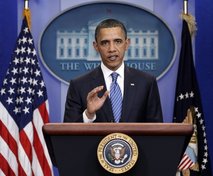 US President Barack Obama is in the political battleground state of New Hampshire to challenge Congress to extend an expiring payroll tax cut.
His trip comes a day after the failure of a deficit-cutting effort by a bipartisan congressional committee.
Democrats had hoped to include the tax cut extension and other economy-boosting measures into an agreement by the so-called super-committee.
Republicans are not wholly against the proposal, but may attach conditions.
Speaking from a high school in Manchester, New Hampshire, the president will argue that failure to extend the tax breaks would hurt middle-class families.
Under his latest jobs plan the president would cut by a further percentage point a payroll tax break that has reduced workers' contributions to Social Security by 2%.
The measure helped 121 million families save $934 (£600) last year, the Tax Policy Center says.
"If we don't act, taxes will go up for every single American, starting next year. And I'm not about to let that happen," President Obama said on Monday.
It has been nearly two years since he visited New Hampshire, a presidential swing state he won in 2008.
In January, it holds one of the first state-by-state nominating contests to pick the Republican candidate who will challenge Mr Obama for the White House in a year's time.
During Tuesday's visit, President Obama will also argue for an extension of benefits for the long-term unemployed.
Introduced as part of the 2008 stimulus package, it was renewed last year but is also due to expire at the end of this year unless Congress acts.
Analysts say that failing to preserve the measures would be a drag on the fragile US economy, already labouring under an unemployment rate of 9%.
Official figures released on Tuesday found the US economy had grown in the last quarter at a slower pace than previously estimated.
Republican members of Congress have not ruled out an extension to the payroll tax.
Party members sent the White House a letter in September stating the proposal was a potential area of common ground in the president's $447bn jobs bill.
But Republicans may demand the $248bn cost of the measure be offset elsewhere.
There is doubt over whether Congress will be able to make a deal, given the super-committee's failure after weeks of talks to agree how to cut government spending.
It means automatic across-the-board spending cuts are due to come into effect in 2013.
However, some Republican lawmakers have already said they will work to avoid the cuts to the Pentagon's budget.
Representative Buck McKeon, chairman of the House Armed Forces Committee, and Senator John McCain, top Republican on the Senate Armed Services Committee, want to eliminate reductions to military spending.
And President Obama's own Defence Secretary, Leon Panetta, is lobbying to protect his department from cost-cutting.
The president warned on Monday that he would veto any move to undo the automatic cuts.
Egypt military pledges to speed up power transfer
Egypt's military rulers have agreed to speed up presidential elections, a key demand of protesters packing Cairo's Tahrir Square.
Field Marshal Mohamed Hussein Tantawi said on national TV they would happen by July 2012.
He said parliamentary elections due next week would go ahead and that a referendum on an immediate transfer of power would be organised if necessary.
It follows days of protests in Cairo's Tahrir Square over the pace of reform.
Tens of thousands of people continued to pack Tahrir Square on Tuesday evening.
Witnesses said many appeared to reject the military's latest concessions, chanting: "We are not leaving, he (Tantawi) leaves."
The US, in its strongest comments yet on the renewed unrest in Egypt, condemned the use of "excess" force by police. At least 28 people have been killed and hundreds injured since Saturday.
US State Department spokeswoman Victoria Nuland called on Egyptian authorities to "exercise maximum restraint".
Next week's parliamentary elections are due to set in train a process of transition to democracy following the toppling of President Hosni Mubarak in February.
But many Egyptians fear the military intends to hold on to power, whatever the outcome of the polls.
Under the military's original timetable, presidential elections might not have happened until 2013.
The BBC's Kevin Connolly in Cairo says the army's readiness to bring forward presidential elections appears to be a major concession.
Field Marshal Tantawi, head of the Supreme Council of the Armed Forces, said that the military was only there to protect the people and did not seek permanent power.
"The armed forces, represented by their Supreme Council, do not aspire to govern and put the supreme interest of the country above all considerations," he said.
"They are fully prepared to immediately hand over power and to return to their original duty in protecting the homeland if that what they people want, through a popular referendum if necessary."
Salvation government
His announcement followed a day of crisis talks between the military and political leaders.
As the talks took place, Prime Minister Essam Sharaf spoke briefly to reporters and pleaded for calm.
"All I ask of the people is that they leave, calm down. We have responded to what they wanted. We were so close to our main goal which is the elections. This is what is important, the political shift," he said.
As night fell in Cairo on Tuesday, the sirens of ambulances carrying wounded protesters to hospital wailed across Tahrir Square.
The square was the focal point for protests that toppled President Mubarak.
Much of Tuesday's violence took place in the streets leading between the square and the interior ministry building, witnesses say.
One protester near the ministry was seen hanging an effigy of Field Marshal Tantawi from a traffic light.
Clashes were also reported in several other Egyptian cities including Alexandria, Suez, Port Said and Aswan.
Parliamentary elections that begin next week will be staggered over three months.
They were cast in doubt after days of protests and by the offer by the military-appointed civilian cabinet, led by Prime Minister Essam Sharaf, to resign.
The military's original timetable called for the new parliament to then choose a 100-member constituent assembly to draw up a new constitution within six months.
A referendum would then approve the document before a presidential election is held. That would mean the military still in power until late 2012 or early 2013.
Protesters, however, had demanded the presidential vote take place after the parliamentary elections.
-BBC
Pakistan US ambassador Haqqani resigns over 'memogate'
Pakistan's ambassador to the United States has resigned over claims that he sought Washington's help against his country's military.
Husain Haqqani is accused of compiling a memo seeking US help to avert a military takeover in Pakistan following the killing of Osama Bin Laden in May.
The ambassador denied the allegations, which were made by a US-based lobbyist.
The row has put already tense relations between Pakistan's civilian and military leaders under severe strain.
Mr Haqqani was summoned to Islamabad earlier this week and offered to resign after meeting Pakistan's top civilian leaders, the head of the army and intelligence service chiefs on Tuesday.
State television said that his resignation had been accepted. The prime minister's office said Mr Haqqani had been asked to resign.
"I have much to contribute to building a new Pakistan free of bigotry and intolerance," Mr Haqqani said in a Twitter message. "Will focus energies on that."
Imra
A prime ministerial spokesman said that all concerned in the affair would be given a "sufficient and fair opportunity" to present their views before an investigation which would be "carried out fairly, objectively and without bias".
Mr Haqqani, a close ally of President Asif Ali Zardari, has repeatedly denied any role in drafting or delivering the memo.
However, former US Joint Chiefs Chairman Michael Mullen confirmed receiving a secret communication. But he said he did not pay any attention to it and took no follow-up action.
The row over "memogate" originates from a Financial Times article by Pakistani-American businessman Mansoor Ijaz, published on 10 October.
In it, Mr Ijaz said that President Zardari had offered to replace his country's military leadership and cut all ties with militant groups following the killing of Bin Laden last May.
It is far from clear that President Zardari could deliver on either score.
BBC Monitoring's Sajid Iqbal says the saga took a new twist over the weekend when Mr Ijaz absolved Mr Zardari of any blame and singled out Hussain Haqqani for the contents of the memo.
"The memo's content in its entirety originated from him," Mr Ijaz told a news agency.
The affair has led to the Pakistani media raising new questions about the role of the military - and the US - in Pakistani politics.
It has been complicated by the involvement of opposition politician and former cricketer Imran Khan.
He named Hussain Haqqani as a player in the "memogate" affair at a large rally in Lahore on 30 October - before Mr Ijaz had brought his name into the public domain in the West.
Mr Khan has yet to explain why he did so.
Militant link
It has also emerged that Pakistani spy chief Shuja Pasha flew to London to meet Mr Ijaz on 22 October, less than two weeks after he revealed the existence of the memo in the Financial Times.
The article said that a new security team would be set up within Pakistani intelligence to replace the unit charged with maintaining relations with the Taliban.
"This will dramatically improve relations with Afghanistan," Mr Ijaz wrote in the article, quoting widely from the memo which he said had been delivered to Adm Mullen on 10 May.
How he came by his information is also not clear.
Correspondents say the machinations described by Mr Ijaz paint a picture of a Zardari government scrambling to save itself from an impending military coup following the raid on Bin Laden's compound - and asking for US support to prevent such a coup before it started.
Mr Haqqani has been accused by the Pakistani press and some politicians of playing a role in the drafting of the memo because he has long acted as a link between the civilian government in Pakistan and the Obama administration.
But he denies any wrong-doing.
"At no point was I asked by you or anyone in the Pakistani government to draft a memo and at no point did I draft or deliver such a memo," Mr Haqqani was quoted by the US-based Foreign Policy magazine as saying in a letter offering his resignation to President Zardari.
BBC
Turks and Caicos workers protest looming job cuts
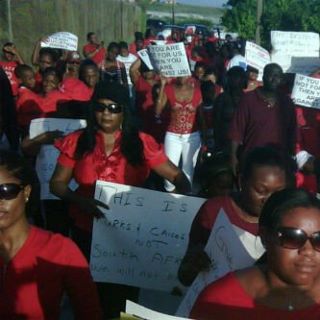
 Hundreds of government workers in the Turks and Caicos Islands are protesting upcoming job cuts.
Teachers, immigration agents, doctors and government clerks are among the more than 200 people who marched in Providenciales on Tuesday to also demand bigger severance packages.
The government has said it will cut 300 public sector jobs by Dec. 9 to trim costs and eliminate what it says are overlapping positions.
Civil service union president Rufus Ewing says protesters might launch a second strike on Wednesday.
The government said late Monday it was surprised about the decision to protest because it had already agreed to increase severance packages after negotiations with the union.
In release sent to RTC News: Martin Stanley, Chief Executive, TCI Government said: “I can confirm that the TCI Government has contingency plans in place for events such as today’s strike.
“During the strike as we concentrate on essential and emergency services, we ask the people of TCI to be patient as they will not receive the usual high standard of public service on strike days.
“I would also ask those strikers who work with the vulnerable members of our society to continue to balance their desire to protest with ensuring that there is adequate service provision to the needy.
“While there is no law against striking in the TCI , clearly there are consequences for workers who do strike, such as losing a day’s pay.”
RTC News received a copy of the letter sent to Martin Stanley on November 21st which reads:
Dear Mr. Stanley,
We hereby acknowledge receipt of your email of November 16, 2011, responding to our letter to the Governor which listed our concerns and demands with reference to the Civil Service.
It is indeed unfortunate that The Adminstration’s response is less than satisfactory as it contains favourable consideration of only one of a list of several demands for fair treatment as outlined in our letter dated November 13, 2011.
The Administration has indicated that it is willing to entertain further dialogue on the issue of approval for redundant Civil Servants to be
employed in self-sufficient statutory bodies but has continued to ignore the remaining critical demands made by Civil Servants. We continue to be of the view that none of our other demands were met and to this end are extremely disappointed. We have previously indicated to the Governor that the continued disregard of this Administration for the human rights and
basic social welfare of Civil Servants has now made it necessary for us to undertake the necessary actions to obtain justice.
Please be informed that Civil Servants will be engaging in a strike on Tuesday November 22, 2011.
This action will continue on a weekly basis until our demands are met.
Respectfully
CSA Management Council
Since the days pay cut announced by Mr.Stanley, RTC News have not received a response from the CSA.

U.S. to join U.K. in new Iran sanctions
 The United States will name Iran, as well as its Central Bank, as a “primary money laundering concern,” on Monday but not place sanctions directly on the central bank, a senior Treasury Department official tells CNN.
The U.S. will also sanction a number of Iranian companies allegedly supporting Iran’s nuclear program, the senior Treasury Department official said.
The announcement comes on the same day Britain cut all financial ties with Iran over concerns about Iran's nuclear program, the first time it has ever cut an entire country's banking sector off from British finance, the British Treasury announced.
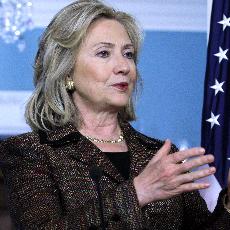
The Treasury Department released a statement saying that Treasury Secretary Timothy Geithner and Secretary of State Hillary Clinton will be make remarks at 430p ET Monday to "outline new steps the United States is taking to increase pressure on Iran."
The actions come in response to a recent report by the International Atomic Energy Agency’s (IAEA) which expressed serious concern over what it said was Iran’s continuing work on its nuclear program.
Israel's Defense Minister Ehud Barak told CNN's Fareed Zakaria that Iran is probably less than a year away from being at a point that it will be too late to stop its nuclear program.
"It's true that it wouldn't take three years, probably three quarters, before no one can do anything practically about it because the Iranians are gradually, deliberately entering into what I call a zone of immunity, by widening the – the redundancy of their plan, making it spread over many more sides," Barak said on Fareed Zakaria GPS.
U.S. has been considering action against the Central Bank of Iran but officials became concerned that a full sanction could have a negative effect on the world economy because of the potential impact on oil prices.
This weekend, Elise Labott reported the US will impose fresh sanctions against Iran’s petrochemical industry, citing diplomatic sources.
A number of congressional members have been calling for sanctions against the central bank amidst questions about how much the current spate of sanctions are actually working.
-CNN
CIA Spies Caught, Fear Execution in Middle East
In a significant failure for the United States in the Mideast, more than a dozen spies working for the CIA in Iran and Lebanon have been caught and the U.S. government fears they will be or have been executed, according to four current and former U.S. officials with connections to the intelligence community.
The spies were paid informants recruited by the CIA for two distinct espionage rings targeting Iran and the Beirut-based Hezbollah organization, considered by the U.S. to be a terror group backed by Iran.
"Espionage is a risky business," a U.S. official briefed on the developments told ABC News, confirming the loss of the unspecified number of spies over the last six months.
"Many risks lead to wins, but some result in occasional setbacks," the official said.
Robert Baer, a former senior CIA officer who worked against Hezbollah while stationed in Beirut in the 1980's, said Hezbollah typically executes individuals suspected of or caught spying.
"If they were genuine spies, spying against Hezbollah, I don't think we'll ever see them again," he said. "These guys are very, very vicious and unforgiving."
Other current and former officials said the discovery of the two U.S. spy rings occurred separately, but amounted to a setback of significant proportions in efforts to track the activities of the Iranian nuclear program and the intentions of Hezbollah against Israel.
"Remember, this group was responsible for killing more Americans than any other terrorist group before 9/11," said a U.S. official. Attacks on the U.S. embassy and Marine barracks in Beirut in 1983 killed more than 300 people, including almost 260 Americans.
The U.S. official, speaking for the record but without attribution, gave grudging credit to the efforts of Iran and Hezbollah to detect and expose U.S. and Israeli espionage.
"Collecting sensitive information on adversaries who are aggressively trying to uncover spies in their midst will always be fraught with risk," said the U.S. official briefed on the spy ring bust.
But others inside the American intelligence community say sloppy "tradecraft" -- the method of covert operations -- by the CIA is also to blame for the disruption of the vital spy networks.
In Beirut, two Hezbollah double agents pretended to go to work for the CIA. Hezbollah then learned of the restaurant where multiple CIA officers were meeting with several agents, according to the four current and former officials briefed on the case. The CIA used the codeword "PIZZA" when discussing where to meet with the agents, according to U.S. officials. Two former officials describe the location as a Beirut Pizza Hut. A current US official denied that CIA officers met their agents at Pizza Hut.
From there, Hezbollah's internal security arm identified at least a dozen informants, and the identities of several CIA case officers.
Hezbollah then began to "roll up" much of the CIA's network against the terror group, the officials said.
One former senior intelligence official told ABC News that CIA officers ignored warnings that the operation could be compromised by using the same location for meetings with multiple assets.
"We were lazy and the CIA is now flying blind against Hezbollah," the former official said.
CIA Spies Caught in Iran
At about the same time that Hezbollah was identifying the CIA network in Lebanon, Iranian intelligence agents discovered a secret internet communication method used by CIA-paid assets in Iran.
The CIA has yet to determine precisely how many of its assets were compromised in Iran, but the number could be in the dozens, according to one current and one former U.S. intelligence official.
The exposure of the two spy networks was first announced in widely ignored televised statements by Iranian and Hezbollah leaders. U.S. officials tell ABC News that much of what was broadcast was, in fact, true.
Hezbollah's leader, Sayyed Hasan Nasrallah, announced in June of this year that two high-ranking members of Hezbollah had been exposed as CIA spies, leading U.S. officials to conclude that the entire network inside Hezbollah had been compromised.
In Iran, intelligence minister Heidar Moslehi announced in May that more than 30 U.S. and Israeli spies had been discovered and an Iranian television program, which acts as a front for Iran's government, showed images of internet sites used by the U.S. for secret communication with the spies.
U.S. officials said the Iranian television program showed pictures of people who were not U.S. assets, but the program's video of the websites used by the CIA was accurate.
Some former U.S. intelligence officials say the developments are the result of a lack of professionalism in the U.S. intelligence community.
"We've lost the tradition of espionage," said one former official who still consults for the U.S. intelligence community. "Officers take short cuts and no one is held accountable," he said.
But at the CIA, officials say such risks come with the territory.
"Hezbollah is an extremely complicated enemy," said a U.S. official. "It's a determined terrorist group, a powerful political player, a mighty military and an accomplished intelligence operation, formidable and ruthless. No one underestimates its capabilities."
Source-ABC