
Republicans 2012: National security focus at debate
The eight Republican presidential hopefuls have traded blows on national security at a wide-ranging debate in Washington DC.
Before an audience of foreign policy experts, candidates were probed on domestic and foreign issues including defence cuts, Iran and border security.
The latest debate put former House Speaker Newt Gingrich in the spotlight after a recent surge in opinion polls.
The first Republican nominating contest will be on 3 January 2012 in Iowa.
Mr Gingrich is the latest in a series of Republican contenders to join former Massachusetts Governor Mitt Romney at the top of the polls.
Analysts say the conservative Republican base is dissatisfied with the prospect of Mitt Romney as their nominee, and has been searching instead for a known conservative candidate capable of taking on Mr Obama in November 2012.
With few candidates boasting significant foreign policy experience, the latest debate offered a new challenge for the leading contenders.
Mitt Romney criticised the defence cuts triggered by the failure to reach a deficit-reduction deal and mounted a strong defence of Israel, while Newt Gingrich and Texas Governor Rick Perry both spoke out on the emotive issue of immigration.
Ron Paul - a consistent anti-war voice - called for an end to US military adventures overseas, and former China ambassador Jon Huntsman, trailing in the polls but with with foreign policy experience, said troop levels in Afghanistan should be cut quickly.
Mr Huntsman found more speaking opportunities than usual, but Herman Cain, a confident voice on domestic economic issues, was less prominent than in recent debates.
Unpatriotic'
As the debate opened in Washington Mr Gingrich expressed his support for continuing and strengthening the surveillance portions of the US Patriot Act.
Ron Paul, an anti-war US House representative, called such provisions "unpatriotic" and said Americans should not be willing to sacrifice liberty for security.
"Yes, you might prevent a crime but then the crime will against be American people," Mr Paul said.
On Pakistan, Rick Perry and Michele Bachmann sparred over US involvement with Islamabad.
Mr Perry said he would "not send them a penny" as the country has shown the US "time after time they can't be trusted".
Ms Bachmann cautiously said she would continue sending aid to Pakistan, because they were still sharing intelligence. Pakistan, Ms Bachmann said, was "too nuclear to fail".
Mitt Romney described Pakistan as in need of urgent development. "We need to bring Pakistan into the 21st Century - heck, into the 20th Century."
Afghanistan debate
In a debated staged and moderated by CNN there were few sharp exchanges between candidates.
In a a rare back and forth, on Afghanistan, Mr Huntsman and Mr Romney argued back and forth about the planned US troop drawdown.
Mr Huntsman said US troops should come home sooner than planned, with some acting as trainers to the Afghan army and a "drone presence" in the country.
Mr Romney disagreed, arguing that leaving Afghanistan early would leave it open to more violence. The two former governors also argued over the president's role as commander in chief.
The former US ambassador to China said a president should "be informed by a lot of different voices". Mr Romney responded by saying the the decision should be "based on people who are closest to the ground".
On Iran, Mr Gingrich said Tehran's leaders could be gone within a year if fuel supply to the government was restricted. A peaceful change of government in Iran would be vastly preferable to a war or military strikes, he said.
Mr Romney also said that his first international trip as president would be to Israel, to show US support for that country.
On the question of the Arab Spring, Mr Huntsman said the US "did itself a disservice" by acting too soon.
"Our interests in the Middle East is Israel and preventing from Iran from going nuclear," Mr Huntsman said.
Mr Perry walked back from his earlier calls for a Syrian no fly-zone, saying it was only one of several actions that could be taken against the Assad regime.
CNN

International Emmys dominated by UK television shows
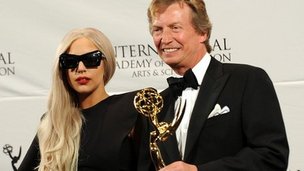 British TV productions have won five awards at the International Emmys in the US, including best actress for Julie Walters.
She was honoured for her Bafta-winning portrayal of Mo Mowlam in Channel 4's Mo, a biopic about the late politician.
Christopher Eccleston was named best actor for his role in Jimmy McGovern's Accused on BBC One, which also won best drama series.
Each episode told the story of a character who ends up in court.
Eccleston played a plumber who found £20,000 in the back of a cab but was arrested after it turned out the money was forged.
Gareth Malone Goes to Glyndebourne won best arts programme.
The series, about a group of teenagers training to star in a new opera for the world renowned Glyndebourne opera house, was produced by Twenty Twenty Television for BBC Two.
Twenty Twenty also won the non-scripted entertainment award for The World's Strictest Parents, which aired on BBC Three.
Lady Gaga made a surprise appearance at the ceremony, which was hosted by actor Jason Priestley at the Hilton hotel in New York.
The pop star presented an honorary prize to American Idol's executive producer, Nigel Lythgoe, another British export.
Gaga said Lythgoe was her favourite TV executive - he returned the compliment, describing her as "the most creatively talented woman in showbusiness right now".
Chile won its first international Emmy for children's programme, What Is Your Dream?
Belgium won best comedy series for Benidorm Bastards, a hidden camera show that follows seven elderly people playing tricks on young people.
Canada picked up the best documentary prize for Life with Murder, about a family torn apart when a 20-year-old is charged with the murder of his 19-year-old sister.
Swedish crime drama, Millennium, won best TV movie or mini-series and Portugal won the prize for best telenovela - a limited-run serial drama popular in Latin American - for Blood Ties.
The International Emmys celebrate TV production outside the US.
BBC
US seeks top dancehall artiste labelled as 'Dudus' associate
Another high-ranking Jamaican dancehall star has found himself in trouble with the law. This time, it is a well-known and popular singjay law enforcement officers have labelled an associate of former west Kingston strongman Christopher 'Dudus' Coke, who is currently awaiting sentencing on drug-related charges in the United States.
While a law enforcement officer has confirmed that the Corporate Area-based singjay is being sought in Michigan in the US on drug-related allegations, The Gleaner has learnt that he is wanted on at least two warrants.
The singjay, who is one of the top-ranked artistes in the dancehall and has a number of hits, is also a green card holder.
"He is not the only Jamaican entertainer being sought by the US on drug-related allegations," the officer said.
The latest information comes against the background of a recent statement made by head of the Criminal Investigation Branch, Assistant Commissioner Ealan Powell, that a number of entertainers have popped up on the police radar and will be arrested soon.
Powell's comment came shortly after the arrest of controversial dancehall star, Adidja Palmer, who goes by the stage name 'Vybz Kartel'.
Murder charges
Palmer is currently before the courts on two murder charges and the police say he has been implicated in at least five other murders.
"We have an interest in at least 10 other members of the entertainment industry, some of whom have been implicated in a number of murders and shootings," Powell told The Jamaica Gleaner recently.
He did not disclosed the identity of the other entertainers who are being sought, but since then, one other artiste has been arrested and charged.
J-Hud: Choice to Visit Fiance Saved Her from Family Murders
Jennifer Hudson has revealed that going to see her fiance in a wrestling match may have saved her life and kept her out of the house on the day her family was murdered in Chicago.
The Oscar-winner was in Florida with David Otunga on Oct. 24, 2008, when her mother and brother were shot to death in their Chicago home. Her seven-year-old nephew Julian King was reported missing but was found dead three days later.
Hudson, 30, is now telling Ebony magazine that she too could have been a victim of the murders had she not gone to see David in a World Wrestling Entertainment (WWE) match.
“That’s one of the things that saved my life, because I could have been home with my mom then,” she said. [Otunga] wanted me to come out to Florida with him instead of going to Chicago. I flew out to see him; that’s why I’m still here. I’ve never said that before, and I can’t believe I just said that now. But I didn’t know.
“He was just like: ‘I’m going to this wrestling thing and it’s in Tampa. I’m going out there now, so you can come out there and see me versus going home.’”
While she was in Florida her mother Darnell Donerson, 57, and her brother Jason, 29, were brutally murdered. William Balfour – the estranged husband of Hudson’s sister Julia – has been charged with the murders.
Otunga and the “Dreamgirls” star now have a son together, two-year-old David Jr.
Also in the Ebony interview, Hudson dismissed rumors that she hasn’t married her fiance because they can’t settle on a prenuptial agreement.
“I don’t know where that came from, because that’s not the issue at all,” she says. “I thought that was so random. Even if that were the case, it wouldn’t be something we would discuss.”
In fact Hudson says the couple had agreed upon a wedding date before the family tragedy. She said they were looking forward to “the biggest, grandest wedding ever.”
But “after that happened, I was like: ‘I don’t know what I want.’ A lot of things have happened in my life. There are a lot of things that I need to get adjusted to before I do anything else. That’s how I feel about it.”
Hudson got engaged to Otunga shortly before the murders. She says her brother wasn’t initially supportive of the couple’s plans, thinking they were moving too fast.
“My brother had the biggest issue with it,” she says. “He cried. But I’m his baby sister, so of course he was going to have issues with it. [The rest of the family] would say: ‘Well, Jenny always seems to make the right decisions.’ I was being told this for a reason, so [I thought]: ‘We’re going to take our time. Obviously, I listened.”
Later explaining why she took on a light-hearted role in the upcoming comedy “The Three Stooges,” she says: “It’s so different from anything I’ve done. I play a nun. I feel like I’m getting my feet wet in comedy. Another reason I took this role is because my mom was a huge fan of ‘The Three Stooges.’”
-E.Web
More Rappers Join Class Action Lawsuit Against CBS and CNET Over Illegal File Trading Services
Singers, songwriters and performing artists alike are collaborating with Internet media mogul Alki David to file a massive copyright infringement lawsuit, claiming CBS subsidiaries CNET and CBS Interactive possibly earned billions by distributing illegal file trading software.
The complaint is being spearheaded by Alki David and the Justice for Artists Coalition (www.justart.net, to fight for the justice of artists across the world.
David claims that CNET and CBS Interactive fostered and popularized the piracy of copyrighted works.
“CBS Interactive has made billions by inducing the public to break the law, by providing them the file-sharing software and step-by-step guides, on exactly how to do it,” Alki David said in a press release. “No one has held Defendant accountable for this. Until now.”
David accuses CBS Interactive and CNET of maintaining an ongoing criminal enterprise by distributing peer-to-peer file-sharing software and DRM removal software.
The lawsuit claims the illegal software came with many detailed reviews and tips on how to use the applications to copy known protected intellectual properties.
Artists victimized include Lady Gaga, Snoop Dogg, Ludacris, Madonna and Britney Spears, PM Dawn, Slick Rick, Ron Brows, Sugar Hill Music, Luther Campbell aka Luke Skywalker, Pretty Ricky, Dough E Fresh, H-Town and many others.
“We have only scratched the surface. Many more rights-holders are coming forward representing tens of thousands of more intellectual properties but the verification process for identifying ownership is long and detailed, so we will keep on adding as we go,” said Alki David.
Trinidad PM says wants crackdown on unregulated developments
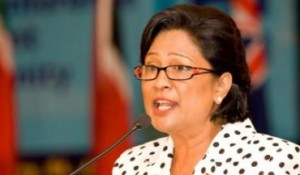 Prime Minister Kamla Persad-Bissessar said strong action must be taken to stop unregulated hillside developments after homes and other properties in the north-west of the country were damaged during heavy rainfall on Saturday.
Homes and vehicles were covered with sludge, while cars were swept away.
“I think we need to relook the legislation and to see how best we can frame that legislation, whether it will include or will not include stiffer penalties but certainly more stringent measures in terms of environmental control,” the prime minister said yesterday as she toured affected communities.
She said the watchdog body – Town and Country Planning – was not functioning effectively and needed more “teeth.”
“For many years we have seen flooding in the low lands and now we’re seeing flooding in the high lands. Therefore we have to give more serious consideration to planning and development and approvals,” she said.
Clean-up crews including members of the Defence Force were out in full force yesterday.
Asked if government would be able to compensate all flood victims, Prime Minister indicated that would not be possible.
“I think it will be totally foolhardy of me and reckless, should I say yes, every single person is going to be compensated,” she said.
“Should we do that, there might not be a cent left in the Treasury,” she added.
Caribbean 360 News
Nineteen Colombians detained in The Bahamas
Nineteen Colombians have been detained by authorities in Grand Bahama for illegal entry into the country.
The 13 males and six females were taken into custody early yesterday morning following a raid at a house by police and immigration officers, ZNS Network stated.
A 36-year-old Bahamian man was also detained.
This comes on the heels of last week’s arrest of around 11 Chinese immigrants – six women and five men – who pleaded guilty to illegal landing after they were hauled before the courts.
They were each fined and could spend up to 12 months in jail if they fail to make the payment.
“Once the fines would have been paid they will be transported to Nassau for deportation to their homeland. If the fines are not paid they will go to Fox Hill until their custodial sentence,” said Dwight Beneby, Assistant Director of the Department of Immigration, Grand Bahama.
“Most of the time they go from Beijing to Moscow, Moscow to Cuba, Cuba to Haiti and most times from Haiti to The Bahamas, by air, but this crew said they came from Haiti to Freeport directly by boat and that’s unusual,” he added.
The immigration official said the number of people attempting to smuggle from Freeport into the US has been a challenge.
Caribbean 360 News
Attacking Cuba is big business
A telephone conversation revealed by Venezuela’s VTV show “La Hojilla”, between a man identified as Fernando and Americo Martin, a long-established anti-Venezuela and anti-Cuba activist, is said to corroborate that the Venezuelan opposition is paid by powerful groups to destabilize the South American nation.
The man called Fernando proposed that Martin give a lecture on December 10 about Cuba, but Martin said he was tired of speaking about Cuba and suggesteds another subject, though finally he agreed because in the end “Cuba is best sold”, as Fernando pointed out.
“Just tell me the date when you can give a two-hour lecture on the issue you prefer on Saturday, December 10. Cuba is the best subject to sell, because we charge and we pay for this thing,” said Fernando, who also offered Martin money and trips abroad, according to Venezuelan news website Aporrea.
On top of that Fernando assured that Martin’s lecture would be promoted by the New York Times, and other media outlets.
Martin, part of the opposition against Venezuelan President Hugo Chavez, frequently attacks Cuba and Venezuela with his writings and lectures, mainly published by El Nuevo Herald newspaper and other US-based media. He has also been invited by Florida-based anti-Cuba radio stations to speak against the two countries.
Caribbean News Now
Caribbean nationals are key to tourism, says festival producer
Don’t be mistaken, warns an experienced Caribbean festival producer, Caribbean Diaspora communities drive tourism in the region, and also support the development of economies back home.
Speaking to journalists, editors and community leaders at Sirius XM Satellite Radio studios in New York on Friday, Walter Elmore, chairman of Art of Music Productions Limited, asserted that festival tourism was key to Jamaica and the Caribbean region and that nationals overseas were key drivers of business not only to musical festivals, but to the whole region throughout the year.
“Just look at the turnout today — Caribbean people have come out to find out what’s going on at home so they can make their travel plans as well as bring others along with them,” said Elmore, who was in Manhattan for the New York City launch of the 16th annual Jamaica Jazz and Blues Festival “The Art of Music”, a three-day celebration from January 26 to 28, 2012.
Invoking a recent University of the West Indies study on “Strategic Opportunities in Caribbean Migration”, Elmore argued that Diaspora tourism was critically important to the Caribbean.
“The researchers have carefully documented that our nationals come home for educational, medical cultural and many other reasons and spend a lot of money with our telecommunications companies and the airlines,” he said.
“We’re no longer guessing,” said Elmore. “It’s time for all Caribbean countries to work more closely with their nationals in the marketplace,” he added, as he showered praise on Jamaica’s Minister of Tourism Edmund Bartlett for taking the Diaspora seriously.
“We pay tribute to our nationals for carrying the flag and sharing the spirit of our homelands here in America,” Elmore noted.
Artistes confirmed for the 2012 festival include multi-platinum, five-time Grammy award-winning singer Celine Dion, Kelly Rowland, Nicole Henry, Jully Black; and Jamaica’s Shaggy and Richie Stephens, who both made a special appearance at the New York launch.
In recognition of Jamaica’s 50th anniversary of Independence, the entire Thursday night line-up will be dedicated to the history of Jamaican music with performances from across the various musical eras: ska, rocksteady, dub and reggae. Other Jamaicans scheduled to perform are Toots Hibbert, John Holt, Yellow Man and Half Pint.
Caribbean News Now
Andy Murray withdraws from ATP World Tour Finals at O2 Arena
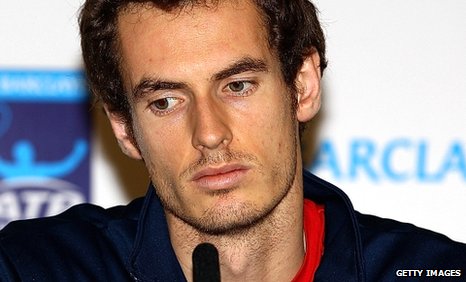 British number one Andy Murray has been forced to pull out of the ATP World Tour Finals with a groin injury.
He strained the muscle in training on 14 November and suffered a recurrence in Monday's straight-sets defeat by David Ferrer at London's O2 Arena.
"I was told to take a week to 10 days completely off - I just didn't have enough time to recover," said the visibly dejected Scot.
"I was probably going to do myself more damage playing than not."
Murray was scheduled to practise at 1300 GMT on Tuesday for an hour ahead of Wednesday's Group A match against Tomas Berdych.
But he failed to appear and a hastily arranged press conference was called at which the 24-year-old delivered news of his withdrawal.
He has been replaced by world number nine Janko Tipsarevic of Serbia.
"When I came off the court [on Monday], I was very disappointed and upset," said Murray.
"I said we'd see how I feel when I woke today up but I was never going to feel great. You hope things are going to get better, but in reality that wasn't ever going to happen.
"I woke up this morning still sore, came in and was going to hit. We chatted for about two hours - about when I was going to be practising, what I should do, what the right thing to do was.
"I had some food, we spoke more about it. I was just trying to find reasons why I should try to play.
"But there was no real positive of coming out and playing because yesterday I was really unhappy on the court. I wasn't enjoying it at all.
"This is one of the best tournaments in the year, one that me and all of the players look forward to playing. I couldn't give anywhere near my best and that's what was disappointing."
After losing to Ferrer, Murray admitted that unless it was this event or a Grand Slam, he would not even have started the tournament.
He will now attempt to recover in time to begin his 2012 season at the Brisbane International on 1 January, with the Australian Open starting in Melbourne on 16 January.
"It might seem like it's a long time away but the Australian Open is six, seven weeks away," Murray continued. "I could mess up my preparation for that, for the beginning of the year.
"That off-season is so important for me in terms of getting myself in shape. It's one of the few times when you can have an actual training block.
"It's a strain - I definitely don't need an operation. It's not a major injury but it's something that I needed much more time than I had to get ready."
Murray added that he may have to think more carefully about his schedule in future.
Since the US Open, he has played more matches than any other member of the world's top four - Novak Djokovic, Rafael Nadal and Roger Federer - all of whom won their first matches at the O2.
"There's no chance I would have been ready to win the tournament here," Murray said. "In hindsight it was maybe the wrong decision [to play], but you also want to try and give yourself an opportunity, if you can.
"If you look at the other guys that played loads of matches this year, Roger and Novak both took a large break after the US Open. Rafa took one after Asia.
"Maybe me trying to get ready for Basel was too soon. That's something I probably need to learn from because I had played a lot of matches."